
Metschnikowia fructicola
Metschnikowia fructicola
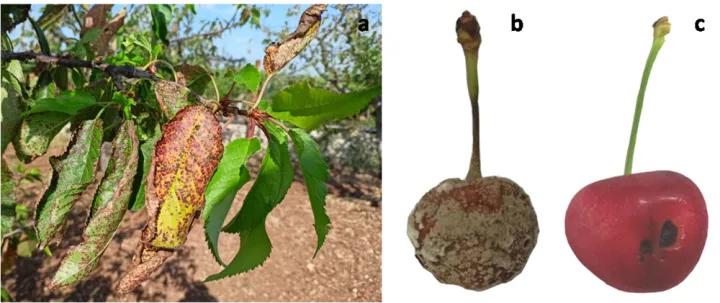
Description
Symptoms
External signs of this microorganism's presence on fruits are often masked by general tissue decay. However, during active colony development, localized areas of skin softening may be observed.
When fruit integrity is compromised, the fungus multiplies intensely, which can lead to discoloration of the epidermis at micro-trauma sites. This is often accompanied by a faint, characteristic yeast-like odor.
Unlike other types of rot, infection by this fungus does not always lead to rapid blackening of tissues. Often, the process proceeds as a gradual weakening of cell walls due to fungal enzymes.
Visually diagnosing the fungus in the field is difficult without laboratory analysis. It often accompanies other infections, complicating the progression of diseases on grapes and stone fruits.
Microscopic examination reveals characteristic Metschnikowia ascospores, which are the primary diagnostic marker for mycologists.
Pathogen
Metschnikowia fructicola is an ascomycetous yeast-like fungus commonly found on the surface of fruits and berries. Unlike many aggressive pathogens, this microorganism is considered a dual-purpose agent: a potential cause of spoilage and a powerful tool for biological plant protection.
Biologically, this object is a saprophytic yeast-like organism. Its ability to rapidly colonize wound surfaces makes it an active participant in microbiological interactions on the fruit cuticle.
Scientific studies confirm that this species can synthesize specific antimicrobial compounds. This allows it to successfully compete with other decay-causing fungi for living space and nutrients.
In the natural environment, this fungus is transmitted via insect vectors, raindrops, or contact between healthy and infected fruits. It possesses high plasticity in response to changing temperature regimes.
Mycological classification places this organism in the group of antagonists, which opens significant prospects for its use in commercial horticulture as an alternative to chemical pesticides.
Conditions for development
The main development factor is the presence of high air humidity and moderately warm weather. The fungus actively multiplies at temperatures between 15 and 25 degrees Celsius.
The presence of sugary exudates on the surface of fruits (e.g., during grape berry cracking) creates an ideal nutrient medium for the mass propagation of this microorganism's colonies.
In orchards with poor crown ventilation and stagnant air, the risk of fungal biomass accumulation increases significantly. Dense plantings help maintain a microclimate favorable for its activity.
Infection occurs primarily through wounds caused by hail, insects, or mechanical damage during harvest. Healthy fruits with intact cuticles are much more resistant.
Prolonged periods of rain during the ripening phase facilitate the spread of microflora across the entire surface of the fruit body, significantly increasing the rate of infection.
Why it matters
Harmfulness manifests in the acceleration of fruit spoilage after harvest. The fungus promotes the development of secondary infections that degrade the marketability of produce during storage.
With mass development, the fungus can cause significant harvest losses during transport. Produce loses shelf life, becoming unsuitable for long-term retail sales.
In vineyards, this pathogen can exacerbate gray mold development by competing for carbohydrates and secreting metabolites that alter juice flavor. This is critical for the winemaking industry.
The impact is economic, as it reduces the yield of high-quality premium produce. Thin-skinned cultures are particularly susceptible to infection.
Beyond direct tissue destruction, the fungus can negatively affect the microbiological composition during fermentation, requiring special attention during raw material processing.
Protection
The main method of prevention is maintaining an agronomic environment that excludes mechanical fruit damage. Timely pest control reduces the risk of infection spread.
It is important to ensure plantation ventilation. Regular pruning and canopy management help reduce humidity in the root zone and the fruit zone.
The use of biological fungicides based on antagonist strains shows high efficiency. Employing beneficial microorganisms allows for the suppression of pathogen growth without chemical intervention.
Maintaining temperature control during storage is a critical factor. Cooling fruits slows fungal activity and prevents further spoilage.
Regular orchard monitoring and the use of modern diagnostic methods are recommended to detect infection hotspots in time and implement effective control measures.
Discussion
No discussions yet — be the first.