
Metarhizium rileyi
Metarhizium rileyi
Description
Symptoms
The initial signs of infection include reduced movement, loss of appetite, and the cessation of feeding by the caterpillar.
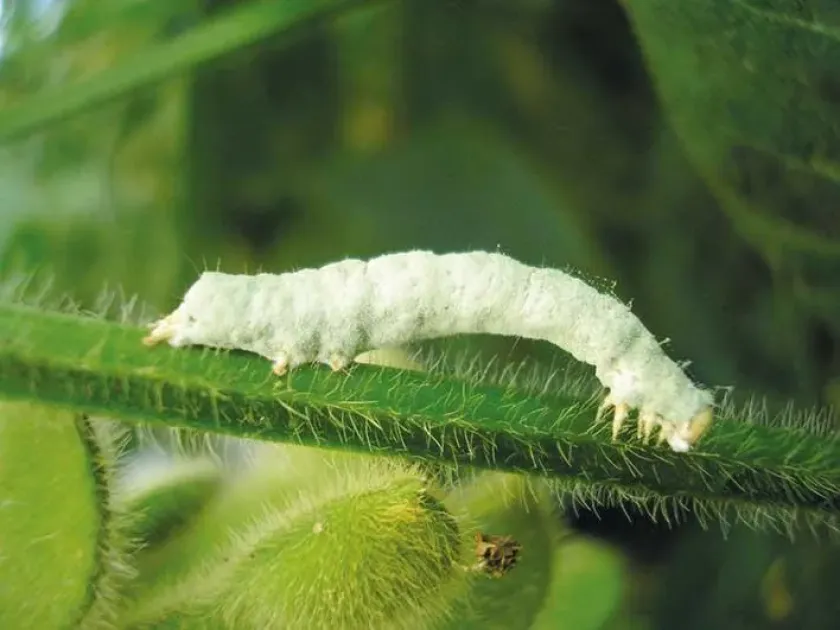
As the infection progresses, the insect's body may exhibit color changes, often becoming pale, yellowish, or translucent due to internal tissue decay.
A distinctive feature is the development of a white or greenish powdery fungal mat on the surface of the deceased insect.
Infected larvae often remain attached to leaves or stems, appearing as mummified remains covered in fungal mycelium and spores.
In field conditions, clusters of dead larvae are most commonly found in damp areas with high levels of relative humidity.
Pathogen
Metarhizium rileyi (formerly Nomuraea rileyi) is a specialized entomopathogenic fungus that belongs to the Clavicipitaceae family.
This fungus is not a plant pathogen; instead, it serves as a natural enemy and biocontrol agent against various lepidopteran insect pests.
The fungus initiates infection when its conidia adhere to the insect's cuticle, germinate, and penetrate the host's body using mechanical pressure and enzymes.
Once inside, the fungus proliferates, consuming the insect's internal nutrients and causing physiological disruption.
The life cycle concludes when the fungus emerges through the insect's integument, sporulating and releasing new conidia into the environment.
Conditions for development
High relative humidity (typically above 80%) is a critical requirement for the germination of Metarhizium rileyi spores.
The optimal temperature range for the development and transmission of the fungus is between 20°C and 25°C.
Free moisture, such as dew or rain, facilitates the movement of spores onto the insect host, significantly enhancing infection rates.
Dense crop canopies provide a protective microclimate that shields the fungus from the detrimental effects of direct sunlight and desiccation.
Periods of prolonged drought and high UV radiation are unfavorable for the survival of conidia, drastically reducing the fungus's efficacy.
Why it matters
Metarhizium rileyi is essentially harmless to crops, as it targets only specific insect pests, acting as a natural regulator.
Its primary hosts include significant lepidopteran pests such as the cotton bollworm and other noctuid moth species that damage foliage.
By suppressing these populations, the fungus prevents extensive leaf loss and protects the yield potential of various cash crops.
As a biological control agent, it reduces the need for synthetic insecticides, contributing to more sustainable agricultural practices.
The fungus is highly selective, minimizing risks to non-target organisms and natural predators within the field ecosystem.
Protection
Successful management involves preserving existing fungal populations by avoiding unnecessary applications of broad-spectrum fungicides.
Commercial formulations containing Metarhizium rileyi can be integrated into pest management programs to target lepidopteran larvae.
Applications are most effective when timed with evening or early morning moisture to maximize spore survival and penetration.
Regular field scouting allows growers to assess natural infection levels and adjust chemical treatment schedules accordingly.
- Monitor for environmental humidity
- Apply biocontrol agents at early larval stages
- Minimize broad-spectrum fungicide usage
- Maintain buffer strips to support natural biocontrol populations
Discussion
No discussions yet — be the first.