
Merulius tremellosus
Merulius tremellosus
Description
Symptoms
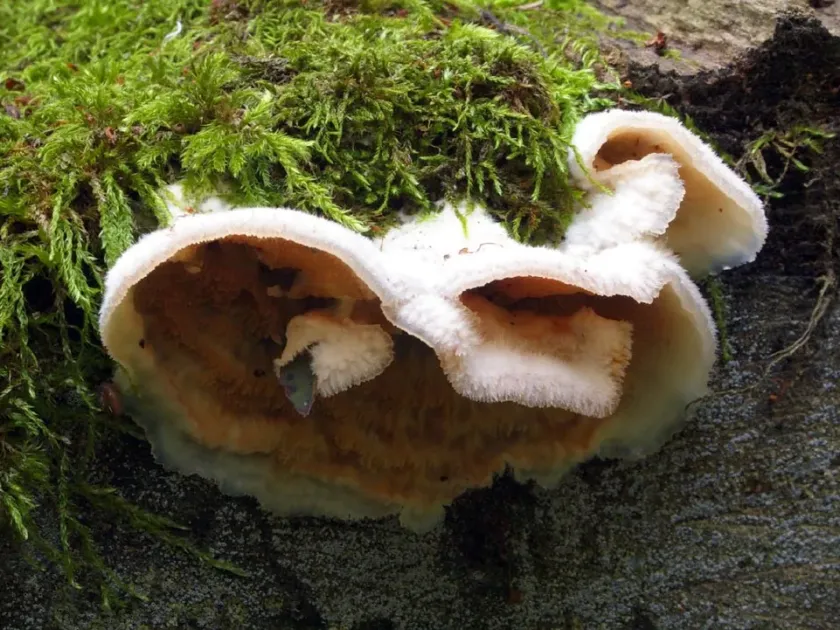
The most distinctive sign is the presence of shelf-like or effused fruiting bodies on the surface of tree trunks or branches, characterized by a gelatinous texture and yellowish-white or pinkish hues.
Internal wood infection manifests as white rot, where the wood tissue becomes soft, spongy, and brittle, making it easy to identify upon inspection or drilling.
Visible decline in the foliage is a late-stage symptom, appearing as premature yellowing, wilting, or drying out because the fungal decay interferes with the tree's nutrient transport system.
Cracks in the bark and abnormal oozing of sap may occur at the site of infection, as the fungus disrupts the normal physiology of the tree's cambium layer.
Severe cases result in the tree becoming brittle, leading to the sudden snapping of trunks or branches under light mechanical loads or moderate wind pressure.
Pathogen
The causal agent is the wood-decaying fungus Merulius tremellosus, commonly known for its gelatinous, tremulous fruiting bodies. It belongs to the Basidiomycota phylum and functions primarily as a saprotroph in forest ecosystems.
This fungus is highly efficient at degrading lignocellulosic materials. While it prefers dead timber, it frequently colonizes weakened or damaged living trees, transitioning into a destructive pathogen.
The life cycle involves the production of spores within the fruiting bodies, which are dispersed by wind. These spores germinate on moist substrates, allowing the fungus to establish its mycelial network deep within the wood fibers.
The mycelium secretes enzymes that break down the complex structure of wood, eventually leading to a characteristic white rot that strips the timber of its structural integrity.
Given the right conditions, the fungus can survive for years, continuously expanding through the internal tissues of the host until the entire structure is compromised.
Conditions for development
High environmental humidity is the primary catalyst for the development of Merulius tremellosus. Excess moisture in the wood itself allows for rapid mycelial growth and proliferation.
The fungus thrives in moderate temperature ranges, typically between 15°C and 25°C, which are common during spring and autumn, facilitating high spore production.
Mechanical damage, such as frost cracks, pruning wounds, or storm damage, provides an entry point for the fungus to bypass the natural protective barriers of the bark.
Dense, poorly ventilated plantings retain moisture on the bark surface, providing an ideal microclimate for the fungus to take hold and spread to adjacent healthy trees.
General stress factors, including soil compaction, drought, or nutrient deficiencies, weaken the tree’s natural defenses, making it susceptible to opportunistic colonizers like this fungus.
Why it matters
The damage caused by this fungus is profound, as it destroys the mechanical core of the tree, rendering it unstable and prone to collapse, which creates significant safety hazards.
In ornamental and orchard environments, infection leads to a total loss of aesthetic value and fruit yield, eventually resulting in the death of the host tree.
The fungus acts as a persistent source of inoculum, shedding millions of spores that can infect other trees in the vicinity, creating a domino effect of decay throughout the garden.
Economic impact is significant, encompassing the costs of removal, stump treatment, and the replacement of mature, high-value trees that could have otherwise survived for decades.
Once established in the heartwood, the infection is often irreversible, requiring radical interventions that alter the landscape and disrupt local biodiversity.
Protection
Proactive management begins with strict sanitation, including the immediate removal and proper disposal of deadwood and infected branches to reduce spore pressure.
All pruning must be executed correctly, and wounds should be sealed with specialized antifungal pastes or sealants to prevent fungal spores from entering fresh tissues.
Improve garden airflow by pruning for better light penetration and canopy ventilation, which helps lower humidity levels and discourages the formation of gelatinous fruiting bodies.
For trees with significant decay, complete removal is often the only safe option to prevent physical damage to property or nearby plants caused by falling timber.
Regular health monitoring is essential; early detection of small fruiting bodies can sometimes allow for minor surgical interventions to save the host tree before the rot spreads too far.
Discussion
No discussions yet — be the first.