
Merulius
Merulius
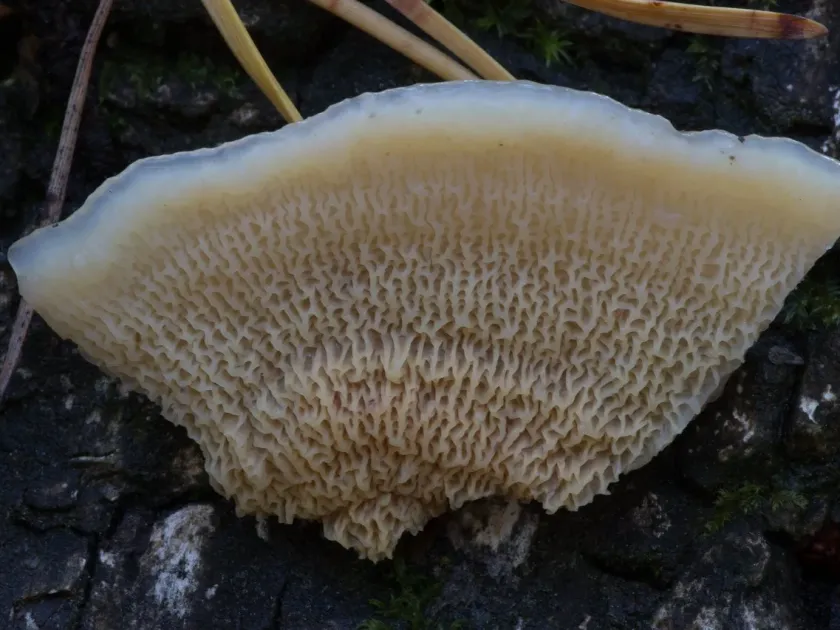
Description
Symptoms
The initial sign of infestation is the appearance of white, cotton-like or cobweb-like mycelium on the surface of the timber. Over time, these patches darken, turning yellowish, rusty, or brown.
Advanced growth manifests as fruiting bodies with a wavy, pore-like surface. These structures often display water droplets on their surface, which explains the common name weeping fungus.
Infested wood undergoes a distinct color change, darkening to a deep brown. Cracks appear in the surface, creating a cubic fracture pattern that is characteristic of severe dry rot damage.
Structural failure is a hallmark of the late stages of decay. The wood becomes brittle, loses all load-bearing capacity, and crumbles into fine powder when subjected to the slightest pressure.
A heavy, musty odor is a reliable indicator of active fungal growth. Even if visible fruiting bodies are not yet obvious, the smell often reveals that the infection has established itself within the structure.
Pathogen
The causative agent of this disease is the Merulius genus, with Merulius lacrymans (the weeping fungus) being the most notorious member. It is a basidiomycete fungus that specializes in the degradation of wood fibers, specifically lignin and cellulose.
The fungus forms an extensive mycelium network that penetrates deep into the wood structure. As it grows, it secretes enzymes that break down the chemical bonds of the material, rendering it structurally unstable and porous.
Reproduction is facilitated by spores that are easily dispersed through air currents, water, or physical contact. These spores settle on new surfaces, creating new infection sites wherever moisture and organic matter are present.
This fungus is a saprotroph, meaning it feeds on dead organic matter rather than living plants. However, its aggressive nature allows it to destroy wooden structures, fence posts, and stored timber at an alarming rate.
It is distinct in its ability to adapt to environments with limited airflow, which allows it to thrive in the dark, damp recesses of buildings and structures where other fungi might struggle.
Conditions for development
High humidity is the primary catalyst for Merulius growth. Moisture content within the wood exceeding 20% is considered the ideal environment for the fungus to establish and colonize.
Poor ventilation and stagnant air provide a safe haven for the pathogen to grow without interruption. Dark, damp areas such as crawlspaces and basements are the most frequent locations for infestation.
The fungus thrives best at temperatures between 20°C and 25°C. However, its resilience allows it to persist under various temperature conditions, making it a persistent threat in many climates.
Contact with damp soil or moist brickwork significantly accelerates the spread of the mycelium. The fungus can even transport moisture over short distances, allowing it to colonize drier sections of wood.
Faulty construction, such as inadequate damp-proofing and lack of insulation, creates perfect conditions for spores to take root. Any trapped condensation acts as an entry point for the fungus.
Why it matters
The most significant harm caused by Merulius is the rapid destruction of wooden load-bearing components. This leads to structural failure, floor sinking, and the overall degradation of building safety.
The economic impact is substantial due to the high costs associated with replacing structural timber and conducting deep remediation. In severe cases, the entire structure may need to be dismantled.
Infestation poses a risk to other wooden assets on the property, such as stored garden supplies, furniture, or firewood, which can be quickly ruined if kept near an active infection site.
The presence of airborne spores can impact indoor air quality, which may cause health concerns in buildings where the fungus has been allowed to proliferate unchecked.
If not treated, the fungus can spread rapidly throughout an entire building, turning a minor issue into a large-scale project that requires professional abatement and reconstruction.
Protection
Effective prevention starts with ensuring proper ventilation in all wooden structures. Maintaining low humidity levels in basements and crawlspaces is essential to suppress fungal development.
Applying high-quality wood preservatives and fungicides is critical for long-term protection. These chemicals prevent the mycelium from penetrating the wood surface and establishing a root system.
Damp-proofing is a fundamental requirement. Implementing moisture barriers between wood and foundations or soil prevents the intake of water, which is necessary for the fungus to survive.
If an infection is detected, immediate removal of the affected wood is necessary. It is crucial to cut away additional healthy material around the site to ensure that all hidden mycelium is removed.
After removal, proper disinfection of the area is mandatory. Destroying the infested material by burning is the most reliable way to ensure that spores do not survive to infect other areas.
Discussion
No discussions yet — be the first.