
Meruliopsis
Meruliopsis
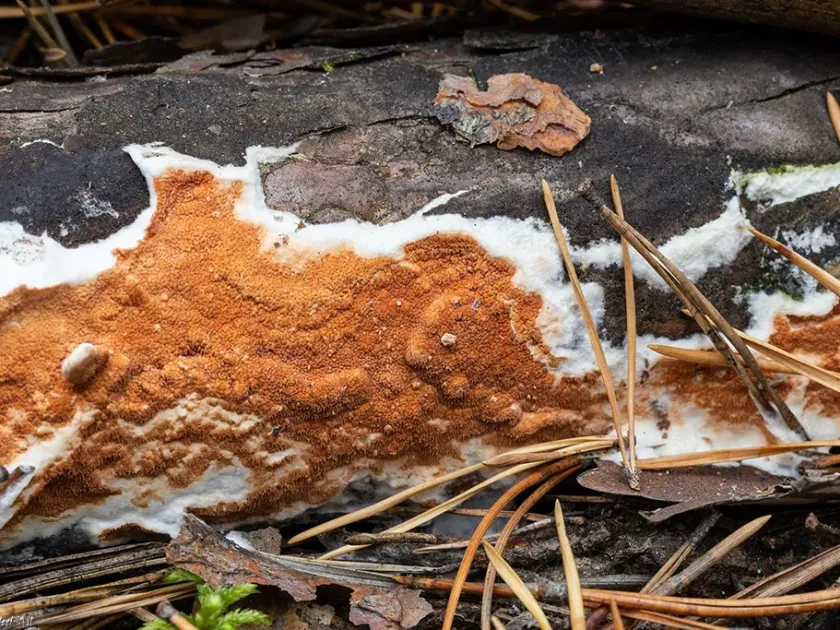
Description
Symptoms
The most reliable sign of infection is the appearance of characteristic fruit bodies. These look like thin, crust-like formations, often white, cream, or pale ochre, covering the surface of the wood or bark.
Infected wood undergoes visible changes in structure and color. It often becomes bleached, soft, and fibrous, losing the mechanical strength typical of healthy woody tissue, which is a hallmark of white rot.
As the disease progresses, the tree may exhibit systemic symptoms such as canopy thinning, premature yellowing of leaves, and an overall decrease in shoot vigor due to compromised hydraulic function.
Necrotic areas of the bark may develop near the site of infection. These spots indicate that the fungus has successfully colonized the vascular cambium, eventually leading to the death of local woody tissues.
In humid conditions, a faint fungal odor may be detected near the infected areas, indicating the active metabolism of the mycelium deep within the trunk or branches of the tree.
Pathogen
The disease is caused by wood-decay fungi of the genus Meruliopsis, which are members of the Basidiomycota phylum. These fungi are saprotrophic, meaning they primarily thrive on dead or dying plant material by decomposing lignin.
The fungus produces thin, effused, and often wrinkled or reticulated fruit bodies on the bark or exposed wood surface. These structures function as the primary source of basidiospores, which facilitate the rapid spread of the disease.
Infection usually occurs when fungal spores settle into fresh wounds, pruning cuts, or frost cracks in the bark. Once established, the mycelium penetrates deeper into the heartwood and sapwood, secreting digestive enzymes.
This pathogen is classified as a white rot agent. It systematically breaks down the complex polymers of wood, significantly compromising the structural integrity of the affected host plant over time.
The biological cycle of the fungus is strictly dependent on moisture availability within the wood tissue. Without sufficient water content, the enzymatic activity required for wood degradation is significantly reduced.
Conditions for development
Meruliopsis thrives under conditions of high humidity and moderate temperatures, typically ranging from 15°C to 25°C. These conditions are ideal for both the spore germination and mycelial expansion.
Lack of proper pruning and dense canopy growth contribute to poor air circulation, creating a stagnant microclimate that is highly favorable for the establishment and proliferation of the pathogen.
Trees that are under physiological stress—due to drought, nutrient deficiency, or prior damage—are significantly more susceptible to infection compared to vigorous, well-maintained trees.
Dead wood and decaying stumps in the vicinity act as major inoculum reservoirs. Spores from these sites are easily transported by wind, rain, and insects to healthy trees throughout the growing season.
Improper wound management remains a critical factor. Exposed wood after heavy storms or careless pruning acts as a direct gateway for the fungus to enter the tree's internal vascular system.
Why it matters
The primary concern regarding Meruliopsis is the severe loss of mechanical stability. Weakened trunks and branches are prone to sudden failure, creating significant safety hazards in populated areas.
Long-term infection leads to the disruption of water and nutrient transport, which inevitably results in tree decline and eventual mortality, causing substantial loss in both timber and landscape value.
The disease can easily spread from one tree to another within an orchard or forest stand. If left unchecked, these fungal foci can destroy entire sections of a plantation in a relatively short period.
By weakening the host's natural defenses, the fungus prepares the tree for secondary infestations by wood-boring insects, further accelerating the decay and limiting the success of recovery treatments.
The presence of such fungi reduces the overall ecological and aesthetic value of parklands and gardens, leading to increased maintenance costs associated with tree removal and site sanitation.
Protection
Effective management begins with stringent sanitation practices. Regularly removing dead wood, fallen branches, and infected stumps is essential to limit the total spore count in the environment.
All necessary pruning should be performed carefully to avoid unnecessary wounding. Any accidental damage to the bark must be treated immediately with an appropriate wound sealer or fungicide paste.
Maintaining a healthy, open canopy through strategic pruning helps improve air circulation. This lowers the localized humidity and creates a less hospitable environment for fungal development.
Optimizing tree health through balanced fertilization and adequate irrigation provides the plant with the resources needed to mount a robust defense against infections at their initial stage.
When working with infected specimens, disinfect all tools with alcohol or a bleach solution between uses. This crucial step prevents the accidental transfer of spores to healthy trees in the vicinity.
Discussion
No discussions yet — be the first.