
Merismodes
Merismodes
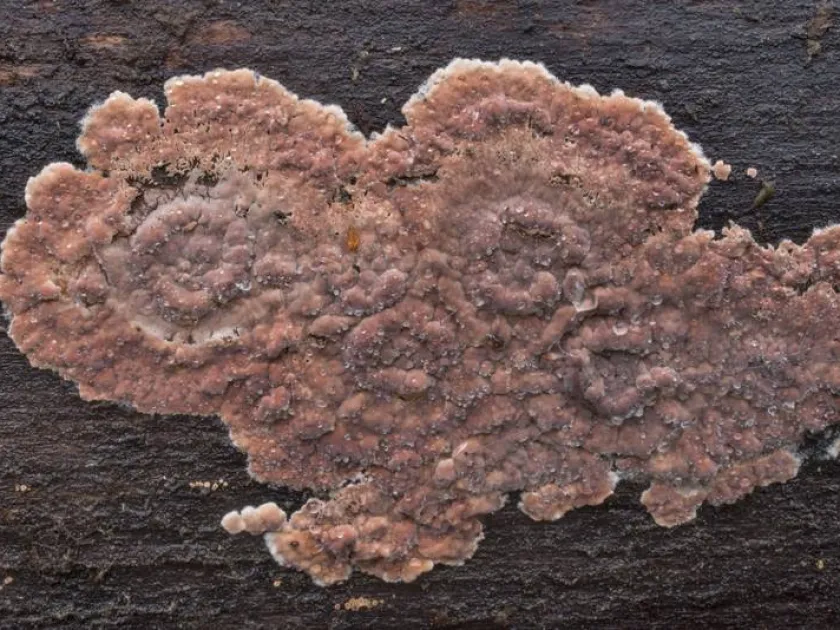
Description
Symptoms
The first observable signs include the appearance of tiny, pale or greyish, cup-like structures on the surface of tree bark. These structures often congregate in small groups, making the bark appear textured or slightly discolored.
Infected bark often darkens and shows signs of localized necrosis. Over time, the bark may begin to peel away from the wood, indicating that the fungus has successfully disrupted the connection between the bark and the underlying woody tissue.
Under the bark, one can often find white, web-like strands of mycelium, which are characteristic of this infection. These strands block the transport of water and nutrients, which is directly responsible for the symptoms seen in the tree canopy.
The crown of the tree often exhibits premature yellowing, wilting, and leaf drop. When a branch is severely infected, the entire distal end of the branch will dry out, leading to visible dieback that can be identified from a distance.
Deep cracks, lesions, or slow-healing wounds at the site of the infection are common on larger stems. These areas often serve as reservoirs for the fungus, allowing it to remain active even when the exterior conditions are less favorable.
Pathogen
Merismodes is a genus of fungi belonging to the order Agaricales, specifically the Niaceae family. While primarily recognized as saprotrophic, these fungi can act as opportunistic pathogens on trees that have been weakened by environmental stress or physical injuries.
The fungus produces small, cup-shaped fruiting bodies, often found in clusters on decaying wood or damaged bark. Its biological life cycle is designed to thrive in environments with organic matter decomposition, though it can transition to living plant tissue if provided with a suitable entry point.
Spore dissemination occurs via air currents and moisture droplets, which can land on pruning wounds or frost cracks. Once the spores germinate, the fungal mycelium penetrates the outer layers, eventually colonizing the cambium and the underlying wood.
The fungus maintains its presence through vegetative growth during humid periods, while during dry spells, the mycelium persists within the bark structures. This resilience makes it a persistent issue in gardens where sanitation is neglected.
Biological studies suggest that the fungus uses specialized enzymes to degrade plant fibers, which allows it to secure nutrients from the host tree, eventually leading to the structural compromise of the infected branches.
Conditions for development
High humidity and prolonged periods of rainfall are the primary drivers for Merismodes development. The fungus requires a consistent moisture film on the bark to facilitate spore germination and colony expansion.
Physical trauma, such as sunscald, frost damage, or improper pruning, creates the ideal environment for the fungus. These wounds provide direct access to the nutrient-rich cambium layer, which the fungus quickly colonizes.
Temperature plays a crucial role in the development cycle, with growth being most active in mild, temperate conditions ranging from 15°C to 25°C. Rapid metabolic activity during these times allows the colony to spread across the trunk or branches.
Poor airflow within the canopy, typical of unmanaged or overcrowded orchards, keeps the branches moist for longer periods. This microclimate is conducive to the growth of Merismodes and other wood-decaying fungi.
Trees that are nutritionally deficient or under stress from pests are naturally less resilient. Such trees fail to produce adequate protective barriers, making them significantly more susceptible to successful colonization by the fungal spores.
Why it matters
The primary concern is the significant loss of branch productivity and structural integrity. As the fungus consumes the woody tissue, affected branches become fragile and are prone to breaking under the weight of fruits or snow.
Nutrient flow is severely impaired, which manifests as reduced fruit quality and yield. Small, prematurely ripening, or misshapen fruits are common consequences of the system-wide stress caused by the fungal infection.
If left untreated, the fungus can progress from smaller branches to the main trunk. This cumulative effect causes serious dieback and can ultimately lead to the death of the entire tree if the infection reaches the vascular system.
The spread of spores across the orchard creates a cycle of infection that affects neighboring trees. Once the fungus is established in a garden, it becomes difficult to eradicate, necessitating costly intervention or removal of trees.
Economic damage includes the loss of labor and time required for pruning, the potential need for tree removal, and the long-term impact of losing productive planting stock that takes years to replace.
Protection
Sanitary pruning is the most effective management strategy. All infected material must be removed, cutting well into the healthy tissue to ensure that all traces of mycelium are excised from the tree.
Post-pruning care involves disinfecting all tools and sealing large cuts with a copper-based paste or a suitable fungicide-impregnated wound sealant to prevent re-infection through the open wounds.
Applying copper-based fungicides as a preventative spray in early spring helps to reduce the initial inoculum density. This step is critical in orchards with a history of fungal diseases, as it cleans the bark surface.
Improving air circulation through regular and correct pruning is essential for disease prevention. Maintaining an open canopy allows the bark to dry quickly after rain, removing the moisture the fungus relies upon.
Promoting tree vigor through balanced fertilization and proper irrigation helps the tree bolster its natural defense systems. A robust tree is much better equipped to heal small injuries and resist the initial stages of fungal invasion.
Discussion
No discussions yet — be the first.