
Meripilus giganteus
Meripilus
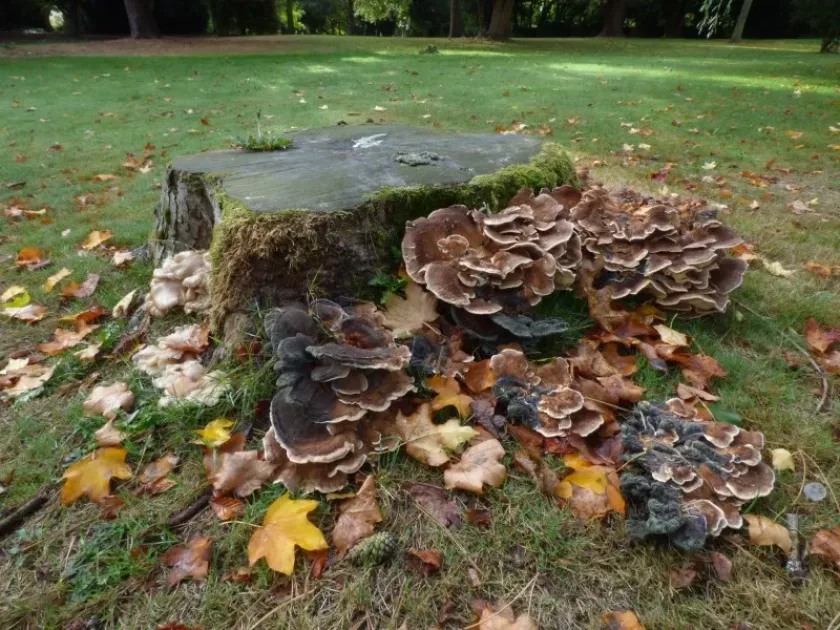
Description
Symptoms
The most visible symptom of an infection is the emergence of large, clustered fruiting bodies at the base of the trunk. These brackets are fan-shaped, brownish, and often grow in dense rosettes during late summer and autumn.
Internal wood decay is a hallmark of this disease. Roots exhibit signs of white rot, where the wood becomes pale, fibrous, and brittle due to the degradation of lignin and cellulose by the fungus.
Canopy health often declines as the root system is compromised. Foliage may turn yellow, wilt, or fall prematurely, while shoot growth becomes significantly stunted due to poor water and nutrient uptake.
Structural failure is a major risk, as the fungus weakens the anchor roots. Affected trees may suffer sudden windthrow, tipping over even when appearing green and relatively healthy above ground.
Closer inspection of the root collar may reveal white fungal mycelium entering bark cracks. These hyphae gradually infiltrate the root system, leading to long-term systemic damage to the host.
Pathogen
The pathogen is the basidiomycete fungus Meripilus giganteus, also known as the giant polypore. It is a facultative parasite and saprotroph that excels in decomposing wood tissues.
The fungus invades the tree through damaged roots or trunk wounds. It uses powerful enzymes to break down the wood structure, turning vital tissues into a soft, white, decayed mass.
It can survive for years as a saprotroph in dead stumps and root fragments. This endurance makes it a persistent threat in forests and parks, capable of spreading to healthy neighbors.
Spore dispersal occurs via wind, allowing the fungus to find new hosts. Furthermore, the mycelium can spread through soil contact, effectively colonizing the root systems of adjacent trees.
The fungus is non-discriminatory, affecting a wide variety of broad-leaved species such as oak, beech, and various orchard trees, making it a generalist threat in diverse environments.
Conditions for development
High soil moisture and moderate temperatures are primary drivers for fungal activity. Rainy spells in late summer create the perfect conditions for the development of fruiting bodies.
Trees subjected to environmental stress, such as drought, poor soil aeration, or mechanical damage, are significantly more susceptible to Meripilus giganteus infection.
Poorly ventilated, crowded planting sites encourage the buildup of spore loads. In such microclimates, the fungus can easily jump from host to host, establishing persistent disease centers.
Soil compaction often limits oxygen availability to roots, weakening the tree's natural defense mechanisms. This physiological stress makes the plant a prime target for wood-decay fungi.
The presence of decomposing organic matter and old tree stumps in the vicinity provides a reservoir for the pathogen to thrive and maintain its population levels year after year.
Why it matters
The main danger lies in the hidden nature of the infection. By the time the fruiting bodies are visible, the root system is often severely compromised, leaving little chance for recovery.
Economic and aesthetic losses are substantial, as infected specimen trees often require removal. This impacts property value, landscape design, and orchard productivity.
Public safety is a primary concern. The instability of trees affected by root rot poses a risk of falling, which can result in property damage or injury in residential and public areas.
The pathogen acts as a source of recurring infection. Failure to remove diseased material ensures that the fungus will continue to spread to surrounding healthy vegetation via roots.
Treatment of root-decay fungi is notoriously difficult. The systemic nature of the infection within the soil and root zone makes total eradication nearly impossible without aggressive intervention.
Protection
Prevention is the best strategy. Maintain tree vigor through proper irrigation and balanced fertilization to ensure the tree can effectively compartmentalize minor root injuries.
Minimize mechanical injuries during landscaping or soil cultivation. Promptly treat any wounds on the trunk or exposed roots to prevent the entry of fungal spores.
Remove and destroy infected trees and their entire root systems once the disease is confirmed. Do not leave stumps in the ground, as they serve as breeding grounds for the fungus.
Regular monitoring of the root collar and base of the trunk is essential. Early detection allows for the isolation of infected individuals before the mycelium spreads to neighboring plants.
If an infection is identified, consider soil sanitation or the replacement of affected soil layers. In high-value gardens, consulting with a professional arborist is recommended for disease management.
Discussion
No discussions yet — be the first.