
Meripilus fungi
Meripilaceae
Description
Symptoms
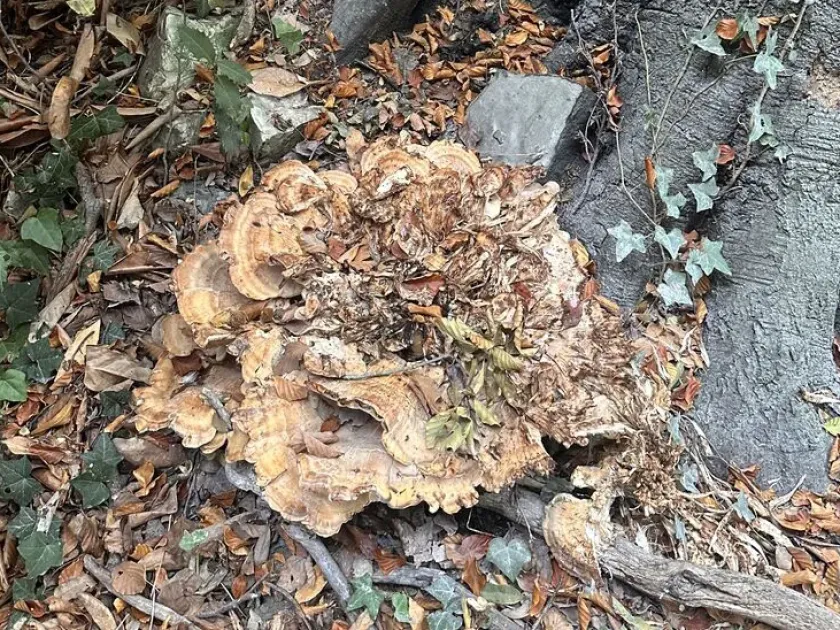
The primary sign of infection is the emergence of characteristic fungal fruiting bodies at the base of the tree trunk. These bodies form fan-shaped or rosette-like clusters consisting of multiple overlapping caps.
In the early stages, the infection manifests as a discoloration of the wood at the base of the trunk and the root collar. The tissues gradually soften, losing their structural integrity and strength.
As the disease progresses, white mycelial cords become visible on the affected areas. These cords penetrate deep into the sapwood, systematically breaking down the lignin and cellulose that provide wood stability.
Visual inspection often reveals premature leaf drop and the drying of specific skeletal branches, which indicates a disruption in the transport of water and nutrients throughout the tree.
In the final stage of decay, the tree becomes critically unstable. Even under light wind conditions, the tree may suffer a complete stem fracture because the inner wood has been reduced to a decayed, punky mass.
Pathogen
The disease is caused by fungi of the Meripilaceae family, with Meripilus giganteus being the most prominent species. These are basidiomycete fungi that act as both parasites and saprotrophs.
The condition is classified as white butt or stem rot. The pathogen selectively degrades lignin, leaving behind light-colored, fibrous wood that is structurally compromised.
The fungal life cycle involves the production of basidiospores, which are dispersed by wind or insects. These spores enter the plant through fresh bark wounds, pruning cuts, or damaged root ends.
Fungi of this family are capable of surviving for long periods in the soil or in remnants of dead wood, maintaining their infectious potential for several years.
The biology of the pathogen is closely linked to the tree's physiological state. Healthy, vigorous trees can often successfully block mycelial penetration through the effective compartmentalization of damaged areas.
Conditions for development
The development of Meripilus fungi is favored by excessive soil moisture and poor root aeration. Waterlogging causes fine roots to die, creating entry points for fungal infection.
A temperature range between +18°C and +25°C is considered most favorable for active mycelial growth and the emergence of fruiting bodies during the summer months.
The presence of mechanical injuries—such as cracks, frost damage, or deep bark abrasions—significantly increases the probability of successful infection upon contact with fungal spores.
High planting density, which restricts air circulation, creates a microclimate with elevated humidity, accelerating spore germination on the bark surface.
Stress factors such as drought, nutrient deficiencies, or anthropogenic environmental impacts weaken trees, making them highly susceptible to pathogen colonization.
Why it matters
The economic and aesthetic harm caused by Meripilus fungi involves a rapid decline in the health and vitality of trees in parks, landscapes, and private gardens.
The main danger lies in the hidden nature of the disease. Interior wood decay often remains undetected until the tree becomes a significant safety hazard for property and people.
Root system damage reduces the tree's ability to remain anchored in the ground, leading to an increased risk of large tree failure, which can damage structures or utility lines.
Infected trees serve as constant sources of spores, which are disseminated across the area, creating a persistent threat to nearby healthy deciduous trees.
Economic losses arise from the costs of removing hazardous trees, stump removal, and the subsequent need for landscape restoration and replanting of new stock.
Protection
The primary method of prevention is maintaining a high level of horticultural management: consistent watering, appropriate fertilization, and protection against mechanical damage.
Regular sanitary pruning should be conducted to remove dead or diseased branches. All pruning cuts should be immediately treated with appropriate sealants or disinfecting solutions.
Upon detection of initial fruiting bodies, they should be carefully removed and destroyed, preferably by burning, to prevent further spore dissemination.
If extensive decay of the trunk or root system is confirmed, the only effective management strategy is the full removal of the tree, including the excavation of the root system.
Preventive treatment of the root zone with systemic fungicides may be beneficial in the earliest stages of the disease to help localize and suppress mycelial activity.
Discussion
No discussions yet — be the first.