
Melosira varians
Melosira varians
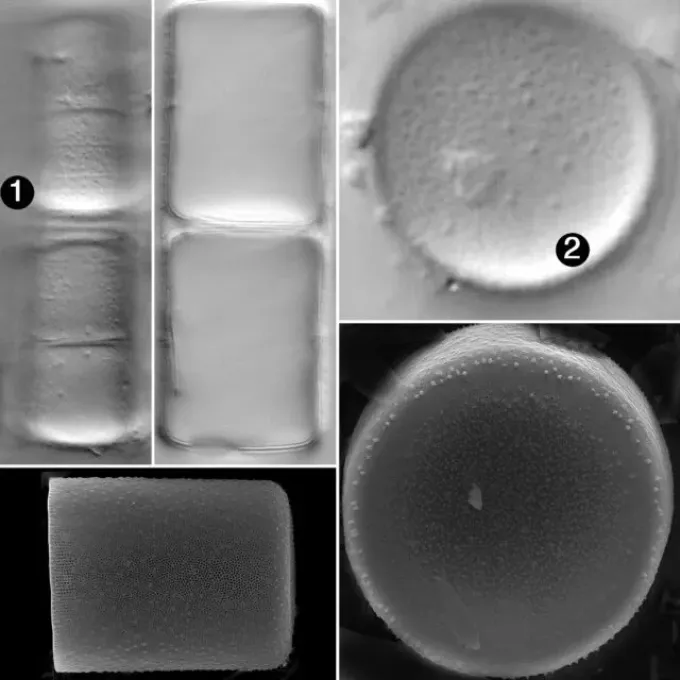
Description
Pathogen
Melosira varians is a species of freshwater diatom that forms long, filament-like colonies. In an agricultural context, it is not recognized as a crop pathogen but rather as a problematic aquatic organism that affects irrigation infrastructure and water supply systems.
The organism consists of cylindrical cells joined in chains, which can rapidly proliferate under suitable environmental conditions, leading to dense mats that clog water transport channels.
Biological resilience is a key feature of this species, as it can adapt to various light intensities and nutrient levels, ensuring its survival even when environmental factors fluctuate.
While it is a natural component of aquatic ecosystems, its rapid growth often turns it into a nuisance for water management, significantly hindering the flow of water necessary for crop cultivation.
The ability to form auxospores allows the population to persist in changing conditions, making it a persistent challenge for those managing stagnant or slow-moving water bodies.
Conditions for development
The development of Melosira varians is largely driven by the eutrophication of water sources. Increased levels of nitrogen and phosphorus, often originating from agricultural runoff, serve as primary nutrients for rapid biomass accumulation.
Temperature is a critical factor, with spring and autumn months often providing the most favorable conditions for the growth of this diatom species due to moderate thermal ranges.
A sufficient concentration of dissolved silica in the water is essential, as these diatoms require it to construct their rigid, glass-like cell walls, which act as a limiting factor for population expansion.
Low water velocity or stagnant conditions in irrigation canals provide a stable substrate for filaments to attach, leading to the formation of extensive carpets that disrupt water distribution.
Adequate sunlight penetration is required for high rates of photosynthesis; therefore, clear, sunlit waters during the vegetative season promote the most intense blooms of the species.
Why it matters
The primary concern for the agricultural sector is the mechanical obstruction of irrigation canals. The dense growth reduces the efficiency of water transport, potentially leading to irrigation deficits for crops.
Decaying biomass from algal blooms can deplete dissolved oxygen levels in the water, which may negatively impact water quality and affect surrounding aquatic life in reservoir settings.
Accumulated algal filaments lead to increased siltation and sediment trapping within irrigation networks, necessitating frequent and expensive maintenance work to clear channels and restore water flow.
Pumps and filtration systems are highly susceptible to clogging by these algae, resulting in downtime and increased operational costs for maintaining the infrastructure responsible for field irrigation.
Furthermore, the physical blockage of small-scale irrigation emitters can cause uneven water distribution, which directly impacts crop development and consistency across the field.
Protection
Mechanical removal remains the most common and immediate control strategy. This includes the use of rakes, mechanical screens, and dredging equipment to extract algal mats from water channels.
Proactive management of water flow velocity is effective at discouraging the attachment of filaments, making the environment less hospitable for the establishment of large colonies.
Chemical control using algicides is an option but must be managed strictly to comply with safety regulations and prevent contamination of irrigation water destined for sensitive agricultural crops.
Long-term prevention is best achieved through the reduction of nutrient runoff from agricultural lands, which effectively lowers the carrying capacity of the water for such algal species.
- Routine mechanical cleaning of irrigation networks.
- Monitoring nutrient levels in water sources.
- Enhancing water circulation to prevent stagnation.
- Implementation of vegetative buffer strips to catch runoff.
Discussion
No discussions yet — be the first.