
Meloderma sharmarum
Meloderma sharmarum
Description
Symptoms
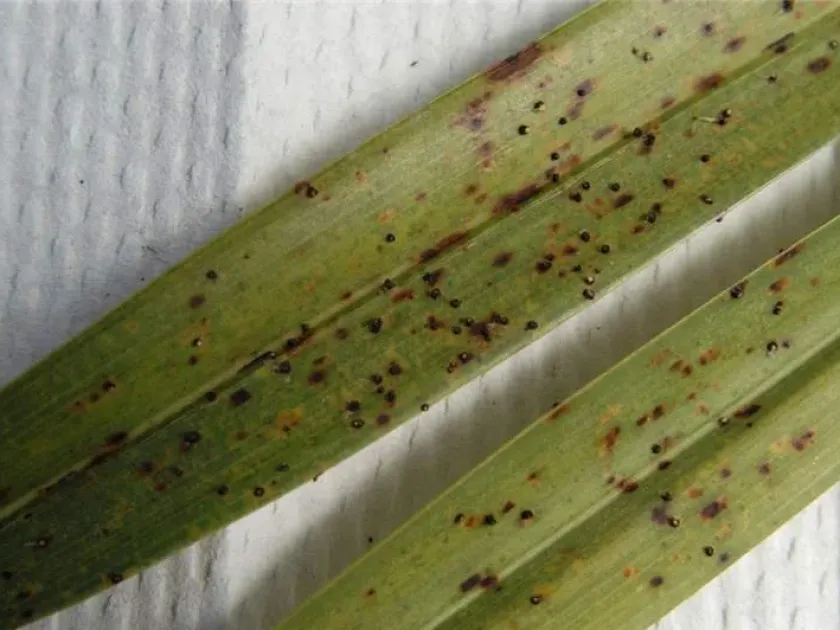
The initial signs of infection present as small chlorotic spots on the leaf blades. Over time, these spots expand and develop a darker, brown-to-black necrotic appearance, often surrounded by a distinct halo, which serves as a key diagnostic feature.
On stems and stalks, the disease manifests as elongated necrotic stripes that can lead to tissue cracking and structural deformation. This structural damage inhibits the growth of the plant and limits its ability to support its own weight or develop fruits properly.
Under conditions of high humidity, a characteristic mycelial growth may appear on the affected areas. This fungal mat is typically greyish or yellowish in color and confirms active sporulation, which serves as a secondary source of inoculum for neighboring plants.
Severe infestations often result in premature wilting and abscission of leaves or flower buds. This reduction in the vegetative surface area directly impacts the plant's ability to photosynthesize, leading to stunted growth and reduced biomass accumulation.
- Appearance of chlorotic spots on leaves
- Dark necrotic spots with distinct margins
- Deformation and cracking of stems
- Development of fungal growth in damp weather
- Premature loss of reproductive organs
Pathogen
The causal agent of the disease is the fungus Meloderma sharmarum, which is classified within the group of ascomycetes. This pathogen is a specialized parasite that targets specific plant tissues, leading to systemic physiological stress in the host.
During its life cycle, the fungus produces specialized fruiting bodies that invade the epidermis of the plant. These spores are remarkably resilient to adverse environmental conditions, allowing the pathogen to overwinter in soil or crop residues with high success.
Transmission occurs primarily through air currents, as spores are light and easily dispersed over long distances. Additionally, moisture, such as rain droplets or heavy dew, facilitates the physical transfer of spores to healthy plant organs during the growing season.
The fungus metabolizes host nutrients and secretes specific toxins that compromise the plant's natural immune system. This disruption of metabolic pathways leads to cell wall degradation and impairs the plant's vascular conductivity, hindering the transport of vital resources.
Scientific research indicates that Meloderma sharmarum possesses high genetic flexibility, allowing it to adapt to fungicides relatively quickly. Consequently, continuous field monitoring and precise diagnostic measures are essential to keep the pathogen population below the economic threshold.
Conditions for development
Optimal development for Meloderma sharmarum occurs in environments with high relative humidity, generally exceeding 75 percent. These moisture-rich conditions are critical for spore germination and the successful establishment of the mycelium on host tissues.
The pathogen thrives in moderate temperature ranges, typically between 18 and 24 degrees Celsius. While extreme temperatures can slow down its spread, the fungus remains dormant in environmental debris until conditions become suitable again.
Poor agricultural practices, such as high-density planting and inadequate spacing, create a humid microclimate that favors rapid disease spread. Lack of proper ventilation prevents the canopy from drying, keeping foliage moist for extended periods.
The persistence of crop debris from previous seasons is the primary factor for the initial disease onset. Fungal spores remain viable in these residues, providing a constant reservoir of infection that triggers outbreaks as soon as the weather warms up.
Nutrient imbalances, particularly a deficiency in essential minerals that reinforce cell walls, make plants more susceptible to penetration. A balanced nutrition program strengthens plant anatomy and acts as a primary line of defense against fungal entry.
Why it matters
The primary harm caused by the disease is the substantial reduction in the photosynthetic capacity of the plant. Since the fungus targets leaves, the plant's ability to convert solar energy into carbohydrates is severely hindered, leading to overall plant decline.
Infection leads to premature necrosis of tissue, which directly results in reduced crop yields. Furthermore, infected fruits often show poor development, lack desired quality, and may have altered taste profiles, rendering them unsuitable for premium markets.
The disease drastically reduces the shelf life and storage potential of harvested products. Latent infections can lead to rapid decay during transport and storage, resulting in significant post-harvest economic losses for producers.
The weakened state of the plant makes it significantly more vulnerable to secondary opportunistic pathogens. These secondary invaders further complicate the health status of the crop, making it difficult to isolate the primary cause of damage.
In the long run, consistent presence of the disease necessitates shifts in crop rotation strategies and higher investments in chemical protection, which increases production costs and lowers the overall profitability of agricultural operations.
Protection
A multi-faceted approach is required for effective control, prioritizing integrated pest management (IPM) techniques. Crop rotation is the most effective way to break the life cycle of the pathogen and prevent the build-up of spores in the soil.
Rigorous sanitation, including the removal and destruction of crop residues, is mandatory. Deep tillage practices can bury infected material, reducing the number of spores available to infect the subsequent crop during the following spring.
When chemical intervention is necessary, the strategic application of fungicides—timed based on weather forecasting—is critical. Rotating fungicides with different modes of action is essential to manage potential resistance development in the fungal population.
Improving cultural conditions, such as optimizing plant spacing and density, enhances air circulation. This simple measure keeps plants drier and significantly decreases the risk of spore colonization during peak infection windows.
Biological control agents, such as beneficial bacterial strains, can be applied to create a suppressive environment for the fungus. This approach is increasingly preferred in sustainable agriculture as it protects the soil microbiome while keeping the pathogen under control.
Discussion
No discussions yet — be the first.