
Meloderma
Meloderma
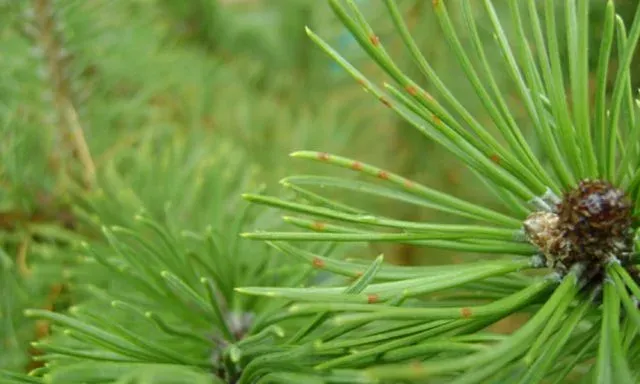
Description
Symptoms
The primary symptom of Meloderma infection is the premature yellowing and browning of current-year needles. Unlike natural needle drop, the infected needles often remain attached to the branches for an extended period.
During spring and summer, tiny black dots or lines appear on the needle surface; these are the fungal apothecia. They emerge through the epidermis, giving the needles a characteristic rough texture.
Severe infestations lead to massive needle shedding, which significantly thins the tree canopy. Defoliation typically starts in the lower part of the tree and gradually spreads upwards.
Infected needles lose their luster, become brittle, and eventually curl as they die. This reduces the aesthetic value of the tree and interferes with its normal photosynthetic processes.
In forest nurseries, the disease may manifest as widespread seedling dieback, causing significant losses of young planting stock if left unmanaged.
Pathogen
The disease is caused by fungi in the genus Meloderma, which are members of the Ascomycota phylum. The most well-known species impacting pines is Meloderma desmazieresii.
The fungus acts as a specialized parasite, infecting needle tissue via stomata or minor injuries. Inside the tissue, the fungal mycelium breaks down cell structures and disrupts the tree's metabolism.
The life cycle includes a spore-producing stage where ascospores are released into the air. These spores can travel long distances, allowing the pathogen to infect healthy stands far from the source.
The pathogen overwinters in fallen needles or on infected needles remaining on the branches. When spring conditions are favorable, the fungus resumes development and begins releasing spores.
Due to its high degree of host specificity, the fungus can cause significant epidemics in homogeneous pine plantations, where conditions for its proliferation are optimal.
Conditions for development
High relative humidity and moderate temperatures during spring are critical factors for disease progression. Prolonged wet weather in May and June facilitates spore germination on the needles.
Trees that are already stressed due to nutrient deficiency or drought are more susceptible. The disease tends to thrive in dense, poorly ventilated stands where moisture persists on needles.
Areas situated in low-lying terrain, where cold air and moisture collect, are particularly prone to outbreaks. These environments maintain the humidity levels necessary for the fungus to flourish.
Overcrowded plantations that lack proper forest management are prime breeding grounds for the fungus. Reduced canopy airflow correlates directly with increased infection rates within the forest stand.
The presence of accumulated forest litter provides an ideal reservoir for the pathogen to survive from one season to the next, sustaining the infection cycle in affected areas.
Why it matters
Meloderma weakens the tree, making it significantly more susceptible to secondary infestations by opportunistic pests, such as bark beetles and wood-boring insects.
The disruption of photosynthesis inhibits annual wood increment, leading to economic losses in timber production and a reduction in the overall biological productivity of the stand.
In nursery environments, the disease can devastate young seedlings, resulting in high mortality rates and the failure of reforestation efforts within those specific zones.
Chronic infection results in the degradation of the forest ecosystem, diminishing its protective and recreational functions while negatively impacting local biodiversity.
For ornamental conifers, the disease can be devastating, as the loss of needles leads to an unsightly canopy that is difficult to restore, often necessitating the removal of the tree.
Protection
The most effective prophylactic measure is maintaining appropriate stand density. Regular thinning improves canopy ventilation, which prevents the prolonged dampness the fungus requires.
Sanitation practices, such as the collection and disposal of infected needle debris, are crucial to reducing the primary inoculum source for the following season.
In nurseries, targeted applications of systemic or contact fungicides during periods of spore dispersal can effectively protect vulnerable young plants from infection.
Promoting mixed-species forest stands enhances overall ecosystem resilience, reducing the probability of large-scale disease outbreaks compared to pure pine monocultures.
Regular monitoring of canopy health is essential. Early detection allows for the pruning and removal of infected branches, which can help contain the pathogen and prevent further spread.
Discussion
No discussions yet — be the first.