
Meliolales
Meliolales
Description
Symptoms
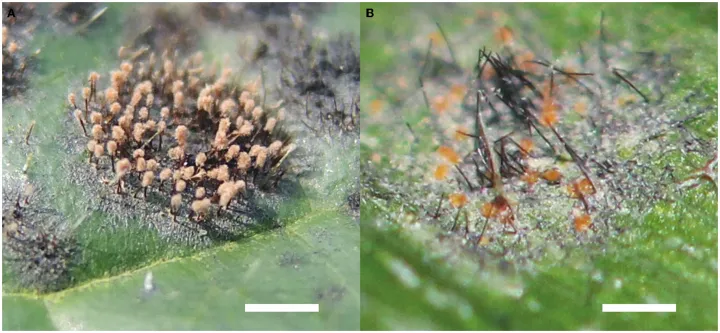
The primary symptom of a Meliolales infection is the appearance of a dark, velvety, or sooty coating on the leaves, stems, and sometimes fruits. This coating consists of a dense network of mycelium.
Unlike some other pathogens, Meliolales fungi are largely superficial. They grow on the leaf surface and anchor themselves using specialized structures called hyphopodia, which allow them to extract nutrients from the host.
Small black dots, known as perithecia, often appear scattered across the dark fungal mats. These fruiting bodies give the affected plant parts a granular appearance under magnification.
Infected leaves may become discolored, pale, or yellow. As the coating thickens, it reduces the surface area available for light absorption, leading to localized leaf chlorosis.
Severe infestations can lead to premature leaf drop and the overall weakening of the plant. The coating is quite persistent and is not easily removed by physical agitation or rain.
Pathogen
The disease is caused by fungi belonging to the order Meliolales, within the class Dothideomycetes. These are obligate biotrophs that rely entirely on the living tissues of their host plants for survival.
These fungi are characterized by dark, pigmented mycelium. The hyphae are typically brown or black, forming a dense network on the epidermis of the plant, which is why they are often grouped with sooty molds.
Sexual reproduction occurs via the formation of perithecia, which are produced directly on the surface of the mycelium. These structures release ascospores that facilitate the spread of the fungus.
The biology of these fungi is often linked to the presence of honeydew-secreting insects. While Meliolales are parasites, they frequently colonize plants that are already stressed by aphid or whitefly populations.
The order contains a vast number of species, each showing high host specificity. They are predominantly found in tropical and subtropical regions but can occur in greenhouse environments worldwide.
Conditions for development
High humidity and moderate temperatures are the most critical factors favoring the development of Meliolales. Poor air circulation in dense plantings exacerbates the problem significantly.
The presence of honeydew-secreting insects like aphids, scales, or mealybugs is a primary driver for outbreaks. The sugary residue acts as a substrate that encourages fungal growth.
Spore dispersal is achieved through air currents and water splashes. In greenhouse conditions, the lack of wind and consistent humidity can allow the fungus to spread rapidly across entire benches of plants.
Overcrowded plants, which prevent leaves from drying quickly after irrigation or rain, provide an ideal microenvironment for the germination of fungal spores.
Frequent fog or heavy morning dew can also promote the spread of these fungi, especially if the canopy of the plant is dense and retains moisture for extended periods.
Why it matters
The most significant damage caused by Meliolales is the restriction of photosynthesis. The opaque black mycelial mats block sunlight, significantly reducing the plant's ability to produce energy.
This reduction in photosynthetic capacity leads to stunted growth, lower crop yields, and increased vulnerability to other stressors, both biotic and abiotic.
For ornamental crops, the visual damage caused by the black sooty coating makes the plants unmarketable. This causes substantial economic losses for nurseries and growers.
By clogging the stomata and covering the leaf surface, the fungus interferes with gas exchange and transpiration, which can cause internal physiological stress to the plant.
While the fungi are generally not necrotrophic, the long-term impact of covering the foliage can weaken the plant's immune system, making it more prone to secondary infections.
Protection
The most effective strategy for managing Meliolales is the control of honeydew-producing insects. Implementing an integrated pest management program to manage aphids and scales is essential.
Cultural practices are vital for control. Pruning and thinning out dense foliage improves airflow, which helps leaves dry more quickly and disrupts the fungal lifecycle.
Sanitation is key; removing heavily infected leaves and debris helps reduce the amount of inoculum available for further spread during the growing season.
Fungicides containing copper or sulfur may provide some protection, but they should only be used as a supplementary measure alongside pest management and good horticultural practices.
- Regular monitoring for signs of insect activity.
- Using drip irrigation to avoid wetting the foliage.
- Proper plant spacing to maintain healthy air circulation.
Discussion
No discussions yet — be the first.