
Meliola hyptidis
Meliola hyptidis
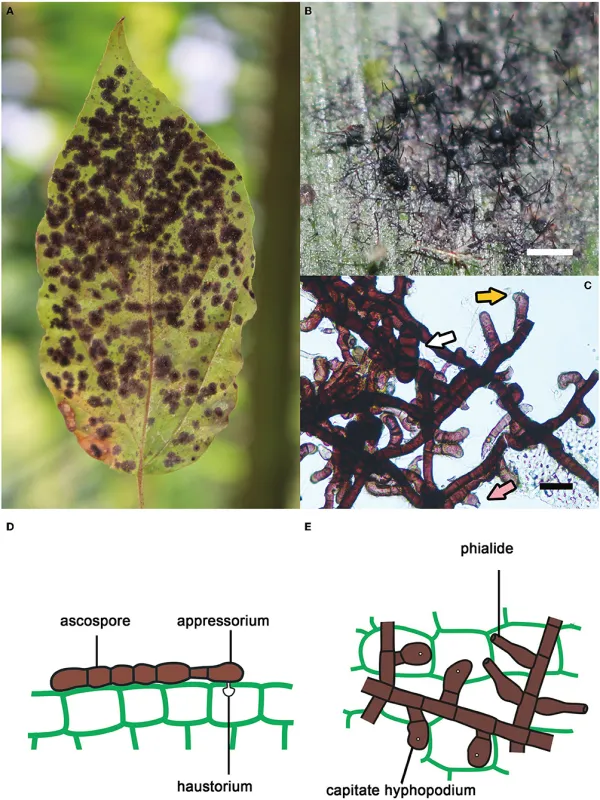
Description
Symptoms
The primary symptom of infection is the appearance of a black, velvety coating on leaves, stems, and petioles. This dark layer resembles soot, which is why it is often referred to as black mildew.
Unlike common saprophytic sooty molds, the mycelium of Meliola hyptidis is firmly attached to the plant surface. It can grow in dense patches that gradually coalesce to cover entire leaves.
In areas where the fungus attaches, the host plant may exhibit chlorotic spots or localized necrosis. This is due to the fungus drawing nutrients directly from the epidermal cells of the leaf.
As the infection progresses, affected leaves may become yellow, start to wither prematurely, and eventually drop off, leading to a significant loss of photosynthetic surface area.
A definitive diagnostic feature is the presence of perithecia—tiny, black, round fruiting bodies of the fungus that appear as small specks scattered across the dark fungal mats.
Pathogen
The causal agent of this disease is the microscopic fungus Meliola hyptidis, which belongs to the order Meliolales. This fungus is an obligate epiphyte that develops primarily on the surface of plant leaves and stems.
The pathogen is known as a type of "black mildew" or "sooty mold" fungus. It forms a dark, dense mycelial mat that colonizes the outer surface of the host plant without penetrating deep into the internal tissues.
The biology of Meliola hyptidis involves specialized attachment structures called appressoria. These structures allow the fungus to grip the plant cuticle firmly, making it resistant to being washed away by rain or wind.
The fungus reproduces through both sexual and asexual stages. Its spores are efficiently dispersed by wind, water splashes, and physical contact with insects, ensuring rapid spread within a population.
It is host-specific, frequently targeting plant species within the Lamiaceae family, particularly those belonging to the genus Hyptis found in various tropical regions.
Conditions for development
Meliola hyptidis development is highly dependent on high humidity levels. Environments with sustained humidity above 75% are ideal for spore germination and rapid mycelial growth.
The fungus thrives in warm temperatures typical of tropical and subtropical climates, where conditions allow for constant metabolic activity of the pathogen.
Dense plant spacing and lack of air circulation are major contributing factors. Poor airflow traps moisture, creating a persistent humid microclimate that favors fungal colonization.
Frequent rainfall and heavy dew provide the essential water film required for fungal spores to settle and initiate infection on the surface of the plant foliage.
Debris from previously infected plants acts as a reservoir for the pathogen, facilitating the transmission of spores to new, susceptible plant growth at the start of the season.
Why it matters
The most significant impact of the fungus is the mechanical blockage of sunlight, which severely inhibits the plant's ability to perform photosynthesis.
The infected plant experiences reduced growth rates and diminished metabolic efficiency, as the fungus actively siphons nutrients from the plant's superficial cells.
This weakening effect makes the host more susceptible to secondary stressors, such as drought, nutrient deficiency, or other opportunistic pests and diseases.
Premature leaf senescence and abscission reduce the overall biomass of the plant, which is particularly detrimental to crops grown for their foliage or overall vigor.
While the disease is rarely lethal on its own, the long-term presence of the fungus significantly lowers the marketability and quality of ornamental and medicinal plants.
Protection
Effective management begins with good horticultural practices, such as proper spacing to ensure adequate air circulation and reduce the humidity around the foliage.
Sanitation is critical; all infected plant material should be carefully removed and destroyed to prevent the spread of fungal spores to healthy plants.
In cases of severe infestation, the application of appropriate fungicides, specifically those targeting surface fungal pathogens, can effectively suppress the growth of the mold.
Preventive measures include monitoring for insect pests, as their feeding damage can weaken the plant's cuticle and make it easier for the fungus to establish itself.
Keeping the plants healthy through proper fertilization and watering helps improve their natural resistance to epiphytic fungal colonizers like Meliola hyptidis.
Discussion
No discussions yet — be the first.