
Meliola guatteriae
Meliola guatteriae
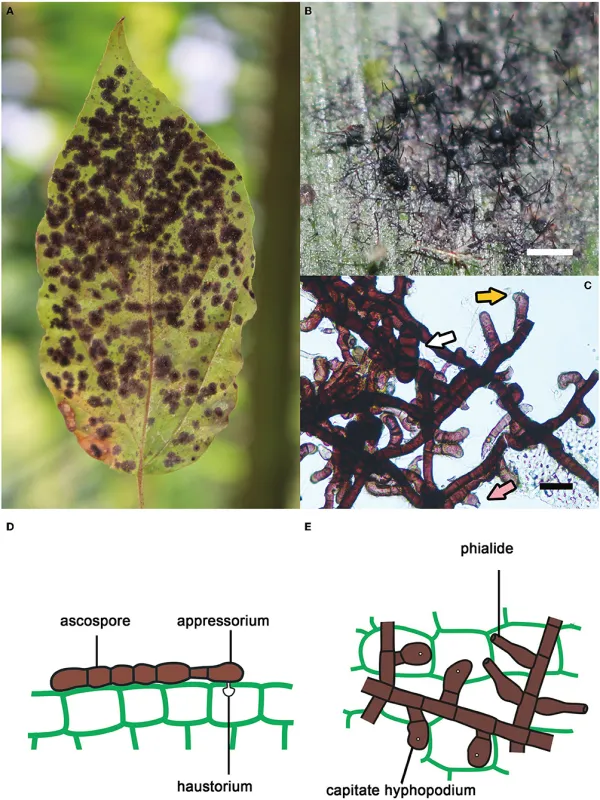
Description
Symptoms
The primary symptom of infection is the development of a dark, velvety, or sooty coating on the upper surface of the leaves. Initially, the colonization appears as small, irregular patches that gradually expand and coalesce.
The fungus forms a dense, black mat that is visibly distinct from the green leaf tissue. This growth is quite persistent and cannot be easily wiped off, as it is firmly attached to the leaf cuticle by its mycelial network.
As the infection progresses, the black layer thickens, effectively shading the leaf surface and obstructing the light required for photosynthesis. This leads to a marked decrease in the metabolic activity of the leaf.
In cases of severe infestation, the leaves may show signs of chlorosis, followed by premature yellowing and dropping. This premature senescence is a direct response to the reduced photosynthetic efficiency and metabolic stress caused by the mold.
Microscopic examination reveals a characteristic net-like pattern of dark hyphae on the leaf surface, which is a diagnostic feature used by plant pathologists to identify the presence of Meliola species.
Pathogen
Meliola guatteriae is an ascomycetous fungus belonging to the Meliolales order. It is a specialized epiphytic fungus, often categorized as a type of sooty mold that colonizes the surface of plant leaves without directly invading the deep tissues.
The fungus develops an extensive network of dark, black hyphae on the leaf surface. These hyphae are equipped with specialized structures known as appressoria, which allow the fungus to securely anchor itself to the host plant's cuticle.
The biological cycle involves the production of perithecia, which are fruiting bodies containing spores. These spores are released and dispersed by air currents, facilitating the spread of the infection to healthy parts of the same plant or neighboring plants.
Meliola guatteriae is highly host-specific, primarily affecting plants within the Annonaceae family. It thrives in tropical and subtropical regions, where it can maintain a persistent presence on host foliage throughout the year.
Although it does not typically act as an aggressive necrotrophic pathogen that kills tissue directly, it is considered a significant nuisance that negatively impacts the physiological health and aesthetic quality of the host.
Conditions for development
The development of Meliola guatteriae is highly dependent on environmental conditions, specifically high humidity and consistent warmth. It is most prevalent in humid climates where moisture remains on leaf surfaces for extended periods.
Tropical environments, characterized by high dew point and frequent precipitation, provide the ideal moisture levels required for spore germination and the proliferation of the fungal mycelium.
Poor ventilation within the canopy of trees and shrubs is a major contributing factor. Dense foliage reduces airflow, creating stagnant, humid microclimates that promote rapid fungal growth and spread.
While the fungus can derive nutrients from plant exudates, the presence of honeydew secreted by sap-sucking insects like aphids, scales, or whiteflies acts as a major catalyst, accelerating the colonization process significantly.
High plant density and lack of pruning further exacerbate the problem by creating a favorable environment for the pathogen to thrive, preventing the foliage from drying out after rainfall or morning dew.
Why it matters
The primary harm caused by Meliola guatteriae is the reduction of photosynthetic capacity. By masking the leaf surface with a thick black mat, the fungus prevents sunlight from reaching the chlorophyll, causing the plant to lose energy.
This loss of energy results in stunted growth and reduced yields. For Annonaceae crops (such as soursop or cherimoya), the economic impact is significant as it affects fruit quality, size, and overall plant vigor.
The presence of the mold makes the plant more susceptible to other secondary infections and physiological stresses. The overall health of the plant is compromised, reducing its ability to recover from other environmental challenges.
For ornamental plants, the visual impact is detrimental. The black, sticky-looking layer ruins the aesthetic value of the foliage, making the plants unsightly and potentially unsellable in commercial nursery settings.
Chronic infestations over several seasons can lead to significant defoliation, which drains the plant's nutrient reserves, potentially leading to long-term decline or even the death of the plant under extreme conditions.
Protection
Effective management begins with the control of sap-sucking insects. By eliminating pests like aphids and scale insects, the source of honeydew is removed, making the plant less attractive for the growth of sooty molds.
Proper pruning and thinning of the canopy are essential for increasing airflow and light penetration. This simple agricultural practice helps the leaves dry out faster, which is detrimental to the survival of the fungus.
Preventative applications of fungicides, especially those containing copper, can be effective in protecting the foliage from initial spore colonization. Timing these applications is crucial for success.
Good sanitation practices, such as the prompt removal and destruction of fallen or heavily infected leaves, help reduce the inoculum pressure in the garden, preventing the fungus from building up in the environment.
Monitoring is key; identifying the early stages of the disease allows for timely intervention before the fungus forms a dense, mature mycelial mat that becomes resistant to most surface treatments.
Discussion
No discussions yet — be the first.