
Meliola clerodendricola
Meliola clerodendricola
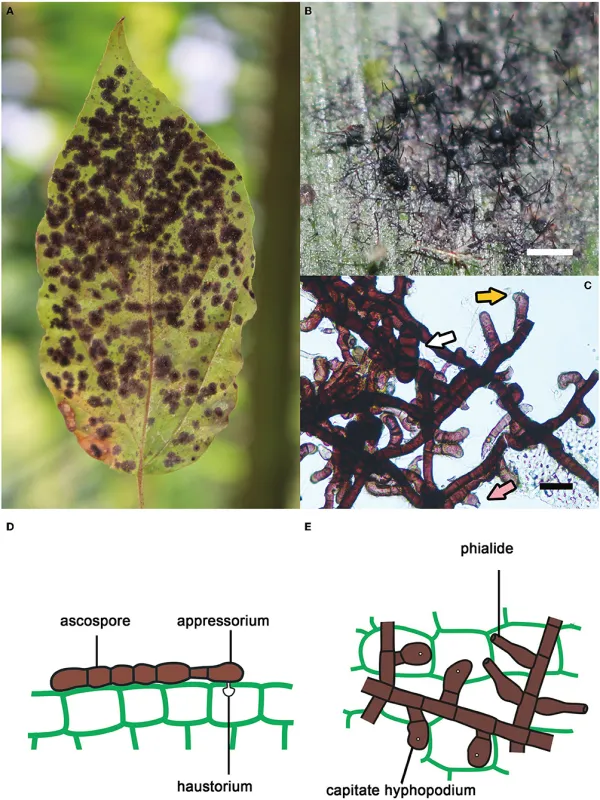
Description
Symptoms
The most visible sign of infection is the presence of black, velvet-like patches on the surface of leaves. These patches are formed by the extensive growth of the dark fungal mycelium.
In advanced stages of the disease, the patches may coalesce, covering a significant portion of the leaf surface, which can cause the leaf to lose its natural green color and luster.
Small black fruiting bodies, known as perithecia, may be visible under magnification within the fungal mats, appearing as tiny dots scattered across the infected area.
Infected leaves may exhibit signs of chlorosis or premature yellowing, as the layer of fungus physically blocks sunlight from reaching the chlorophyll-containing cells.
While the fungus is primarily superficial, heavy infestations can lead to leaf curling or stunted development of young shoots and buds.
Pathogen
Meliola clerodendricola is a microscopic ascomycete fungus belonging to the order Meliolales. It is a specialized parasite that colonizes the surface of host plants, often forming dense, dark mycelial networks.
The fungus attaches itself to the leaf surface using specialized structures known as hyphopodia, which allow it to absorb nutrients from the plant's surface without necessarily penetrating deep into the tissues.
This pathogen is host-specific, primarily affecting plants in the Lamiaceae family, particularly the genus Clerodendrum. It thrives in tropical and subtropical environments where host plants are common.
The life cycle of the fungus involves the production of ascospores, which are spread by wind or water splashes, facilitating the infection of new leaves and nearby susceptible plants.
Unlike some other pathogens, Meliola species are known for their distinctive dark appearance, which gives them the common classification as a type of "black mildew" or "sooty mold" fungus.
Conditions for development
High humidity and poor air circulation are the primary drivers of Meliola clerodendricola growth. The pathogen flourishes in stagnant, humid environments often found in dense canopies or greenhouses.
The fungus is frequently associated with the presence of insect pests such as whiteflies, aphids, or scale insects, which produce honeydew—a sweet secretion that serves as an excellent substrate for the fungus.
Temperatures ranging from 22°C to 28°C are optimal for the spore germination and colonization of the host plant, mirroring the typical growth climate of its host.
Overcrowding of plants or a lack of proper spacing reduces airflow, which keeps the leaf surfaces damp for extended periods, providing ideal conditions for the fungus to spread.
A lack of sunlight and excessive shading can also exacerbate the infection, as these conditions prevent the leaves from drying out effectively after rainfall or irrigation.
Why it matters
The primary damage caused by Meliola clerodendricola is the inhibition of photosynthesis. The dense fungal mat acts as a physical barrier that prevents light absorption.
By covering the leaf stomata, the fungus interferes with gas exchange, which can lead to metabolic stress and reduced overall plant vigor, making the plant more susceptible to other diseases.
For ornamental plants like Clerodendrum, the aesthetic damage is significant, rendering the plants unsuitable for commercial use or home decoration due to the unsightly black crust.
If left unmanaged, the cumulative effect of reduced photosynthesis and stress can result in premature defoliation and a decline in the plant's health.
Repeated stress from fungal colonization may also make the host plant a target for secondary opportunistic pathogens that further damage the vascular system of the plant.
Protection
The most effective strategy is to control the underlying pest population. Managing whiteflies and scale insects significantly reduces the amount of honeydew available for the fungus.
Improving cultural practices, such as pruning for better air circulation and spacing out plants, helps reduce the humidity levels around the foliage, making it less hospitable for the fungus.
Mechanical removal, such as wiping the leaves with a mild soapy solution, can help remove the surface mycelium and alleviate the stress on the plant.
Preventative application of fungicides can be effective, particularly in environments where humidity is difficult to control. Copper-based or sulfur-based treatments are often recommended.
- Avoid overhead watering to keep leaf surfaces dry.
- Regularly inspect the foliage for early signs of fungal growth.
- Quarantine infected plants immediately to prevent the spread of spores.
- Dispose of heavily infested plant materials away from the cultivation area.
Discussion
No discussions yet — be the first.