
Melastiza chateri
Melastiza chateri
Description
Symptoms
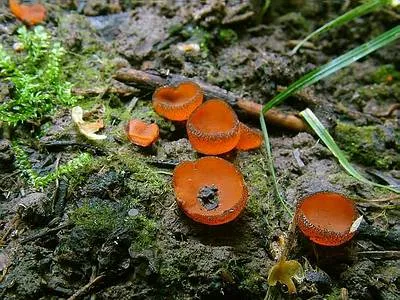
The most distinct sign of Melastiza chateri is the appearance of small, orange, cup-shaped fruiting bodies (apothecia) on the ground surface.
These fruiting bodies often grow in clusters in damp, shaded environments, such as beneath heavy mulch or in greenhouse pots with high organic content.
There are no symptoms like leaf spots, stem rot, or chlorosis associated with this fungus, as it does not rely on living plant hosts.
Observations are strictly limited to the visible reproductive structures, which are transient and disappear when soil moisture drops.
The absence of systemic disease patterns in the surrounding plants is the primary indicator that the fungus is merely saprotrophic.
Pathogen
Melastiza chateri is a species of cup fungus belonging to the family Pyronemataceae. It is fundamentally a soil-dwelling saprotroph, meaning it feeds on decaying organic matter rather than living tissue.
Unlike parasitic plant diseases, this fungus plays a role in the natural decomposition cycle, breaking down complex organic materials in the soil profile.
The fungus is characterized by its bright orange or reddish-orange apothecia, which appear on the surface of the soil during periods of favorable moisture.
Its mycelium is typically confined to the organic-rich layers of the topsoil, where it interacts with various soil microorganisms without harming plant roots.
Being a non-pathogenic organism, it does not possess the enzymes required to penetrate or destroy healthy plant tissues, making it harmless to crops.
Conditions for development
This fungus thrives in conditions characterized by high humidity and moderate temperatures, typically between 12°C and 20°C.
It prefers shaded areas where soil moisture remains constant and where organic debris, such as wood chips or leaf litter, is readily available for decomposition.
Compacted or poorly drained soils can exacerbate the presence of this fungus because they maintain the moisture levels necessary for apothecia development.
It is frequently observed in spring or autumn when precipitation is sufficient to keep the surface of the soil consistently moist for extended periods.
Conversely, direct sunlight and arid conditions effectively inhibit the growth of its fruiting bodies, leading to dormancy.
Why it matters
Melastiza chateri is not considered a threat to agricultural productivity as it does not target living plant tissues or compete with crops for nutrients.
Its presence is primarily an ecological indicator of high soil organic content and persistent moisture, rather than a sign of plant stress or disease.
There are no documented instances of economic loss or crop failure attributed to this species in commercial or domestic farming operations.
The fungus is safe for most plant species and does not produce toxins that could interfere with root development or microbial balance.
Therefore, it requires no eradication measures and can be viewed as a neutral member of the soil community.
Protection
No formal control strategies, such as the use of fungicides, are necessary for this species given its lack of pathogenicity towards crops.
To reduce the aesthetic presence of the fungus, improve soil drainage and ensure adequate ventilation in the area to prevent surface moisture accumulation.
Mechanical removal of the fruiting bodies is the easiest way to limit their visibility, although this does not remove the underlying mycelium.
Reducing the amount of fresh organic mulch on the soil surface can limit the available resources for the fungus, making the area less attractive for colonization.
Maintaining a healthy, well-aerated soil structure is the most effective long-term management practice for this and other soil-dwelling saprotrophs.
Discussion
No discussions yet — be the first.