
Melaspilea granitophila
Melaspilea granitophila
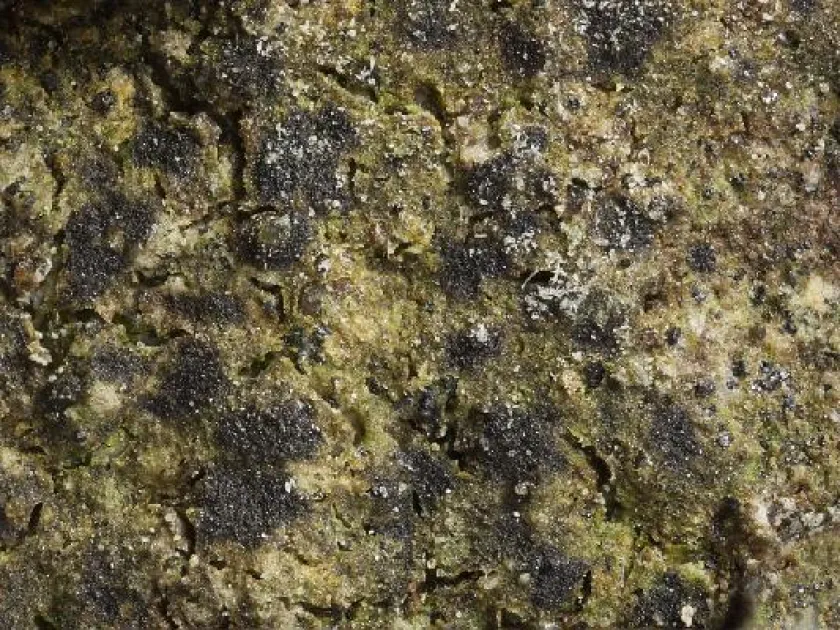
Description
Pathogen
Melaspilea granitophila is a lichenicolous fungus, which means it grows on the thalli of lichens rather than on vascular plants. It belongs to the Ascomycota division and is widely recognized by mycologists as a specialist parasite or commensal in extreme environments.
The fungus is characterized by its ability to penetrate the lichen structure. It does not act as a plant disease for agricultural crops, trees, or flowers, focusing its biological activity strictly on lichen colonies found on rocks and granite surfaces.
The life cycle involves the formation of apothecia, which appear as small black spots on the lichen surface. These structures house the spores that ensure the fungus continues to survive within its specific ecological niche.
Biologically, it is a highly specialized organism. Its interaction with the host is complex, often described as a long-term parasitic relationship that slowly affects the vitality of the lichen rather than causing rapid destruction.
The fungus is taxonomically distinct and occupies a unique niche in mycological studies. It remains an object of interest for ecologists studying biodiversity in rocky landscapes and lichenized ecosystems.
Conditions for development
The growth and spread of Melaspilea granitophila are strictly dependent on the presence of its host lichen. As such, the environmental conditions required are those that favor stable lichen populations: high humidity and moderate temperatures.
Substrate stability is a key factor. Because it primarily colonizes granitic rocks, the microclimate created by the stone's surface texture helps the fungus to survive periods of environmental stress.
Spore dispersal is facilitated by wind and water droplets. The colonization of new hosts occurs primarily in environments where lichens are already established and abundant, ensuring the fungus has a reliable nutrient source.
Air quality is a limiting factor for the distribution of this fungus. Because the lichen host is a bioindicator of clean air, the fungus is rarely found in highly polluted, industrialized areas where lichen biodiversity is low.
Seasonal patterns strongly influence the fungus's reproductive phase. Most apothecia develop during seasons with frequent precipitation, allowing the fungus to maximize its reproductive cycle when the host is metabolically active.
Discussion
No discussions yet — be the first.