
Melaspilea
Melaspilea
Description
Symptoms
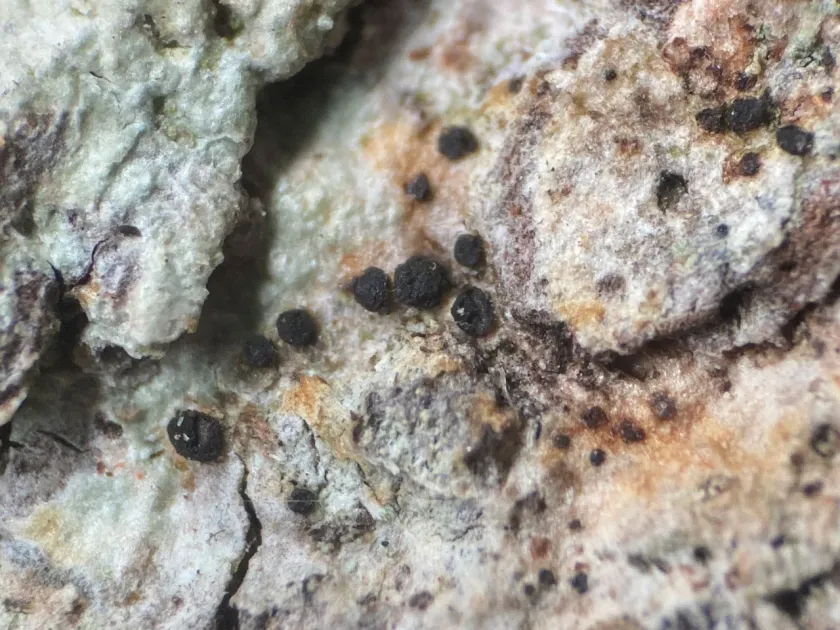
The primary symptom of infection is the presence of small, black, disc-shaped or linear structures known as apothecia, which grow in clusters on the tree bark.
During the early stages of colonization, it is visually difficult to distinguish the development of Melaspilea from natural bark aging or other saprophytic fungi.
Upon closer inspection, one can observe slight cracking of the outer bark epidermis at the points where the fungal mycelium attaches.
Unlike necrotic diseases, an infection by Melaspilea does not typically lead to deep tissue decay or sudden leaf discoloration if the tree is in good vegetative health.
- Small black streaks on the bark.
- Superficial bark flaking.
- Localized darkening of the trunk area.
Pathogen
Melaspilea is a genus of fungi often classified as lichenized or lichenicolous organisms. In agronomy and forestry, these fungi are rarely considered primary pathogens of agricultural crops.
The pathogen belongs to the class Ascomycetes. Its primary form of existence is the apothecia, which typically develop on the surface of tree bark or on lichen thalli, feeding on them as their primary substrate.
The biology of this genus is closely linked to symbiotic processes. The fungus uses specific nutrients derived from bark tissues or other fungal organisms, which determines its specialized niche.
Unlike dangerous phytopathogens, Melaspilea is characterized by a slow development cycle. Spore dispersal occurs through specialized asci that spread via wind or rain droplets.
This fungus is often mistaken for a serious disease, but it usually acts as an indicator of bark health rather than the primary cause of tree decline.
Conditions for development
The development of Melaspilea fungi requires high humidity conditions, making them most active during periods of prolonged rain and heavy fog.
Dense planting and poor canopy ventilation create a favorable microclimate for spores to settle and germinate on the substrate.
The fungus prefers shaded areas of trunks where moisture remains for long periods, unable to evaporate under direct sunlight.
Stressed or weakened trees with micro-cracks in the bark become the primary targets for the settlement and growth of this fungal organism.
Seasonal activity generally occurs during spring and autumn, when temperatures remain in the range of +10 to +18 degrees Celsius.
Why it matters
Melaspilea generally does not cause significant economic damage in commercial orchards. Its harmful impact is usually indirect.
Surface bark colonization can contribute to premature bark aging, potentially creating conditions that attract secondary pests.
In cases of mass development, the fungus may slightly impede gas exchange in the bark tissues, which may weaken the tree's overall state during unfavorable years.
The main issue lies in the potential for misidentification, as this harmless fungus is often confused with serious canker diseases, leading to unnecessary fungicide applications.
In ornamental horticulture, the presence of dark fungal growths reduces the aesthetic value of trees and requires sanitary maintenance.
Protection
Specific management measures against Melaspilea are rarely required, as general agrotechnical practices aimed at tree health are sufficient.
Prevention includes annual trunk cleaning to remove dead bark, lichens, and mosses, which effectively removes the substrate required for fungal activity.
Regular pruning is an essential practice that improves crown ventilation and reduces local humidity levels, preventing fungal spread.
If large colonies are detected, prophylactic trunk whitewashing with a lime solution containing copper sulfate is recommended.
Providing optimal nutrition and irrigation strengthens the tree's natural immunity, making it resilient to colonization by surface-dwelling fungi.
Discussion
No discussions yet — be the first.