
Melanomma sanguinarium
Melanomma sanguinarium
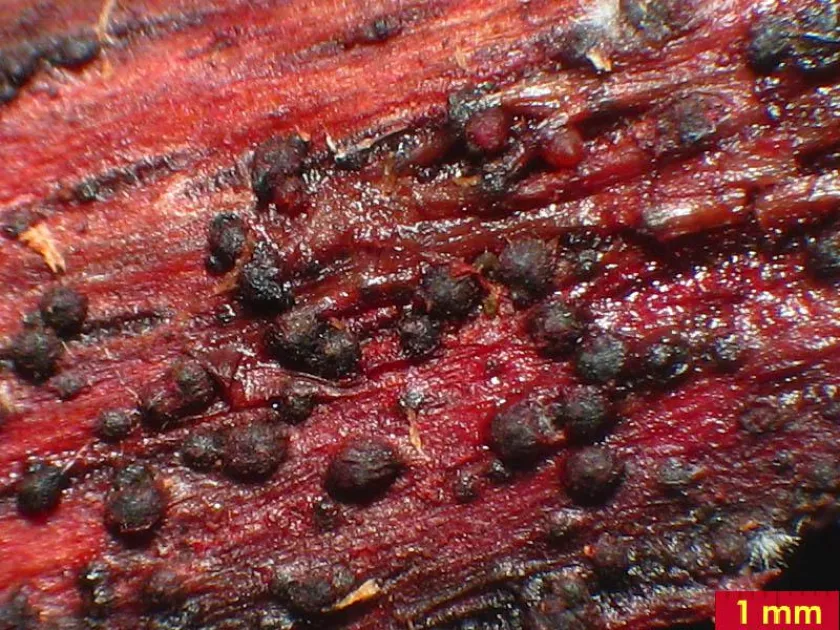
Description
Pathogen
The disease is caused by the ascomycete fungus Melanomma sanguinarium, which belongs to the family Melanommataceae. This organism typically acts as a saprotroph but can exhibit weak parasitic tendencies under favorable conditions.
It produces small, globose to conical ascomata (pseudothecia) that are often semi-immersed in the bark or wood of host plants, appearing as small black bumps or dots on the surface.
The fungus disperses through the production of ascospores, which are ejected from the asci and spread by wind, rain splashes, or insects visiting the plant's surface.
Its mycelium penetrates the outer layers of the plant, potentially compromising the bark structure and allowing for further invasion by secondary pathogens if left untreated.
This species is commonly identified by its microscopic features, specifically the structure of the ascospores and the arrangement of its perithecia on the decaying substrate.
Conditions for development
The development of Melanomma sanguinarium is heavily dependent on moisture levels, with high humidity and rainfall being the primary triggers for spore germination and colonization.
Physical wounds on the bark, such as frost cracks, pruning wounds, or damage caused by borers, provide essential entry points for the fungus to establish itself.
Moderate temperatures ranging between 15°C and 22°C provide the ideal environment for both mycelial growth and the subsequent reproductive stage of the fungus.
Poorly ventilated forest stands or orchard environments with high canopy density often trap humidity, creating a microclimate where the fungus can thrive and spread effectively.
Trees subjected to environmental stress, including drought, poor soil nutrition, or pollution, show reduced ability to defend themselves against such opportunistic infections.
Protection
Effective management begins with stringent sanitation practices, primarily the removal and destruction of dead or dying branches that serve as reservoirs for the fungus.
Applying protective wound sealants or fungicides to pruning cuts can significantly reduce the risk of infection by preventing spores from accessing the internal wood tissue.
Maintaining tree vigor through appropriate fertilization and consistent watering regimes helps the plant maintain its natural structural and chemical defenses.
Regular inspections of the trunks and main branches are recommended to identify early signs of colonization before the infection becomes severe or systemic.
- Routine removal of dead wood and debris.
- Use of copper-based fungicides for bark protection.
- Sterilization of pruning tools to prevent cross-contamination.
Discussion
No discussions yet — be the first.