
Melanoleuca strictipes
Melanoleuca strictipes
Description
Symptoms
The primary visual sign of Melanoleuca strictipes is the emergence of its fruiting bodies, typically occurring during periods of high humidity and moderate temperatures.
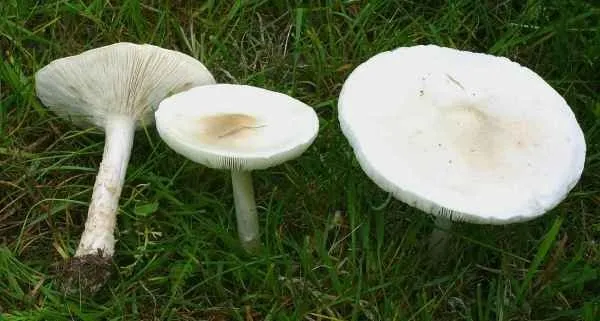
The cap of the mushroom is generally convex to flattened, reaching a diameter of 4 to 10 cm, with a creamy white or light greyish color. It often features a smooth, dry surface.
The gills underneath the cap are densely arranged and white, showing a distinct attachment to the stem. These characteristics are essential for distinguishing it from other similar fungal species.
The stem is notably straight and firm, often cylindrical, which is the origin of its specific epithet. It is usually fibrous and lacks any ring or veil structures.
Spore deposits are white, which provides a clear diagnostic indicator. If you observe these mushrooms in your field, they are likely just processing soil organic matter.
Pathogen
Melanoleuca strictipes is a mushroom species belonging to the family Tricholomataceae. It is important to clarify that this organism is not a plant pathogen and does not cause diseases in crops.
This fungus functions strictly as a saprotroph, meaning it derives its nutrition from decaying organic matter such as leaves, straw, and soil humus. It does not attack living plant tissues.
In the soil ecosystem, Melanoleuca strictipes plays a vital role in organic matter decomposition, breaking down complex polymers into simpler nutrients that plants can eventually utilize.
The fungus develops its mycelium in the surface layers of the soil, forming dense networks that contribute to soil aeration and the natural humus-forming process.
Since it lacks parasitic capabilities, farmers do not need to implement control measures. Its presence is generally considered an indicator of a healthy, organic-rich soil environment.
Conditions for development
The growth of Melanoleuca strictipes is highly dependent on moisture levels in the soil and the presence of abundant organic substrates like mulch or decayed plant debris.
It thrives in temperate climates, with optimal development occurring in late spring or autumn. It is frequently found in grassy areas, meadows, and forest clearings.
Temperature range is critical for its metabolic activity, with the best growth observed between 12°C and 20°C. Prolonged heat or drought periods typically cause the mycelium to go dormant.
Spores serve as the primary method of propagation, spread by wind over vast areas. Once they land in a nutrient-rich environment, they begin to colonize the substrate.
Soil management practices, such as incorporating organic compost, can promote the development of these fungi as they expand their habitat within the top layer of the ground.
Why it matters
Melanoleuca strictipes poses no harm to agricultural crops. It does not compete for resources, nor does it excrete toxins that could inhibit the growth of nearby vegetation.
The fungus is strictly non-pathogenic, meaning there is zero risk of root rot, wilting, or leaf damage associated with this organism. It is not classified as a pest or a disease agent.
Mistakenly identifying these mushrooms as pathogens can lead to the unnecessary use of fungicides, which can degrade soil health and kill beneficial mycorrhizal fungi.
There is no economic loss associated with the presence of this species. In many cases, it is actually a sign of successful soil enrichment and organic matter management.
Agriculture remains unaffected by the growth cycle of this fungus, and crop yields remain stable regardless of the population density of these mushrooms in the soil.
Protection
No protection or control measures are required. Since Melanoleuca strictipes does not damage crops, there is no justification for chemical intervention.
If the appearance of mushrooms is aesthetically undesirable in garden beds, manual removal of the fruiting bodies is sufficient to prevent spore dispersal for the season.
Fungicide application should be strictly avoided, as it is ineffective against this saprotroph and may disrupt the essential microbial diversity of the soil.
Practicing good field hygiene, such as avoiding thick layers of un-composted debris near crop roots, can naturally limit the proliferation of these fungi if necessary.
The best approach is to welcome these mushrooms as part of the natural soil biota, recognizing their contribution to the long-term fertility and biological activity of the agricultural site.
Discussion
No discussions yet — be the first.