
Melanoleuca brevipes
Melanoleuca brevipes
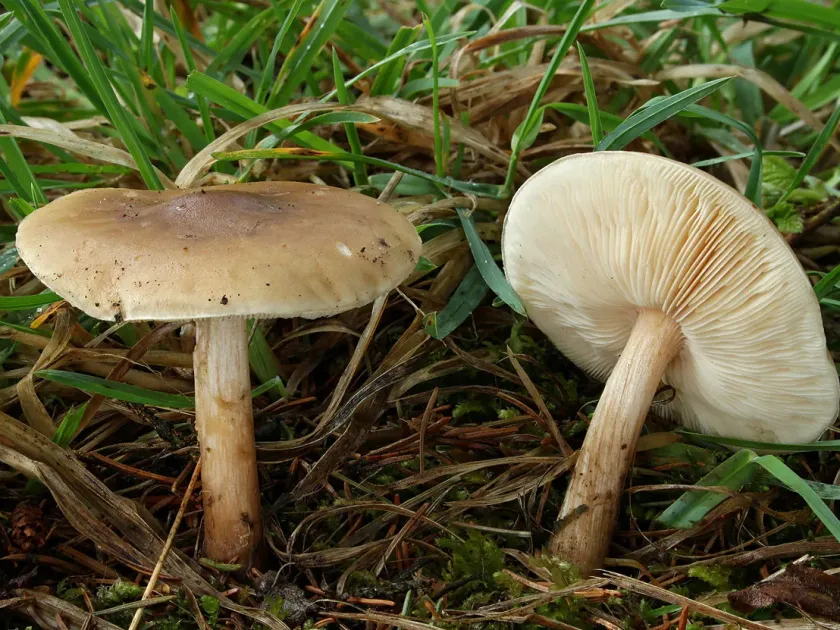
Description
Pathogen
Melanoleuca brevipes is a species of gilled mushroom in the Tricholomataceae family. In the field of agronomy and plant pathology, it is essential to clarify that this organism is not a plant pathogen; it does not infect or cause diseases in living plant tissues.
Biologically, this fungus acts as a saprotroph, meaning its nutrition cycle relies on the decomposition of dead organic matter. It primarily colonizes soil rich in leaf litter, debris, and humus, playing a key role as a decomposer in forest and garden ecosystems.
The mycelium of Melanoleuca brevipes permeates the upper organic layer of the soil. It secretes enzymes that break down complex organic polymers into simpler substances, effectively cycling nutrients back into the soil matrix for other microorganisms.
The mushroom’s life cycle is confined to the soil and forest floor environment. It has no mechanisms to penetrate plant roots or stems, distinguishing it clearly from parasitic fungi that cause root rot or vascular wilts.
The presence of Melanoleuca brevipes in agricultural or horticultural settings is a sign of high soil organic content rather than a symptom of a pathological condition. It is a beneficial part of the soil community.
Conditions for development
The development of Melanoleuca brevipes is strictly governed by moisture availability and the presence of organic substrates. It thrives in high-humidity environments, particularly during the transition seasons of spring and autumn.
Temperatures ranging from 10°C to 18°C are optimal for the growth of mycelium and the subsequent development of fruiting bodies. Excessive heat or drought will typically arrest its growth, leading to dormancy.
The fungus is commonly found in environments with high levels of accumulated leaf litter, woody debris, or decaying plant material. It is well-adapted to the micro-climates created under tree canopies or in shaded garden beds.
Soil structure, specifically its ability to retain moisture without becoming waterlogged, is a major factor. The fungus favors neutral to slightly acidic soil conditions, which are typical for garden soils enriched with organic matter.
Airborne spores are the primary method of dispersal. Once they land on a suitable, moisture-rich organic substrate, they germinate to establish new mycelial networks, thus spreading the organism within the local landscape.
Why it matters
Melanoleuca brevipes poses no harm to agricultural crops, ornamentals, or forests. As it does not infect living plants, it does not reduce crop yields, damage plant vitality, or impair the physiological functions of vegetation.
There is no economic or agronomic damage associated with this species. It does not compete with crops for mineral nutrients, as its primary food source consists of complex organic matter that crops themselves are unable to process directly.
The appearance of fruiting bodies in a field or garden should not be misinterpreted as a disease outbreak. It is a natural biological process occurring in the soil profile, often benefiting the soil structure by decomposing organic matter.
Plants growing in the immediate vicinity of this fungus remain unaffected. Studies of its ecology demonstrate that it does not interact negatively with root systems, nor does it inhibit the growth of surrounding crops.
No agricultural countermeasures are necessary or recommended for this species. Managing it as a pest or disease would be both ineffective and unnecessary, as it provides ecological services rather than acting as a pathogen.
Protection
Since Melanoleuca brevipes is not a plant pathogen, no specific plant protection measures or chemical fungicide applications are required or advised. Such interventions would likely disrupt the beneficial soil microbiome.
If the appearance of mushrooms is aesthetically undesirable in managed landscapes, manual removal of the fruiting bodies is sufficient. This action does not kill the mycelium but limits the localized density of the fungus.
For long-term management, maintaining proper soil aeration and drainage is the most effective approach. Proper agricultural practices that prevent water stagnation in the soil profile naturally regulate the moisture-dependent growth of this species.
Regular cultivation and maintenance of soil pH levels are sufficient to keep fungal growth within natural balance. Promoting a diverse soil microbial population encourages healthy competition, which keeps the saprotrophic activity stable.
In summary, Melanoleuca brevipes should be recognized as an indicator of good soil organic quality. No prophylactic or curative measures against this fungus are part of any standard agricultural IPM (Integrated Pest Management) protocol.
Discussion
No discussions yet — be the first.