
Melanoleuca
Melanoleuca
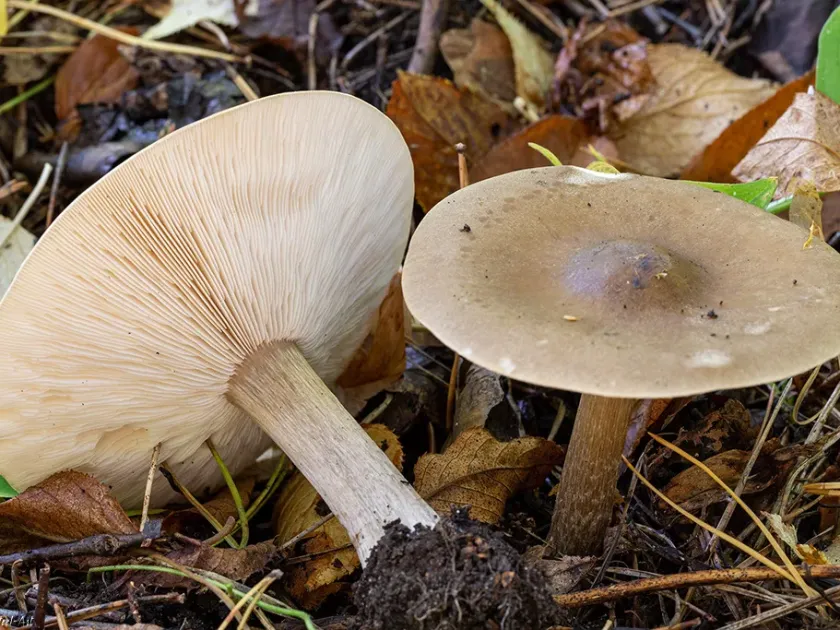
Description
Pathogen
The genus Melanoleuca is not a plant disease. It belongs to the Tricholomataceae family and consists of saprotrophic fungi that inhabit soil and leaf litter.
These organisms are strictly decomposers, meaning they break down dead organic matter rather than attacking living plant tissues.
They do not produce pathogenic enzymes, so they are entirely incapable of causing diseases in crops, vegetables, or ornamental plants.
The fungal mycelium spreads through the soil, concentrating its activity where there is an abundance of decaying organic material.
In the field of agronomy, identifying these mushrooms is important to distinguish them from soil-borne pathogens that might actually harm crop roots.
Conditions for development
Melanoleuca species thrive in environments with high moisture levels and a rich supply of decaying plant material, such as lawns, meadows, and forest edges.
The development of fruiting bodies typically occurs during cool, humid weather, making them common sightings in spring and autumn.
Soil structure, specifically well-aerated soil with sufficient organic content, provides an ideal habitat for the underground mycelial networks of these fungi.
Spore dispersal is managed by wind currents, which facilitates the colonization of new organic-rich soil areas after seasonal rainfall.
Temperature fluctuations are a key trigger for the emergence of mushrooms, with the genus preferring moderate temperatures rather than extreme heat or frost.
Why it matters
Melanoleuca species cause no damage to agricultural crops. They are beneficial components of the soil ecosystem as they contribute to the nutrient cycle.
By decomposing complex plant residues, these fungi help convert organic carbon into forms that support soil fertility for higher plants.
While their fruiting bodies may appear on turf or in fields, they do not compete with crops for nutrients or interfere with plant growth mechanisms.
There is no economic harm associated with their presence; consequently, no control methods or fungicide applications are necessary.
Their appearance is an indicator of a biologically active soil, which is often considered a sign of healthy soil management practices.
Discussion
No discussions yet — be the first.