
Melanohalea
Melanohalea
Description
Symptoms
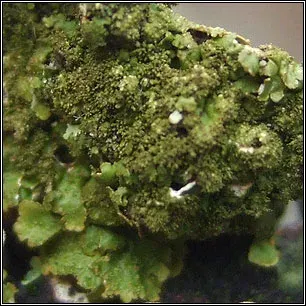
Melanohalea is a genus of foliose lichens characterized by a thallus that forms distinct rosette-like structures on the surface of tree bark.
The colonies typically appear in shades of brown, olive-brown, or deep green, forming tightly appressed layers on the bark of trunks and branches.
Diagnostic features include the presence of soredia or isidia on the surface of the thallus, which are specialized structures utilized for vegetative reproduction.
When moist, the lichen becomes more flexible and its color intensifies, making it highly visible during periods of rain or high atmospheric humidity.
Unlike true pathogens, these lichens do not penetrate living tissue or cause rot; they remain superficial, attached only to the outer dead layer of the bark.
Pathogen
It is important to note that Melanohalea is not a plant disease in the traditional sense, but an epiphytic organism living in symbiosis between a fungus and an alga.
As an epiphyte, it uses the tree solely as a physical substrate, obtaining all necessary nutrients from the atmosphere, rainfall, and accumulated dust.
Taxonomically, it belongs to the Parmeliaceae family, which is widely distributed across temperate forest ecosystems worldwide.
Reproduction occurs primarily through spores or by the dispersal of fragments, which can establish new colonies on rough surfaces of aging bark.
While often mistaken for a disease, its presence is a natural component of many forest ecosystems and does not typically harm a healthy, vigorously growing tree.
Conditions for development
The colonization of Melanohalea is favored by stable levels of humidity and light, often appearing more frequently in mature, open-canopy orchards.
The primary prerequisite for growth is the presence of weathered, textured bark, which provides a stable surface for the spores to attach and germinate.
These lichens are known to be sensitive to air pollution, particularly sulfur dioxide, making them biological indicators of high air quality in rural areas.
Rapidly growing young trees with smooth, expanding bark are rarely colonized because the expansion of the bark surface physically prevents the lichen from establishing.
Areas with poor airflow within the tree canopy create microclimates that retain enough moisture to support the accelerated expansion of lichen colonies.
Why it matters
Melanohalea does not extract sap or nutrients from the tree, meaning it has no direct physiological impact on the health of the host plant.
The primary concern is that dense lichen growth can act as a refuge for overwintering pests, insect eggs, and spores of true pathogenic fungi.
Extensive coverage can lead to prolonged bark dampness, which may slightly increase the risk of bark decay in extremely stressed or old, neglected trees.
The presence of significant lichen cover is often a secondary symptom of a tree that has slowed its growth rate and is no longer shedding bark effectively.
In ornamental landscaping, heavy lichen cover is often perceived as a sign of neglect, which may impact the aesthetic value of public or private gardens.
Protection
Effective management begins with good orchard hygiene, specifically regular pruning to improve airflow and increase sunlight penetration through the canopy.
If removal is desired for aesthetic or phytosanitary reasons, manual scraping of the bark with specialized tools is the most direct and chemical-free method.
Applying traditional lime wash to trunks and main branches creates an alkaline environment that is inhospitable for lichen growth and aids in bark sanitation.
Dormant season sprays with 3–5% ferrous sulfate solution can effectively eliminate lichen colonies on the bark without harming the dormant tree tissue.
- Monitor tree health to encourage vigorous growth.
- Perform regular sanitation of branches.
- Improve site drainage to reduce local humidity.
- Use appropriate fertilization to promote bark shedding.
Discussion
No discussions yet — be the first.