
Melanogaster broomeianus
Melanogaster broomeianus
Description
Pathogen
Melanogaster broomeianus is a species of hypogeous fungus belonging to the order Boletales. It is typically found in woodland environments, where its fruit bodies develop underground or beneath a layer of decaying organic matter.
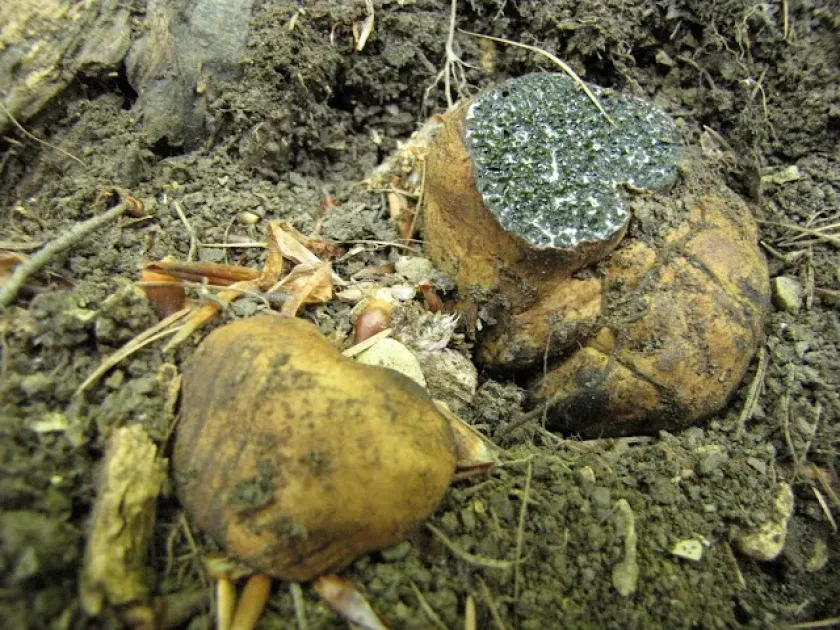
The fungus produces tuber-shaped fruit bodies protected by a firm outer peridium. As the fungus matures, the interior, known as the gleba, develops a chambered structure filled with dark, almost black, spore masses.
Unlike parasitic fungi that actively damage plant tissues, this species functions primarily as a saprotroph. It plays a significant role in breaking down complex organic compounds, contributing to soil nutrient cycling.
The fungus is often associated with the root zones of various trees, participating in complex mycorrhizal networks. This biological connection helps trees absorb minerals more effectively in natural forest settings.
Mature specimens are known for their distinct aroma, which serves an evolutionary purpose by attracting animals that aid in the dispersal of fungal spores across the ecosystem.
Conditions for development
The development of Melanogaster broomeianus is closely linked to soil moisture levels. High humidity in the humus layer provides the necessary environment for the mycelium to expand and for fruit bodies to form.
The species prefers porous, well-drained soils rich in organic matter. A stable, moist microclimate is essential, especially during the active growing season when temperatures are between 15°C and 22°C.
Dry conditions typically halt the development of fruit bodies, forcing the mycelium to enter a dormant state until moisture levels are restored by rainfall or proper irrigation practices.
Dissemination of the fungus is largely dependent on zoocory, where small mammals ingest the fruit bodies and distribute spores through their digestive tract into new habitats.
Human activities, such as forest clearing or soil cultivation, can also inadvertently spread the mycelium to new areas if the environment remains conducive to its growth.
Why it matters
Melanogaster broomeianus is generally not considered a pathogen of agricultural crops. It does not infect live plant tissues or cause diseases that result in significant economic loss to farmers.
In nursery settings, however, dense fungal colonization of the soil may lead to temporary resource competition with young seedlings, potentially affecting the availability of certain soil nutrients.
Large aggregations of the fungus can occasionally alter local soil structure, leading to minor compaction or changes in acidity that may not be ideal for sensitive commercial vegetable crops.
Agricultural professionals consider the presence of this fungus more as an indicator of high organic content and soil moisture rather than a direct threat to the health of their plantations.
In most cases, the impact on soil health is neutral, and the fungus is treated as a natural component of a healthy, biodiverse soil ecosystem rather than a pest to be eradicated.
Protection
As this species does not pose a direct threat to agricultural production, no specific control programs or chemical interventions are recommended or necessary.
Maintaining proper field sanitation and managing soil water levels through efficient drainage systems are the most effective ways to regulate the growth of such fungi.
Ensuring that plant residues are managed correctly prevents the accumulation of excessive organic matter that could provide an overly hospitable environment for saprotrophic fungal species.
Good soil management, including regular tilling and appropriate fertilization, helps maintain a healthy balance of soil microorganisms, which naturally limits the dominance of any single fungal species.
- Regular soil aeration and cultivation
- Effective water drainage management
- Balanced application of fertilizers
Discussion
No discussions yet — be the first.