
Willow rust
Melampsora salicis-albae
Description
Symptoms
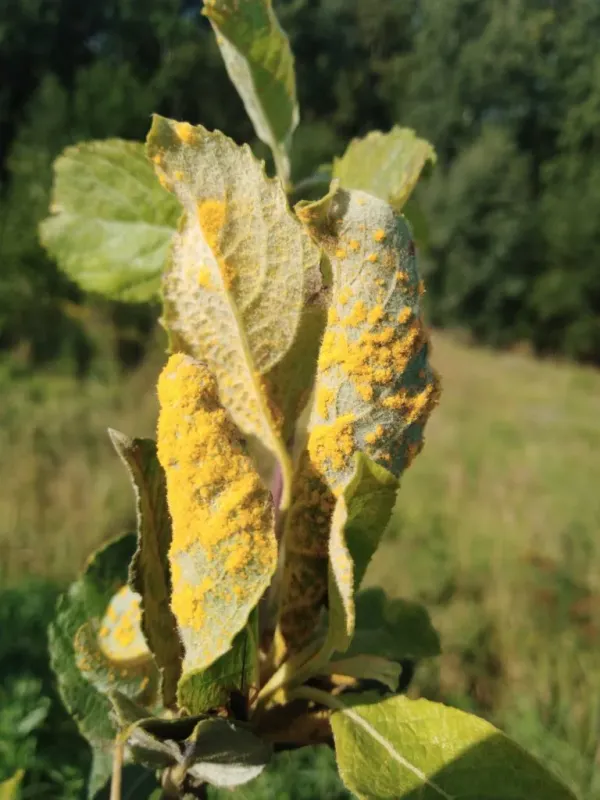
The first symptoms appear in late spring or early summer as small yellow spots on the upper surface of the leaves.
On the undersides of the leaves, characteristic bright orange powdery pustules, known as uredinia, begin to develop and break through the epidermis.
As the infection progresses, these pustules can merge, leading to a significant discoloration of the foliage and eventual tissue necrosis.
By late summer, the orange spots transition into dark, brownish-black crusts representing the telial stage of the fungal lifecycle.
- Yellow or orange spots on leaf surfaces.
- Powdery orange pustules underneath leaves.
- Leaf distortion and curling.
- Premature yellowing and leaf drop.
- Reduced vigor of the tree canopy.
Pathogen
Willow rust is caused by the fungus Melampsora salicis-albae, an obligate parasite that requires a specific host cycle to complete its life stages.
The fungus is heteroecious, meaning it alternates between different host plants, often involving coniferous trees for its early developmental stages.
On willow leaves, the pathogen develops through different spore stages, including uredinia, which are responsible for the rapid spread during the growing season.
The mycelium of the fungus is capable of overwintering in fallen debris, ensuring the persistence of the infection year after year.
Understanding the biology of Melampsora is essential, as the spores are wind-dispersed and highly effective at infecting susceptible host tissues.
Conditions for development
The development of willow rust is heavily dependent on moisture, particularly in the form of frequent rain or prolonged morning dew.
Temperatures ranging from 15°C to 22°C create an ideal environment for spore germination and colonization of new willow growth.
Poor airflow within dense plantings prevents leaves from drying out quickly, which significantly increases the risk of successful infection.
High relative humidity levels for extended periods facilitate the rapid multiplication of the fungus throughout the entire willow plantation.
Plants in shaded or overcrowded areas are generally more susceptible due to the lack of sunlight and reduced evaporation.
Why it matters
Willow rust is primarily damaging because it disrupts photosynthesis, leading to stunted growth and weakened overall plant health.
Severe infestations cause premature defoliation, which deprives the tree of necessary carbohydrate reserves before the dormant winter season.
In nursery settings, the disease makes young willow stock unsalable and reduces the yield of willow wood used for craft or basketry.
Chronic annual outbreaks can lead to branch dieback and, in extreme cases, the eventual death of the affected tree.
Weakened trees are also more likely to be infested by secondary pathogens and various wood-boring insects that thrive on stressed hosts.
Protection
Sanitation is the most critical first step; always rake and dispose of all fallen leaves during autumn to remove overwintering inoculum.
Pruning trees to improve air circulation within the canopy helps create a less favorable environment for fungal spore development.
Application of appropriate fungicides, such as those containing copper or systemic triazoles, can be effective if applied early in the infection cycle.
Proper fertilization and watering schedules help maintain tree vigor, allowing the willow to better withstand fungal pressure naturally.
When starting a new plantation, selecting willow cultivars known for higher resistance to Melampsora can prevent future outbreaks entirely.
Discussion
No discussions yet — be the first.