
Pine twist rust
Melampsora pinitorqua
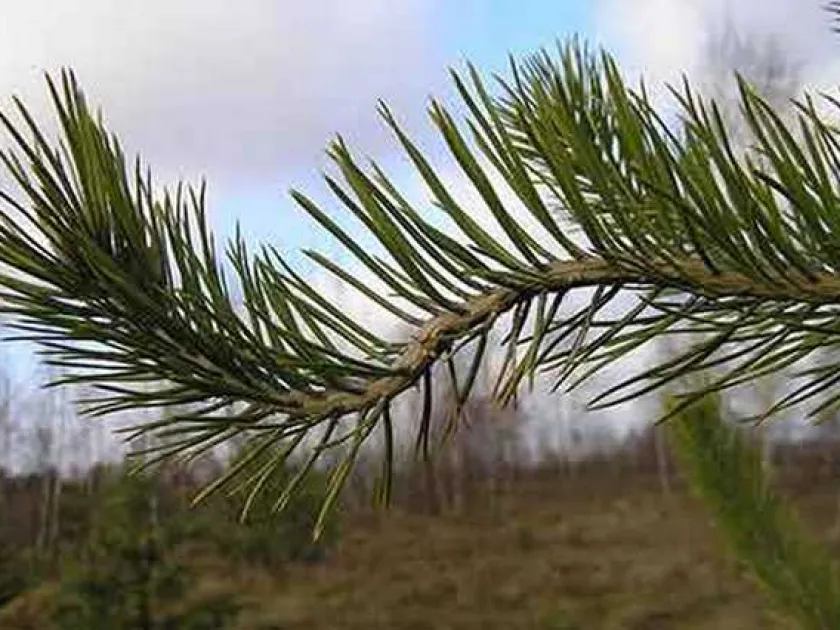
Description
Symptoms
Symptoms of pine twist rust typically appear in late spring on the current year's pine shoots. The most characteristic sign is the twisting or curling of the shoots into an 'S' shape or a loop.
The infected sections of the shoot show distinct swelling, followed by the rupturing of the bark. Bright orange, powdery aecia (spore-bearing structures) erupt from these cracks, making the infection visible.
Severely infected shoots often wither and die. If the primary shoot is affected, the tree may lose its terminal leader, which stunts vertical growth and results in a deformed, bushy appearance.
On aspen hosts, the infection manifests as small yellow chlorotic spots on the underside of the leaves. These spots eventually develop into pustules covered in a dusty layer of urediniospores.
Premature leaf drop in aspen can occur due to heavy infection, which weakens the intermediate host tree, although the primary agricultural impact is concentrated on the pine stands.
Pathogen
The pine twist rust is caused by the heteroecious rust fungus Melampsora pinitorqua. This pathogen requires two different host species to complete its life cycle: Scots pine and various species of aspen or poplar.
The fungus produces several types of spores throughout the year. Aeciospores produced on pine shoots infect aspen leaves, while urediniospores and teliospores are formed on the aspen foliage.
Aspen leaves act as a massive reservoir for the fungus during the summer. The urediniospores are wind-dispersed and can travel significant distances, spreading the infection to susceptible pine stands.
The fungus overwinters on fallen aspen leaves in the form of teliospores. In spring, basidiospores are released from these overwintered leaves and are carried by the wind to infect young, actively growing pine shoots.
The life cycle is perfectly timed with the host development. Pine trees are most vulnerable when their annual shoots are elongating and the tissues are still succulent, allowing the fungal hyphae to penetrate easily.
Conditions for development
The development and spread of the rust are highly dependent on weather conditions, particularly high humidity and moderate temperatures during the spring months. Rainfall during the bud-break period is critical for spore germination.
The proximity of aspen stands to pine plantations is the most significant factor determining infection rates. The risk of disease is substantially higher when the two host species grow in close proximity.
Stand density affects local humidity and airflow. Dense, overcrowded plantations with poor ventilation retain moisture on the needles and shoots for longer periods, promoting fungal infection.
Young pine trees between the ages of 2 and 10 are the most susceptible. Their thin, rapidly growing shoots provide the perfect environment for the fungus to establish itself.
A wet spring with frequent fog or light rain creates an ideal microclimate for the basidiospores to survive and penetrate the pine tissues successfully.
Why it matters
The primary damage caused by pine twist rust is the severe deformation of the pine trunk, which significantly reduces the quality and economic value of the timber.
Stunting of the tree's height growth leads to a loss of productivity in forest stands. Many trees become permanently misshapen, rendering them unsuitable for high-quality wood production.
In nurseries, the disease can cause mass mortality of seedlings, requiring expensive replanting efforts and causing significant financial losses for forestry operations.
Trees weakened by the rust infection are more prone to secondary attacks by pests like bark beetles, which can further jeopardize the health of the entire forest stand.
Management costs, including the constant need for monitoring and potential sanitary interventions, increase the total investment required for healthy pine forest development.
Protection
The most effective strategy is spatial isolation. New pine plantations should be established at least 500 to 800 meters away from aspen or poplar groves to break the disease cycle.
Silvicultural practices, such as the systematic removal of aspen undergrowth within pine plantations, are essential to minimize local inoculum sources in young stands.
Chemical control using fungicides is typically reserved for nurseries or high-value forest plots. Applications must be timed precisely with the period of basidiospore dispersal.
Selecting resilient or resistant pine genotypes is a crucial long-term measure for reforestation projects to reduce vulnerability to rust infections.
- Regular forest health surveys to identify and remove infected trees.
- Promotion of mixed-species stands that do not host the fungus.
- Proper site selection to avoid areas with a history of high rust incidence.
Discussion
No discussions yet — be the first.