
Poplar and Larch Rust
Melampsora laricis-populina
Description
Symptoms
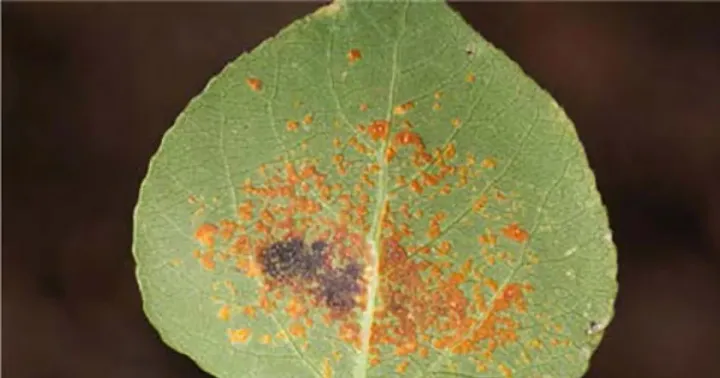
On poplar leaves, the disease appears as bright orange or yellow powdery pustules, known as uredinia, primarily located on the underside of the leaf blades.
As the infection progresses, necrotic spots develop, and leaves often turn yellow, curl, and drop prematurely, leading to early defoliation.
On larch needles, symptoms manifest as small yellow swellings called aecia, which can cause needle curling, chlorosis, and eventual browning.
In cases of severe infection, characteristic rust-colored lesions or cankers may form on the bark of young poplar shoots, weakening the tree's structure.
- Yellowing and premature leaf drop.
- Orange powdery spore masses on leaves.
- Necrotic spots and bark lesions.
- Deformation of larch needles.
Pathogen
The disease is caused by the heteroecious rust fungus Melampsora laricis-populina, which requires two distinct host species, poplars and larches, to complete its life cycle.
This pathogen belongs to the Basidiomycota phylum and is characterized by a complex cycle involving several spore types that ensure its survival and spread.
On poplar trees, the fungus reproduces asexually through urediniospores, leading to rapid, epidemic-like spread of the infection during the growing season.
The fungus typically overwinters as teliospores on fallen poplar leaves, remaining viable until favorable environmental conditions return in the spring.
In spring, the pathogen infects larch needles via aeciospores, which then produce spores that are wind-dispersed back to poplars, closing the biological loop.
Conditions for development
High humidity, frequent fog, and moderately warm weather conditions during the growing season are ideal for the development and spread of the fungus.
Planting poplars and larches in close proximity creates the perfect environment for the pathogen to jump between hosts and cause widespread damage.
Overcrowded plantations with poor air circulation retain moisture in the canopy, significantly promoting spore germination and fungal colonization.
Trees that are already stressed by nutrient deficiencies or adverse environmental factors are significantly more susceptible to successful fungal infection.
Years with significant spring and summer rainfall facilitate infection cycles, as moisture is essential for the germination of the fungus's reproductive structures.
Why it matters
Widespread infection significantly reduces photosynthetic activity, which weakens the tree's health and stunts its annual growth rate.
Premature leaf drop robs the tree of vital nutrients stored for winter, making it more vulnerable to frost damage and cold-related stress.
Young saplings in nurseries can suffer significant mortality due to severe exhaustion and increased susceptibility to secondary opportunistic pathogens.
In urban and forested areas, the disease severely detracts from the aesthetic and recreational value of the trees due to early leaf loss.
Long-term infections can lead to weakened wood structure, making the trees more susceptible to wood-decay fungi and structural failure over time.
Protection
The most effective preventive measure is spatial isolation, ensuring poplars and larches are not planted near each other to break the disease cycle.
Sanitation practices, such as raking and destroying fallen leaves, are crucial for reducing the overwintering inoculum of the fungus.
If symptoms appear, applying fungicides containing copper, triazoles, or other systemic active ingredients can help mitigate the spread of the infection.
Selecting and planting rust-resistant poplar clones is a primary strategy for managing the disease in commercial forestry and ornamental landscaping.
Regular pruning of diseased shoots and thinning crowded stands helps improve air circulation and reduce humidity within the tree canopy.
Discussion
No discussions yet — be the first.