
Spurge rust
Melampsora euphorbiae
Description
Symptoms
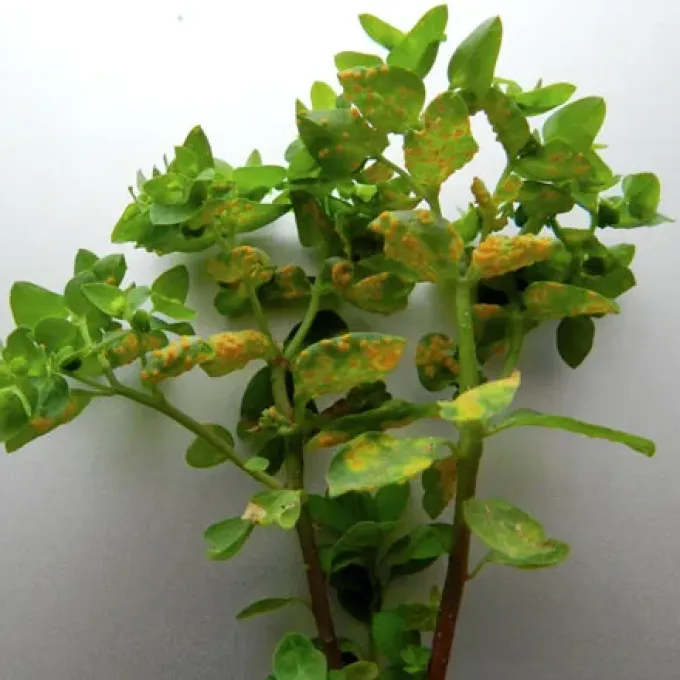
The most recognizable signs of the infection are the development of small, yellowish-orange to rusty-brown pustules, known as uredinia, on the undersides of the leaves.
As the infection matures, these pustules rupture the plant epidermis, releasing a dusty, rusty-colored mass of spores. This powdery appearance is characteristic of the rust infection and gives the disease its common name.
Infected leaves often develop chlorotic spots, curl, and wither prematurely. If the infection is severe, the affected leaves will drop, significantly reducing the plant's photosynthetic capacity.
Stem infections can also occur, leading to malformation and stunted growth. The fungus disrupts the plant's vascular system in localized areas, causing weakened stems that may eventually collapse.
Towards the end of the growing season, the pustules may transition into darker brown or black telia, indicating that the fungus is entering its overwintering stage.
Pathogen
The causal agent of this disease is the fungus Melampsora euphorbiae, a specialized rust fungus that exclusively infects plants of the Euphorbia genus. It belongs to the Basidiomycota phylum and is known for its complex life cycle involving multiple spore stages.
As an obligate biotroph, this fungus depends entirely on the living tissues of its host plant for nutrition. It forms haustoria to extract nutrients directly from the plant cells, leading to a significant drain on the plant's resources.
The pathogen typically survives the winter as dormant teliospores on fallen leaves or plant debris. When spring conditions improve, these spores germinate and begin the cycle of infecting new host growth.
The dispersal of the disease is facilitated by wind, which carries urediniospores over long distances. This method of dissemination allows the fungus to spread rapidly across large gardens or nurseries under favorable conditions.
The biology of Melampsora euphorbiae is closely synced with the host's development. Consequently, infection rates spike during the peak growing season when the plant's metabolic activity is highest, facilitating rapid fungal colonization.
Conditions for development
High humidity and prolonged leaf wetness are the primary environmental drivers for Melampsora euphorbiae. Rain, heavy dew, or overhead irrigation provide the water necessary for spore germination.
The pathogen thrives in moderate temperatures, generally between 18°C and 25°C. These temperatures, often found during the spring and early summer, provide the perfect window for rapid fungal reproduction.
Poor air circulation, often caused by overcrowding or dense planting patterns, creates a microclimate with stagnant air and high humidity, which significantly increases the susceptibility of the plants.
Light availability is also a factor; plants grown in shaded areas often have lower vigor and weakened defense mechanisms, making them easier targets for fungal penetration.
The presence of overwintered spores on plant debris is the most critical factor for the initiation of an epidemic. Sanitation of the garden bed is essential to break the infection cycle.
Why it matters
The primary harm caused by spurge rust is the severe reduction in the aesthetic value of the plants. For ornamental Euphorbia, the presence of rust-colored pustules makes the plant unattractive.
By causing premature defoliation, the fungus severely limits the plant's ability to produce energy through photosynthesis, leading to reduced vigor and stunted growth.
Infected plants are significantly more susceptible to environmental stress, including winter damage. Because the plant cannot store enough reserves, the likelihood of winter mortality increases dramatically.
For nurseries, this disease represents a major economic risk. Large batches of stock can become unmarketable if the rust infection becomes established, leading to financial losses.
Furthermore, the rust pustules damage the plant's cuticle and epidermis, creating entry points for opportunistic bacteria and secondary fungal pathogens, further complicating the plant's health.
Protection
The most effective management strategy begins with rigorous sanitation. All infected plant material, including fallen leaves, should be removed and destroyed at the end of the season to eliminate overwintering spores.
Proper spacing and site selection are essential for preventing the disease. Ensuring adequate airflow and sunlight exposure helps keep leaf surfaces dry, effectively discouraging spore germination.
If the infection is detected, the application of systemic fungicides, such as those containing triadimefon or strobilurins, can effectively manage the fungal population and protect new growth.
Avoid overhead watering methods such as sprinklers. Drip irrigation or careful watering at the base of the plant is recommended to prevent moisture from settling on the foliage.
- Regular inspection of plants throughout the growing season.
- Selective pruning and removal of heavily infected branches.
- Application of mulch to suppress the splash of spores from the soil surface.
- Use of biological control agents as a preventative measure in organic gardening.
Discussion
No discussions yet — be the first.