
Willow rust
Melampsora coleosporioides
Description
Symptoms
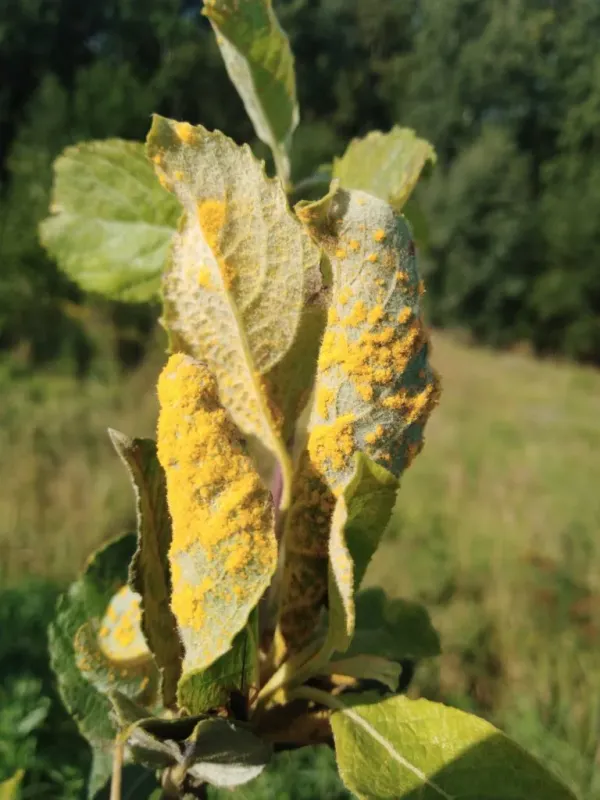
Initial symptoms typically appear in early summer as small yellow-orange spots on the upper surface of the leaves. These spots gradually expand, covering significant portions of the leaf surface.
The lower surface of the leaf develops specific pustules (uredinia) filled with a powdery mass of bright yellow or orange spores. This dusty coating is the most diagnostic feature of the rust infection.
As the disease progresses, premature yellowing, curling, and drying of the leaves are observed. The infected canopy loses its aesthetic appeal and appears sickly well before the autumn season.
Heavy infestations lead to premature leaf drop, which deprives the tree of its ability to accumulate sufficient nutrient reserves before winter. This leads to weakened immunity and stunted growth.
In severe cases, the infection spreads to young branches, causing deformation, growth retardation, and the development of lesions or cracks in the bark.
Pathogen
The causal agent of this disease is the specialized fungal pathogen Melampsora coleosporioides, which belongs to the class of basidiomycetes. This fungus is a dedicated parasite that exclusively infects various species of willow.
The life cycle of the fungus is complex and often involves an alternate host, which ensures its survival across various environmental conditions. The mycelium penetrates the intracellular spaces of the host plant to absorb nutrients.
During its biological activity, the pathogen produces characteristic pustules that release spores. These spores are easily disseminated by wind, rain, or insects, leading to rapid infection across willow plantations.
The pathogen primarily overwinters in fallen leaves, where the mycelium remains dormant until favorable spring temperatures arrive. Once conditions improve, the spores activate and spread to young shoots and leaves.
This disease is a major threat to willow plantations, particularly those grown for biomass, as it can quickly overwhelm large areas if left unmanaged.
Conditions for development
High humidity and mild to warm weather are the primary conditions favoring the development of Melampsora coleosporioides. Frequent fog, dew, and prolonged rain showers are optimal for spore germination.
Poor air circulation within the canopy, often caused by overly dense planting, creates a microclimate perfect for fungal colonization. Stagnant air prevents leaves from drying quickly, which is crucial for disease management.
Improper agronomic practices, such as excessive nitrogen fertilization, result in soft, succulent tissues that are highly vulnerable to fungal invasion. Conversely, phosphorus and potassium deficiencies weaken the tree's natural resistance.
Plantations that are not cleared of infected leaf litter create an ideal environment for the pathogen to accumulate and persist season after season. Disease pressure is significantly higher in neglected areas.
The optimal temperature range for the intensive development and reproduction of the pathogen is between 15 and 22 degrees Celsius.
Why it matters
The primary damage caused by willow rust is the disruption of photosynthesis, which significantly reduces the growth rate and overall vigor of the willow tree. Infected plants become stunted and lose their aesthetic value.
Premature leaf loss negatively impacts the cold hardiness of the willow, making the tree susceptible to frost damage during winter months. This can result in the loss of significant portions of the canopy.
For industrial willow plantations, the disease causes severe economic loss by reducing biomass production. This significantly affects the quality and volume of wood harvested.
Chronic annual infections can lead to the gradual dieback of individual branches and eventually the entire tree if effective control measures are not implemented.
Furthermore, an infected tree experiences reduced tolerance to other environmental stressors, including secondary pest attacks and opportunistic infections that exploit the weakened plant.
Protection
The most important preventive measure is the thorough collection and destruction of fallen leaves in autumn. This significantly reduces the primary inoculum source for the following season.
Maintaining appropriate spacing between trees is essential to ensure good air circulation. Regular pruning of crowded branches helps reduce humidity within the canopy, preventing fungal growth.
When symptoms appear, the application of systemic or contact fungicides is necessary. Fungicides containing copper or specialized systemic active ingredients are effective if applied according to the manufacturer's instructions.
Balanced fertilization, particularly with potassium and phosphorus, helps strengthen cell walls and enhances the tree's internal defense mechanisms against fungal attacks.
Regular phytosanitary monitoring is recommended to detect early outbreaks. When selecting willow varieties for new plantings, choosing disease-resistant cultivars is a proactive strategy to minimize the risk of rust infections.
Discussion
No discussions yet — be the first.