
Poplar and onion rust
Melampsora allii-populina
Description
Symptoms
Initial symptoms on poplar leaves appear as small, yellow chlorotic spots that eventually develop into bright orange, powdery pustules. These lesions can cover the entire leaf surface, severely inhibiting photosynthesis and tree growth.
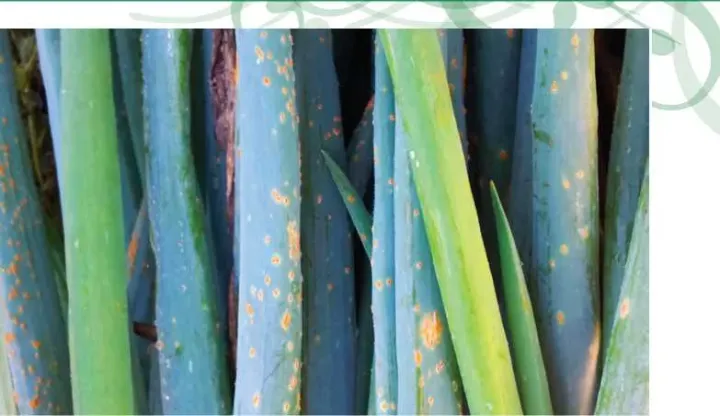
On onions, the infection is characterized by the appearance of small rust-brown or orange raised spots, known as uredinia, on the leaves. As the fungus matures, the epidermis ruptures, releasing a mass of spores that easily spreads across the field.
Heavy infection in onions leads to premature yellowing, wilting, and drying of the foliage. This negatively affects bulb development, resulting in smaller yields and poor storage quality of the bulbs.
On poplars, severe infestations often cause premature leaf drop. This weakens the trees, making them less winter-hardy and significantly reducing the annual wood growth, which is particularly detrimental in tree nurseries.
- Presence of powdery, orange-yellow pustules.
- Small chlorotic spots developing into lesions.
- Deformation and curling of the leaves.
- Premature leaf necrosis and senescence.
- Visible rupturing of the leaf epidermis during spore release.
Pathogen
The causative agent of this disease is the heteroecious rust fungus Melampsora allii-populina. This pathogen has a complex life cycle that requires two different hosts: species of poplar (Populus) and members of the onion family (Allium) to complete its development.
The fungus progresses through several stages, including aecia formation on poplar leaves, followed by the development of uredinia and teliospores. This biological diversity allows the pathogen to persist in the environment throughout the growing season.
On poplar leaves, the fungus forms bright yellow to orange pustules, which serve as the primary source of secondary infection. These structures contain urediniospores that can be easily dispersed by the wind to infect neighboring plants.
The pathogen primarily overwinters as teliospores on fallen poplar leaves. In the spring, these spores germinate and infect the primary host, initiating a new infection cycle that can subsequently spread to nearby onion fields.
Understanding the link between these two hosts is crucial for integrated disease management. Proximity between poplar windbreaks and onion production areas poses a significant risk of severe rust outbreaks during favorable conditions.
Conditions for development
The development of Melampsora allii-populina is highly dependent on high humidity and moderate temperatures. Frequent rainfall, heavy morning dew, and fog provide the optimal environment for spore germination and infection.
The ideal temperature range for pathogen spread is between 15°C and 22°C. Under these conditions, the incubation period is shortened, leading to rapid disease escalation and potential epidemic outbreaks.
Dense crop stands and poor air circulation within poplar canopies create microclimates that trap moisture and facilitate the spread of the disease. Proper site management is essential to reduce these high-risk conditions.
Spore dissemination is primarily driven by wind currents. Spores can travel over several kilometers, making the spatial arrangement of plantings a critical factor in disease prevention.
Seasons with a wet spring and a cool summer are the most dangerous. In such years, the overlap of favorable environmental conditions with the active growth phase of the hosts often results in severe economic losses.
Why it matters
The primary economic impact is the reduction in onion quality and yield. The destruction of photosynthetic tissue prevents the plant from accumulating necessary nutrients, stopping bulb enlargement and maturation.
In poplar cultivation, rust infection causes tree exhaustion. Repeated defoliation over consecutive seasons reduces the vitality of the trees, leading to stunted growth and, in extreme cases, the death of young saplings.
Infected plant tissues are more susceptible to secondary pathogens, including bacteria and fungi that cause bulb rot. This significantly reduces the shelf life of onions and results in high losses during post-harvest storage.
In ornamental nurseries, the aesthetic damage caused by the rust makes the poplar plants unsellable. This leads to direct financial losses and increased costs associated with managing infected inventory.
The cost of implementing chemical protection measures, combined with the loss of merchantable yield, makes Melampsora allii-populina a major concern for both vegetable farmers and forestry managers.
Protection
The most effective strategy is spatial isolation; avoid planting onion fields in the immediate vicinity of poplar plantations. This breaks the cycle of spore transfer between the primary and alternate hosts.
Sanitation is essential, especially the removal and destruction of fallen poplar leaves in the autumn. By eliminating this debris, you remove the primary overwintering site for the fungus and reduce the inoculum load for the following season.
Chemical control involving fungicides from the triazole and strobilurin classes is effective if applied early. Treatments should be initiated at the first sign of infection to protect the foliage and prevent mass spore dissemination.
Cultural practices such as ensuring optimal plant spacing and good air circulation help minimize moisture accumulation. It is also important to maintain balanced nutrient levels, as excessive nitrogen can increase susceptibility to rust.
The use of resistant cultivars and the selection of less susceptible poplar species offer the best long-term solution. Integrating these measures into a comprehensive pest management plan is vital for controlling Melampsora allii-populina.
Discussion
No discussions yet — be the first.