
Megacollybia platyphylla
Megacollybia platyphylla
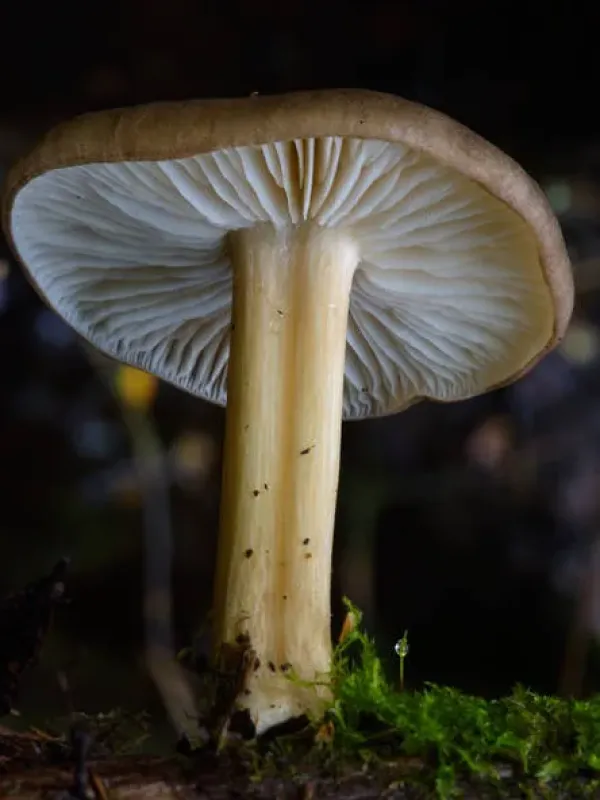
Description
Symptoms
The most visible sign of infection is the emergence of fruiting bodies on stumps, decaying trunks, or at the base of infected trees. These mushrooms have brownish-grey caps (5–15 cm wide) with distinct, wide, and widely spaced gills underneath.
Internal wood infection typically manifests as white rot. The infected wood loses its structural integrity, becoming soft, fibrous, and pale in color. Dark, line-like patterns often appear in the decaying wood, marking the boundaries between different fungal colonies.
Under the bark, one can often find a network of white, thread-like rhizomorphs. These structures confirm active fungal growth and indicate that the infection has deeply penetrated the sapwood and heartwood, compromising the tree's health.
Trees affected by this fungus often exhibit canopy thinning, leaf discoloration, and structural instability. Due to the degradation of the trunk's core, infected trees are significantly more prone to windthrow, where they collapse under wind pressure.
In advanced stages of the disease, the bark may split or fall away, exposing the brittle, decayed interior. The wood becomes so weakened that it can be easily crushed or pulled apart, signaling a complete loss of the tree's mechanical functionality.
Pathogen
Megacollybia platyphylla is a mushroom species within the Marasmiaceae family. In agronomic and forestry contexts, it is primarily categorized as a saprotrophic fungus that can act as a secondary pathogen, colonizing dead or severely weakened wood of deciduous trees.
The pathogen spreads through airborne spores. Upon landing on damaged bark or exposed wood, the spores germinate, and the mycelium begins to penetrate the host tissue. The fungus thrives by breaking down complex lignins and celluloses, effectively rotting the wood structure.
The mycelium forms extensive rhizomorphs—white, cord-like strands that spread rapidly through the substrate. These rhizomorphs allow the fungus to aggressively colonize new areas, turning dead organic matter into a food source for its subsequent fruiting bodies.
Unlike obligate parasites, Megacollybia platyphylla favors already distressed hosts. It utilizes its powerful enzymatic system to digest wood tissue, making it a key player in the decomposition of fallen logs, stumps, and old trees in forest ecosystems.
The life cycle of this fungus is highly dependent on environmental conditions, particularly humidity levels. Once established in a host, the mycelium can persist for many years, completing its reproductive cycle by producing mushrooms in the summer and autumn months.
Conditions for development
High humidity and moisture are the primary drivers for the growth of Megacollybia platyphylla. Shaded, damp environments where water persists are ideal for the fungus to establish itself and spread across the forest floor or into tree trunks.
The optimal temperature range for mycelial development is between +15°C and +22°C. In these moderate conditions, the fungus demonstrates its highest rate of colonization and spore production, facilitating the spread of the infection to adjacent hosts.
Physical injuries to the tree serve as the main entry points for the pathogen. Frost cracks, animal browsing damage, branch breakage, or improper pruning cuts that remain unprotected are the most common sites where the fungus gains access to the tree's interior.
Overcrowded plantations or dense gardens with poor airflow create a stagnant microclimate that supports fungal sporulation. The lack of proper sanitation, such as leaving stumps or decaying wood debris, provides a constant reservoir for the fungus.
Broadleaf species such as oak, beech, and birch are highly susceptible. Once the fungus takes hold on dead debris near a tree, it can readily migrate to the living plant if the tree's natural defenses are lowered by drought, soil compaction, or pests.
Why it matters
The primary harm caused by this fungus is the accelerated decay of wood, which renders timber useless and creates significant safety hazards in populated areas. Falling trees are a major concern for property and human safety.
In orchard management, the infection leads to the gradual decline and eventual death of fruit trees. By destroying the root system and vascular tissues, the fungus starves the tree, causing immediate losses in fruit production and overall health.
Megacollybia platyphylla also acts as a gateway for other pathogens. By weakening the tree's immune system, it makes the host more susceptible to secondary infestations by bark beetles and other wood-boring insects, further compounding the damage.
The persistence of the fungus in the environment makes it a long-term threat. Once a site is contaminated, spores can infect subsequent plantings, necessitating expensive remediation efforts to restore the health of the area or replace lost trees.
Economic losses in parkland and forest management are substantial, as the removal of hazardous trees and the treatment of large-scale infections require significant labor and financial resources, impacting the aesthetic and functional value of the site.
Protection
Sanitation is the most effective management strategy. Removing stumps, deadwood, and fallen branches eliminates the primary substrates the fungus uses to survive and reproduce, drastically reducing the spore load in the immediate environment.
Proper pruning techniques are essential. All pruning cuts should be treated immediately with wound dressings or antifungal sealants to prevent spore colonization. Keeping the tree's bark intact and healthy is the best defense against fungal intrusion.
Regular monitoring of trees for mechanical injuries allows for early intervention. If a wound is detected, it should be cleaned to remove damaged tissue and disinfected with appropriate fungicides before being covered to promote rapid wound healing.
Maintaining tree vigor through balanced fertilization and adequate watering builds a stronger immune response. A healthy, well-nourished tree can better compartmentalize infections and resist the initial colonization attempts by opportunistic fungi.
In cases of localized infection, surgical removal of the decayed wood might be possible. Carefully cutting away all infected tissues until healthy wood is reached, followed by thorough disinfection, can stop the progression of the fungus and save the host tree.
Discussion
No discussions yet — be the first.