
Mastigosporium leaf spot
Mastigosporium rubricosum
Description
Symptoms
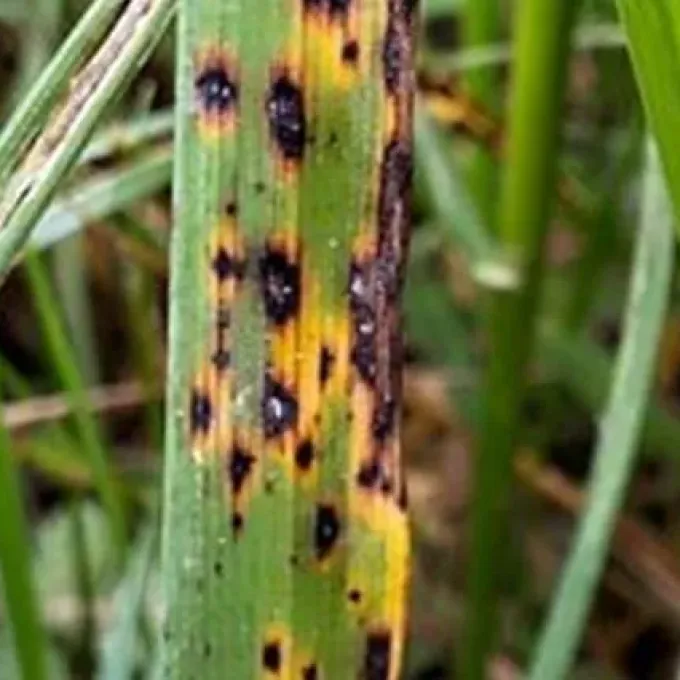
Early symptoms appear as small, light-colored spots that gradually enlarge, becoming circular to oval, and often developing a distinct reddish-brown or dark brown color.
A key diagnostic feature is the dark brown or lead-gray margin surrounding the necrotic center. This halo helps distinguish it from other similar leaf spot diseases affecting grass crops.
Under humid conditions, a fine fungal growth, consisting of conidiophores and conidia, may become visible on the leaf surface, though it is often subtle and requires close inspection.
As the disease progresses, these lesions can merge, causing significant blight on the leaves. Severe infection often leads to premature yellowing and drying, starting from the lower canopy.
Mastigosporium leaf spot is frequently observed on fescues and other meadow grasses. Infected leaves eventually wither, which impacts the overall appearance and productivity of the sward.
Pathogen
The disease is caused by the imperfect fungus Mastigosporium rubricosum, which specifically targets the vegetative parts of various grass species. It is a common pathogen in pastures and hayfields.
The life cycle of the pathogen involves the production of conidia on infected leaf surfaces. The fungus can survive the winter months as mycelium within plant debris or on dormant perennial grass tissues.
Dissemination of the infection occurs primarily via conidia, which are splashed by rain or dispersed by wind currents to healthy leaves. High humidity levels are essential for the dispersal process.
The biology of the fungus requires persistent leaf wetness to allow the spores to germinate and penetrate the host tissue. Its host range is generally limited to members of the Poaceae family.
The fungal infection triggers necrotic lesions that expand as the pathogen utilizes nutrients from the host, eventually leading to the loss of functional leaf area and decreased vigor.
Conditions for development
High humidity and prolonged leaf wetness are the primary drivers of disease development. Outbreaks are most common during cool, wet periods throughout the growing season.
The pathogen thrives in moderate temperature ranges, making spring and autumn periods particularly high-risk times for the spread of Mastigosporium rubricosum.
Dense grass stands with poor air circulation create a localized microclimate with high relative humidity, which is highly favorable for the infection of healthy foliage.
Dew, fog, and frequent rainfall provide the essential film of water necessary for spore germination. Conversely, warm and dry weather conditions significantly inhibit the development of the disease.
Agronomic practices that promote excessive vegetative growth, such as high nitrogen fertilization, can increase susceptibility by keeping the canopy dense and moist for longer periods.
Why it matters
The primary impact is the significant reduction of photosynthetic surface area, which leads to reduced plant biomass and poor growth performance of the grass crop.
For forage and hay production, this disease reduces both the quantity and the nutritional quality of the yield, potentially decreasing sugar and protein content in the harvested grass.
Heavy infections during early growth stages can weaken the plant stand, reducing its tolerance to winter stress and increasing the likelihood of long-term damage to the field.
In seed production fields, the disease can affect seed filling, resulting in lower thousand-kernel weights and reduced germination energy for future plantings.
Economic damage is caused by the need for additional management, potential yield losses, and the general degradation of the pasture or meadow quality over time.
Protection
Effective management relies on crop rotation and pasture management strategies to disrupt the pathogen's survival cycle and minimize the accumulation of inoculum in the field.
Regular mowing or grazing is a critical practice, as it removes infected leaf material and improves airflow through the canopy, reducing the duration of leaf wetness.
The use of resistant cultivars is the most sustainable and efficient strategy for managing Mastigosporium leaf spot in large-scale grass production.
Fungicide applications are generally reserved for high-value seed production fields where maintaining foliage health is essential for yield and seed quality assurance.
- Spacial isolation of fields
- Balanced nutrient management
- Removal of plant debris
- Use of certified healthy seeds
Discussion
No discussions yet — be the first.