
Mastigosporium leaf spot
Mastigosporium muticum
Description
Symptoms
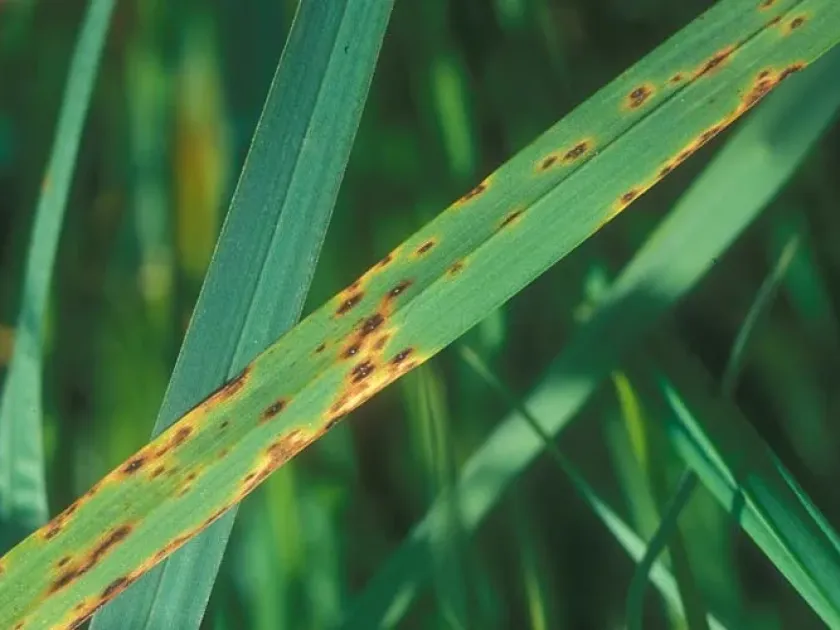
Mastigosporium leaf spot, caused by the fungus Mastigosporium muticum, manifests as distinctive spots on the leaves of Dactylis glomerata. Initially, these spots are small and pale, often appearing water-soaked under humid conditions.
As the lesion matures, it develops a characteristic shape, often elongated or oval, with a central necrotic area surrounded by a dark brown margin. This coloration pattern is a hallmark of the infection.
Under high humidity, a sparse, grayish-white layer of fungal spores forms on the surface of the lesions. This powdery appearance indicates that the fungus is actively producing conidia for further dispersal.
Infected leaves rapidly yellow and wither from the tips downward. If the infestation is severe, entire leaves become chlorotic and necrotic, significantly reducing the photosynthetic capacity of the plant.
The cumulative effect of these lesions leads to the premature senescence of the foliage. The entire grass stand may lose its vibrant color, appearing dull and brown, which is a sign of declining plant health.
##pathogen##The causative agent is Mastigosporium muticum, a specialized fungal pathogen. It belongs to the Hyphomycetes group and is known to be host-specific, primarily targeting Cocksfoot or Orchard grass.
The fungus survives the winter as mycelium within dead leaf tissues and infected plant debris left in the field. This persistence ensures the pathogen remains present in the environment for subsequent seasons.
Reproduction occurs via conidia, which are easily disseminated by wind and rain splashes. These spores adhere to the leaf surface, germinating when conditions become favorable for penetration.
The infection cycle is rapid and can repeat multiple times throughout the growing season. This allows the disease to spread quickly across a meadow or pasture once the initial infection takes hold.
The pathogen produces enzymes that break down the plant cell walls, leading to the formation of the symptomatic spots. This biological process directly stresses the host, draining its resources.
##conditions##High humidity is the primary driver for Mastigosporium leaf spot development. Prolonged periods of dew, fog, or frequent rainfall are essential for the germination and penetration of the spores.
The fungus thrives in moderate temperature ranges, typically between 15 and 22 degrees Celsius. These conditions are most common during the active spring and autumn growth periods of Cocksfoot.
Poor ventilation within dense grass stands creates a microclimate with high moisture retention. This lack of airflow is a significant factor in the severity and rapid spread of the disease.
Over-fertilization with nitrogen, without adequate potassium, can lead to succulent plant tissue that is more prone to fungal attacks. Balanced nutrition is vital to maintain plant structural integrity.
Neglecting to manage the grass height through regular cutting or grazing allows for the accumulation of leaf litter, which acts as a reservoir for the pathogen to thrive throughout the year.
##harm##The disease causes a measurable decrease in forage yield, as the leaf area index is reduced by the destruction of plant tissue. Farmers experience significant losses in green mass and hay quality.
Infected forage has lower nutritional value, including reduced protein and carbohydrate content. This makes the grass less effective as an animal feed, impacting livestock productivity.
Continuous infection weakens the root systems of the grass, leading to a thinner stand over time. This loss of density may necessitate premature pasture renovation, increasing production costs.
Seed production is also negatively affected by the disease. The stress on the plant leads to the development of shriveled or underdeveloped seeds, resulting in lower germination rates.
Economic damage is twofold: it includes the direct loss of biomass and the indirect costs of implementing intensive disease management practices or early pasture replacement.
##control##Regular mowing is the most effective management strategy. It removes infected plant tissue and interrupts the pathogen's life cycle by reducing the available substrate for spore production.
Maintaining an appropriate seeding density is crucial. Proper spacing ensures adequate air circulation, which helps keep the foliage dry and limits the conditions favorable for spore germination.
Supplying balanced potassium-rich fertilizers strengthens the plant's natural defense mechanisms. Resilient plants are better able to withstand the infection and recover from minor outbreaks.
Removing plant debris after the final harvest or at the end of the season reduces the amount of overwintering inoculum. Keeping the field clean is a foundational step in long-term control.
While large-scale fungicide application is rarely economical for pastures, it may be used on seed production fields if the environmental conditions pose a high risk of an severe epidemic.
Discussion
No discussions yet — be the first.