
Mastigosporium leaf spot
Mastigosporium kitzebergense
Description
Symptoms
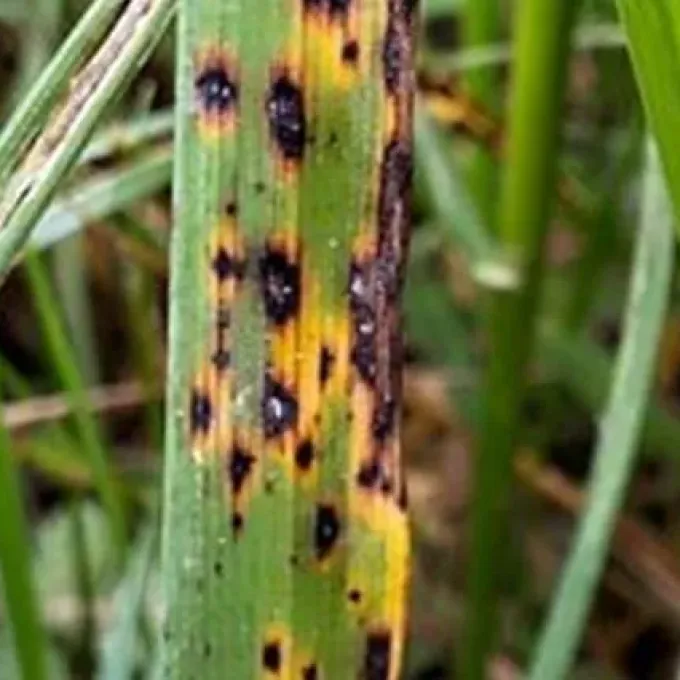
The primary symptom of the disease is the appearance of characteristic spots on leaf blades. These are usually oval or elongated in shape, often surrounded by a light or chlorotic halo, which gives them a zonal appearance.
As the infection progresses, the spots may coalesce, covering large areas of the leaf. In the center of the infected zones, one can often notice a grey or brownish mold, which represents the sporulation of the fungus.
The infection starts on lower leaves and gradually spreads to the upper layers of the plant. In severe cases, the leaves prematurely yellow, wither, and die, significantly reducing the plant's photosynthetic surface area.
Affected plants exhibit stunted growth and impaired development. During heavy infestations, the seed-bearing stems can be weakened, which negatively impacts the quality and weight of the formed seeds.
For differential diagnosis, it is important to distinguish Mastigosporium leaf spot from other spots, such as Septoria or Helminthosporium. The key distinction lies in the specific shape of the lesions and the timing of sporulation appearance.
Pathogen
The causal agent of the disease is the imperfect fungus Mastigosporium kitzebergense, belonging to the group of Deuteromycetes. This pathogen is a specialized parasite that mainly infects perennial grasses in temperate climate zones.
The fungus persists on plant debris and in the turf of affected crops as mycelium or conidia. In spring, under favorable conditions, spores are disseminated by wind and rain splashes, providing the primary infection of new shoots.
The pathogen's life cycle is closely linked to the host's growing season. Throughout the season, the fungus is capable of producing several generations of conidia, which facilitates the rapid spread of infection within a field or pasture area.
Morphologically, the pathogen is identified by specific conidiophores and multicellular conidia that form in the infected leaf tissues. Detailed examination of spore structure is essential for accurate laboratory diagnosis of this disease.
The biology of Mastigosporium kitzebergense is characterized by its ability to survive within a wide temperature range, making it a dangerous pathogen for winter and early spring cereals in high-humidity regions.
Conditions for development
A critical factor for the development of Mastigosporium leaf spot is high air and soil humidity. The disease progresses particularly actively during periods of prolonged rain, fog, or heavy dew in the spring and summer.
Optimal temperature conditions for conidia germination and fungal penetration into plant tissues are within the moderate ranges characteristic of a cool, moist spring.
Densely planted crops, as well as areas with poor canopy ventilation, create an ideal microclimate for the accumulation and spread of fungal spores. Poor air circulation prevents the leaf surface from drying out quickly.
Excessive application of nitrogen fertilizers, which leads to exuberant vegetative growth and softening of leaf tissues, also contributes to increased plant susceptibility to this pathogen.
The presence of weeds in cereal fields can act as a reservoir for infection, maintaining a high inoculum pressure in the field throughout the year.
Why it matters
The main damage caused by Mastigosporium leaf spot is the significant loss of green biomass, which is critical for forage grasses. It reduces not only the volume of hay or forage yield but also its nutritional quality.
The disease disrupts photosynthetic processes, causing plants to exhaust their resources and lose the ability to accumulate nutrients properly. This makes the stand less resilient to adverse winter conditions.
In seed crops, the infestation leads to shriveled grains and reduced germination rates. This results in direct economic losses due to the inability to use the harvest as high-quality seed material.
Infected forage in pastures can negatively affect the nutritional value of the feed. Affected leaves are less palatable to livestock and have a reduced content of essential vitamins and proteins.
In regions with developed livestock industries, Mastigosporium epiphytotics can lead to a shortage of high-quality forage, requiring emergency purchases of expensive supplements to compensate for losses.
Protection
The basis for controlling Mastigosporium leaf spot is the implementation of agronomic practices. Crop rotation, which excludes continuous cultivation of grasses on the same plot for extended periods, is highly recommended.
Timely mowing of the stand is important, as it allows for the removal of infected plant parts and interrupts the pathogen's life cycle. The destruction of plant residues or deep plowing significantly reduces the inoculum level in the soil.
Applying balanced doses of potassium and phosphorus fertilizers enhances the overall resistance of grasses to fungal diseases by strengthening the cell walls of the plants.
The use of resistant cultivars and breeding lines is the most effective long-term solution. Selecting healthy, certified seed material prevents the introduction of the infection into new areas.
In intensive agriculture, for seed crops, the application of fungicides from the triazole or strobilurin groups is permissible. Treatments should be applied at the first signs of disease to achieve maximum protective effect.
Discussion
No discussions yet — be the first.