
Summer patch
Magnaporthiopsis poae
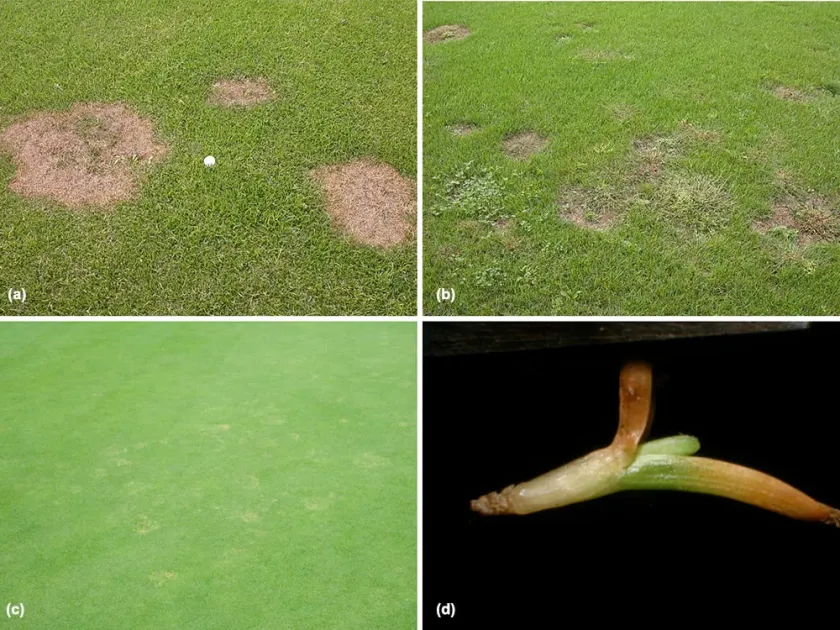
Description
Symptoms
Symptoms initially appear as small, circular patches of yellow or light-green grass. These spots are often just a few centimeters in diameter but can expand rapidly.
As the disease progresses, the patches turn a bronze or reddish-brown color, which can be mistaken for drought stress. In severe cases, the affected turf collapses completely, resulting in bare, sunken patches.
The root system of infected plants is the primary indicator of the disease. Roots appear dark, brittle, and necrotic. If you dig up a sample, the crown may show significant decay, distinguishing it from healthier turf roots.
Sometimes, a distinctive «frog-eye» pattern develops, where the center of the patch recovers or is invaded by other resistant grass species, leaving a ring of dead or dying grass around the perimeter.
Because symptoms often mimic drought, many turf managers initially increase irrigation, which unfortunately creates the perfect environmental conditions for the fungus to continue its destruction.
Pathogen
The disease is caused by the fungus Magnaporthiopsis poae. This soil-borne pathogen is particularly devastating to cool-season turfgrasses, with Kentucky bluegrass (Poa pratensis) being the most susceptible host.
The fungus infects the roots and crowns of the plants during the spring when soil temperatures reach approximately 15°C to 20°C. However, symptoms typically do not become visible until the onset of summer heat stress.
Magnaporthiopsis poae thrives by colonizing the root cortex, eventually killing the root system and preventing the plant from absorbing water and nutrients required to survive the heat of summer.
The pathogen is spread throughout turf areas via the movement of infested soil or clippings. Maintenance equipment, such as mowers and aerators, can easily transmit the fungus from infected areas to healthy ones if not properly sanitized.
The fungus is known for its persistence in the environment, capable of surviving for long periods in soil, making it a recurring problem on golf courses and professional landscapes.
Conditions for development
Summer patch is strongly associated with high soil temperatures, typically between 20°C and 30°C. Once these temperatures are reached, the infected roots fail to support the grass canopy under heat stress.
Poor soil drainage and high soil moisture levels are critical factors that exacerbate the disease. Constant wetness at the root zone encourages fungal growth and reduces the natural defenses of the grass.
The disease is more prevalent in soils with a high pH, particularly those that have been heavily limed. Maintaining a slightly acidic soil environment is often a key part of an integrated management strategy.
Excessive nitrogen fertilization, especially the use of nitrate-based fertilizers during peak summer, can weaken the turf and promote rapid spread of the pathogen.
Close mowing practices heighten the plant's stress levels, limiting the root depth and making the grass significantly more vulnerable to the damaging effects of Magnaporthiopsis poae.
Why it matters
The disease causes significant aesthetic damage to lawns and landscapes, creating unsightly patches that can take an entire season or more to fill in naturally.
On sports turf, it creates uneven playing surfaces, posing a risk of injury to athletes and reducing the structural integrity of the turfgrass stand.
The loss of root mass reduces the overall drought tolerance and recovery speed of the turf, leading to a cycle of decline where weeds and invasive species easily colonize the bare spots.
Management costs are high, requiring specialized fungicide applications, intensive aeration, and topdressing programs to restore the health and density of the lawn.
Without aggressive control, large areas of a golf course or sports pitch can be rendered unusable, causing substantial financial loss for facility owners and managers.
Protection
The foundation of control is soil pH management; keeping the pH in the range of 5.5 to 6.0 is essential for creating an environment less favorable to the fungus.
Effective irrigation management is crucial. Deep and infrequent watering encourages deeper root growth, which allows the plant to access water even if the surface roots are compromised.
Core aeration is a highly recommended practice, as it improves drainage, reduces soil compaction, and stimulates new root growth throughout the growing season.
Preventative fungicide applications are most effective when applied in the spring, based on soil temperature triggers, targeting the pathogen before it can colonize the roots.
- Raise the mowing height to reduce heat stress and encourage deeper root development.
- Use acidifying nitrogen sources, such as ammonium sulfate, to help maintain the desired soil pH.
- Sanitize equipment before moving from affected areas to healthy ones to prevent further spread.
Discussion
No discussions yet — be the first.