
Macroventuria leaf spot
Macroventuria anomochaeta
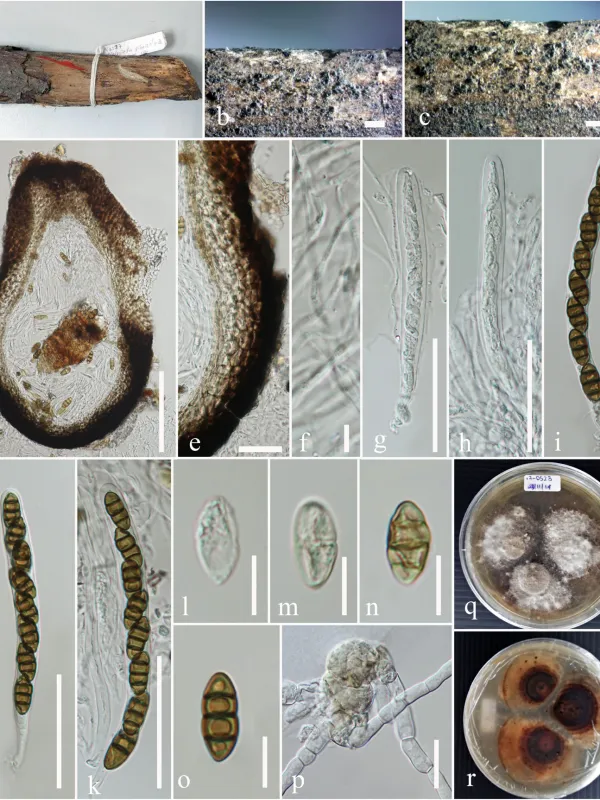
Description
Symptoms
The primary symptom of the disease is the development of localized spots on leaves, which often display irregular margins and range in color from light brown to deep dark brown or black.
A key diagnostic feature is the appearance of small, dark, pimple-like structures within the necrotic spots; these are the fruiting bodies of the fungus that release spores.
As the infection progresses, individual spots may merge, causing large sections of the leaf tissue to necrotize, leading to chlorosis and subsequent premature senescence.
Stems can also be affected, showing elongated lesions that may disrupt the flow of nutrients and water, ultimately causing wilting or dieback in more severe cases.
Under humid environmental conditions, a fine, grayish fungal growth may be visible on the surface of the lesions, representing the sporulation phase of the pathogen.
Pathogen
The disease is caused by the ascomycetous fungus Macroventuria anomochaeta, a pathogenic micro-organism that targets various herbaceous plants and, in some cases, woody hosts.
The life cycle of this pathogen involves the formation of fruiting bodies that allow the fungus to persist in plant debris and soil, making it a recurring threat in agricultural environments.
Dissemination of Macroventuria anomochaeta is primarily achieved through airborne or water-splashed spores, which land on susceptible tissues and initiate the infection process under the right conditions.
The fungus functions as an opportunistic parasite that can thrive on weakened or senescing tissues before spreading to healthy parts of the plant, utilizing enzymes to degrade host cell walls.
Microscopic analysis reveals complex structures of the pathogen, which are crucial for identifying the disease in the field and distinguishing it from other leaf-spotting fungi.
Conditions for development
Macroventuria leaf spot is heavily dependent on high relative humidity and moderate temperatures, which facilitate the germination and infection stages of the fungal spores.
Prolonged rainfall or heavy morning dew keeps the leaf surfaces wet for extended periods, creating an optimal environment for the fungus to establish its hold on the plant.
Dense canopies and poor air circulation within the crop stand prevent moisture from evaporating, leading to a microclimate that strongly favors the spread of the disease.
Stress factors such as nutritional imbalances or improper irrigation can reduce the plant's natural resistance, making it more susceptible to penetration by fungal hyphae.
While extremely hot or dry weather may temporarily suppress the pathogen's growth, the fungus remains alive in its dormant form, ready to re-emerge when conditions turn favorable.
Why it matters
The disease causes a reduction in the total functional leaf area, which limits the plant's photosynthetic capacity and leads to significantly lower yields.
Premature leaf drop forces the plant to divert its energy resources toward stress recovery instead of reproductive growth, negatively impacting fruit size and quality.
By weakening the structural integrity of the stems and leaves, the infection makes the crop more vulnerable to secondary pathogens and further environmental damage.
In severe outbreaks, the cumulative effect of the disease can cause significant economic losses by rendering the harvest unmarketable or of low nutritional value.
The ongoing need for fungicides and increased labor for disease management significantly raises the overall cost of production for the grower.
Protection
Effective management begins with strict sanitation practices, such as removing and destroying infected plant debris, which significantly lowers the initial inoculum load.
Choosing resistant cultivars where available and following a balanced fertilization program helps maintain plant vigor and enhances natural defense mechanisms.
Applying fungicides with preventive efficacy is a common strategy to protect the foliage during high-risk periods, particularly in seasons with frequent rainfall.
Proper spacing and pruning strategies are essential to ensure adequate airflow within the canopy, which allows the leaves to dry faster and reduces the duration of leaf wetness.
Monitoring the fields regularly for early signs of leaf spots allows for timely intervention, preventing the spread of the pathogen to the entire crop area.
Discussion
No discussions yet — be the first.