
Lyophyllum favrei
Lyophyllum favrei
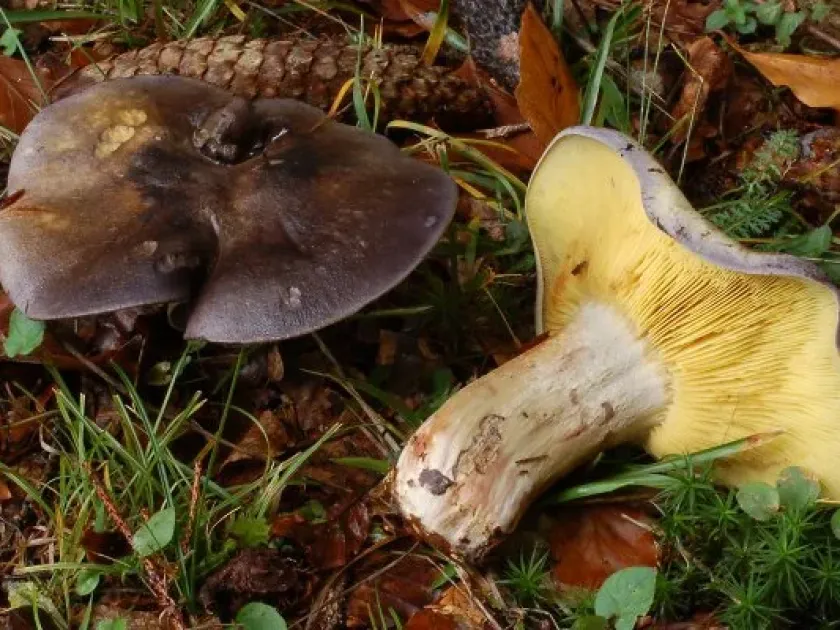
Description
Symptoms
The primary diagnostic sign is the formation of mushroom fruiting bodies near the base of the trunk during the autumn season.
Visual symptoms include progressive yellowing of foliage and premature leaf drop, which can often be mistaken for normal aging.
Later stages of infection are characterized by stunted shoot growth, dieback of the crown, and cracks appearing on the lower bark.
When examining infected wood, internal decay is present, often accompanied by a significant color change of the fibers to darker shades.
The structural integrity of the affected stem is severely compromised, making the wood brittle and prone to breakage.
Pathogen
The causative agent of the disease is the fungus Lyophyllum favrei, which belongs to the Lyophyllaceae family of basidiomycetes.
This microscopic parasitic fungus primarily attacks the root system and the lower portions of woody plant stems.
Biologically, it acts as a necrotrophic pathogen that systematically breaks down plant tissues to extract nutrients for its growth.
Fungal spores are dispersed mainly by air currents, as well as through contact between infected and healthy roots in the soil.
The pathogen shows high aggressiveness when the host plant is stressed or weakened by environmental factors or pests.
Conditions for development
The development of Lyophyllum favrei is closely linked to high soil moisture levels and moderate ambient temperatures.
The cool, damp conditions typical of autumn provide the most favorable environment for mycelial spread and spore germination.
Waterlogging in the root zone creates an ideal habitat for the fungus to establish itself and colonize the root tissues.
Mechanical damage caused during soil cultivation or by insects acts as a primary entry point for the fungal infection.
Poorly ventilated, dense plantings promote the accumulation of spore loads and significantly increase the risk of rapid disease transmission.
Why it matters
The primary impact of the disease is the systematic destruction of the root system, which disrupts water and nutrient uptake.
Prolonged exposure to the pathogen inevitably leads to the decline and eventual death of the tree if left unmanaged.
The fungus breaks down the structural components of the wood, which increases the risk of windthrow and falling limbs, creating safety hazards.
Affected trees show a sharp decline in growth rate and a loss of aesthetic value, rendering them unsuitable for ornamental use.
Uncontrolled spread of the fungus across a site can lead to significant losses of healthy specimen trees within a relatively short period.
Protection
Preventive strategies should focus on sound agronomic practices, including regular sanitary pruning and the removal of all decaying plant matter.
Maintaining proper soil drainage is crucial to prevent the waterlogged conditions that favor the proliferation of this fungus.
When an infected specimen is detected, it should be removed entirely, including the root system, to prevent the mycelium from spreading further.
The application of systemic fungicides can be beneficial for protecting neighboring healthy trees when an outbreak is identified.
Soil disinfection at the site where an infected plant was removed helps to reduce spore pressure and prevents the recurrence of the disease.
Discussion
No discussions yet — be the first.