
Lulworthiales
Lulworthiales
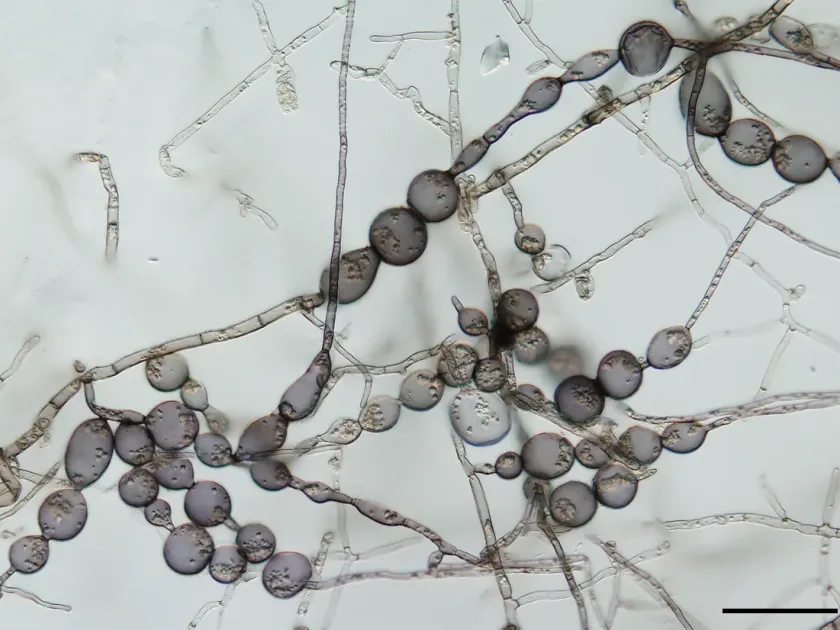
Description
Symptoms
Symptoms of infection appear as discoloration of plant tissues submerged in seawater.
The fungi develop fruit bodies, known as ascomata (perithecia), which are often embedded within the host tissue.
Microscopic examination reveals characteristic perithecia designed to protect spores from the harsh chemical environment of the sea.
Affected tissues lose structural integrity, becoming soft and prone to fragmentation over time.
- Darkened lesions on the surface of plant debris.
- Presence of tiny ostioles (dots) indicating fungal fruiting bodies.
- Tissue softening and decay.
- Microscopic detection of fungal mycelium in host cells.
- Reduced tensile strength of affected organic material.
Pathogen
The order Lulworthiales belongs to the class Sordariomycetes (phylum Ascomycota). These are highly specialized marine fungi known as obligate halobionts.
These microorganisms have evolved to thrive exclusively in marine and estuarine environments where high salinity is essential for their metabolism.
Their primary hosts include decaying remnants of marine macrophytes, such as seagrasses, mangroves, and brown algae.
These fungi produce specific enzymes capable of breaking down complex polymers like cellulose and lignin within high-salinity conditions.
Unlike terrestrial pathogens, their life cycle is intrinsically linked to tidal zones, allowing them to colonize substrates effectively.
Conditions for development
The development of Lulworthiales is strictly dependent on the salinity levels of the surrounding marine water.
Optimal conditions for fungal growth include high aeration and an abundance of carbohydrate-rich organic detritus.
Water temperature significantly affects the metabolic rate and colonization speed of these fungi.
Water currents play a vital role in spore dispersal and colonization, as these fungi have specialized appendages for substrate attachment.
Changes in water chemical composition may influence the growth dynamics and density of these fungal populations.
Why it matters
The harmfulness of Lulworthiales is primarily focused on the accelerated degradation of marine organic matter.
They contribute to the decay of seagrasses and mangroves, which can impact coastal protection ecosystems.
These fungi can also cause degradation of untreated wooden structures in coastal environments.
In aquaculture, an overgrowth of these fungi may negatively affect the biomass quality of commercially cultivated seaweeds.
While they are decomposers, their impact is vital for the natural nutrient recycling processes in ocean ecosystems.
Protection
Controlling marine fungi in open ocean environments is generally not feasible due to the vast scale of the ecosystem.
Protective strategies for infrastructure involve the use of specialized anti-fouling and antiseptic coatings.
In seaweed farming, management practices include monitoring planting density and water quality to limit excessive fungal growth.
Utilizing resilient or resistant species of marine plants can help mitigate the risks of colonization.
Environmental monitoring is critical to detect and manage potential outbreaks in controlled marine facilities.
Discussion
No discussions yet — be the first.