
Lophophacidium needle cast
Lophophacidium hyperboreum
Description
Symptoms
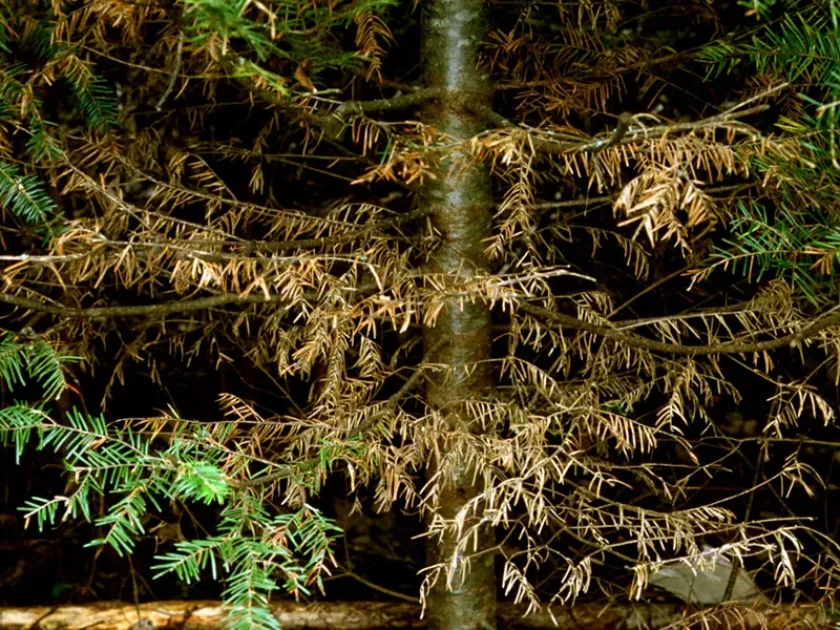
Symptoms initially appear on the previous year's needles as yellowish-brown discoloration, which gradually turns into a deeper reddish-brown.
Diagnostic features include small, black, eruptive fruiting bodies on the surface of the needles that are clearly visible upon close inspection.
Premature needle drop is a hallmark of the infection, often leaving branches bare and significantly reducing the density of the tree crown.
Young shoots may show signs of necrosis, with the infection spreading rapidly during periods of high humidity and favourable weather.
Severe infestations often result in the death of individual branches or the entire tree, especially in young or previously weakened specimens.
Pathogen
The disease is caused by the fungus Lophophacidium hyperboreum, which belongs to the group of ascomycetes infecting conifer needles.
The pathogen completes its life cycle by forming fruiting bodies known as apothecia, which emerge through the surface of infected needles.
The mycelium of the fungus develops internally within the needle tissue, effectively colonizing the host and deriving nutrients for growth.
Infection is primarily spread by spores dispersed by wind or rain splash, which land on healthy needles and initiate new cycles of infection.
This fungus exhibits high persistence in forest litter, where it remains viable as a saprophyte before infecting new host tissues.
Conditions for development
Lophophacidium needle cast thrives in environments characterized by prolonged moisture and high humidity, particularly during cool springs.
Dense stand structures and lack of adequate air circulation contribute significantly to the rapid spread of the pathogen between trees.
Trees that are under stress from drought, poor soil fertility, or mechanical injury are significantly more susceptible to successful fungal colonization.
The accumulation of infected debris on the forest floor provides an ideal reservoir for the fungus to persist and re-infect trees in subsequent years.
Optimal temperature ranges for fungal growth usually coincide with the active development stage of the host needles, increasing the risk of damage.
Why it matters
The main impact of this disease is the reduction of the tree's photosynthetic capacity due to the premature loss of foliage.
In nurseries, the pathogen can cause significant mortality among spruce seedlings, leading to substantial economic losses for foresters.
Chronic infection lowers the overall vigor of the host, making it susceptible to secondary attacks by bark beetles and other wood-boring insects.
The aesthetic value of spruce trees is severely compromised, which is particularly relevant in urban forestry and landscape management.
Large-scale outbreaks can alter forest dynamics and reduce overall stand productivity by hindering the growth of young trees.
Protection
Sanitation practices such as pruning infected branches and removing fallen needles are essential for reducing the local spore load.
Maintaining appropriate spacing during planting helps improve airflow and light penetration, effectively inhibiting the growth of the fungus.
Chemical control involving the use of copper-based fungicides can be effective when applied preventatively during the initial infection window.
Promoting tree health through balanced fertilization and adequate watering can boost the natural resistance of spruce to fungal pathogens.
- Regular site monitoring and assessment.
- Proper disposal of infected organic material.
- Avoidance of overcrowding in plantations.
- Selection of resistant spruce provenances.
Discussion
No discussions yet — be the first.