
Lophomerum ponticum
Lophomerum ponticum
Description
Symptoms
The initial signs of infection include a noticeable discoloration of the needles, which shift from a healthy green to a yellow or light brown hue as the fungus invades the host tissue.
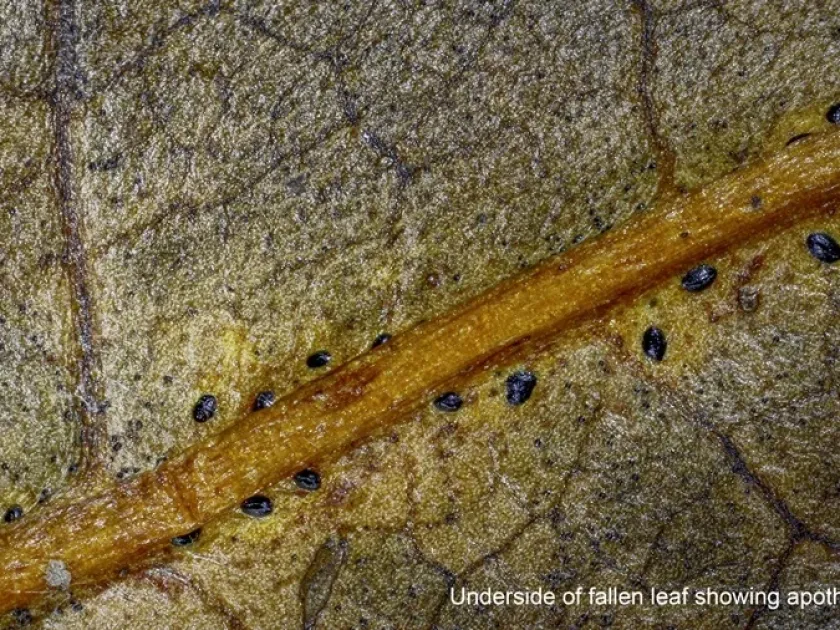
A definitive diagnostic feature is the appearance of tiny black dots, known as apothecia, scattered along the surface of the infected needles, indicating active spore production.
Needles affected by this disease often lose their structural stability and drop prematurely. This symptom is most evident in the lower portions of the crown, where the humidity levels are consistently higher.
Trees suffering from a heavy infestation exhibit a thin and sparse canopy, which significantly degrades their visual appearance and lowers their physiological vigor.
Detection is most successful when inspecting the tree in early spring or summer, as the development of symptoms often coincides with the onset of the tree's primary growth season.
Pathogen
Lophomerum ponticum is an ascomycete fungus that acts as a pathogen primarily affecting various spruce species. It is a known causative agent of needle cast, a condition that compromises the foliage of conifers.
The fungus colonizes the internal tissues of the needles, where it establishes its mycelium. This parasitic growth gradually causes the cells to lose their integrity, leading to the eventual death of the needle tissue.
A crucial phase in the life cycle of Lophomerum ponticum is the development of apothecia. These small, black, fruit-like bodies emerge through the epidermis of the needles to release spores.
The pathogen is highly adapted to the host, ensuring its survival during periods of dormancy by remaining in the fallen needles or on infected branches that stay attached to the tree.
Researching the specific biological requirements of this fungus is essential for forestry experts to accurately identify it and differentiate it from other needle cast pathogens.
Conditions for development
High humidity and moisture are the most critical environmental drivers for the development of Lophomerum ponticum. Rain-heavy seasons and foggy conditions provide the moisture necessary for spore germination.
Poor aeration within dense spruce stands prevents the foliage from drying effectively after precipitation, creating an environment that is highly conducive to fungal infection.
Moderate temperatures during the spring season promote the active release of spores, which are then spread to neighboring branches and trees via wind and water splashes.
Trees that are already under stress—whether due to poor soil quality, nutrient deficiencies, or site unsuitability—are significantly more susceptible to successful colonization by the fungus.
The accumulation of infected plant debris on the forest floor serves as an inoculum reservoir, allowing the disease to perpetuate itself year after year if not properly managed.
Why it matters
The primary impact of Lophomerum ponticum is the premature loss of needles, which leads to a reduction in the total photosynthetic capacity of the spruce tree and stunts its growth.
Continuous defoliation over several seasons weakens the tree, making it significantly more susceptible to secondary infestations by bark beetles and other opportunistic pests.
In nursery settings, this disease can cause substantial economic losses, as infected stock must be discarded or requires costly chemical treatment to remain marketable.
The ecological and aesthetic value of spruce forests is diminished as trees lose their density and health, affecting both wildlife habitats and park landscapes.
If left unmanaged, the pathogen can spread through a stand, causing widespread needle drop that can eventually lead to the decline of entire blocks of coniferous trees.
Protection
Sanitation is a vital component of control. Removing and destroying fallen needles prevents the primary source of spores from surviving the winter to reinfect the tree.
Improving cultural practices, such as thinning overcrowded stands, helps increase airflow around the canopy, reducing the moisture that the fungus requires to thrive.
Chemical control, utilizing appropriate fungicides, can be effective if applied during the critical windows of spore dispersal and early infection phases.
- Regular application of preventative fungicides.
- Ensuring proper tree nutrition to improve natural resistance.
- Selective pruning to promote better air circulation.
Monitoring the forest or nursery regularly allows for the early detection of the pathogen, enabling prompt intervention that can prevent a localized outbreak from becoming a severe, widespread problem.
Discussion
No discussions yet — be the first.