
Lophodermium needle cast
Lophodermium vagulum
Description
Symptoms
Symptoms typically manifest as yellowing of the needles, which eventually turn brown and fall off prematurely. This often occurs during late summer and autumn months.
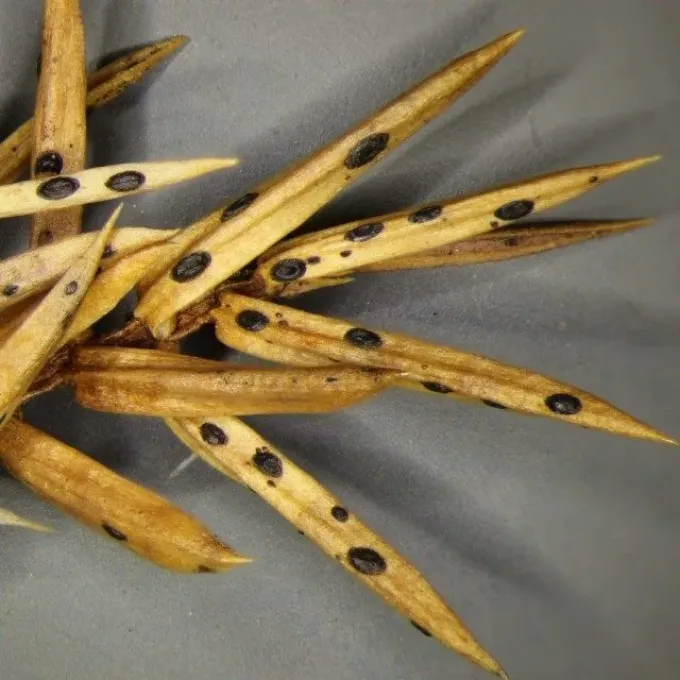
Diagnostic features include the appearance of small, black, transverse lines or spots on the surface of the dead needles. These represent the fungal fruiting bodies maturing through the epidermis.
Infected trees often exhibit severe needle drop, especially in the lower canopy, leading to a thin, sparse appearance of the branches as the infection progresses upward.
In cases of heavy infestation, the entire crown may become discolored and stunted. The tree loses its vital energy, making it look sickly and significantly reducing its ornamental value.
Under magnification or in humid conditions, a greyish mycelial growth might be visible on the surface of infected needles, confirming the presence of the active fungal parasite.
Pathogen
The disease is caused by the ascomycete fungus Lophodermium vagulum, which targets various conifer species. This pathogen is a significant cause of needle loss, affecting tree health and development.
The fungus produces fruiting bodies called apothecia on infected needles. These structures are responsible for the dispersal of spores, which are carried by wind and splashing rain to healthy plant tissues.
The fungus invades the needle tissue through the stomata. Once inside, it develops a mycelial network that interferes with the plant's nutrient uptake and respiratory functions, leading to chlorosis and necrosis.
Lophodermium vagulum can survive on shed needles on the forest floor for extended periods. These remnants serve as a primary reservoir for the infection cycle in subsequent seasons.
The biological success of the pathogen is closely linked to moisture levels. High humidity is essential for the germination of spores and the establishment of new infections on host plants.
Conditions for development
Cool, wet, and humid conditions are ideal for the development and spread of Lophodermium vagulum. The fungus thrives in stagnant air and environments with high moisture levels.
Dense, overcrowded planting schemes restrict airflow, creating a persistent microclimate that favors the pathogen. Poor sunlight penetration in the inner crown further weakens the needles.
Trees under stress, whether due to drought, nutritional deficiencies, or soil compaction, are significantly more susceptible to infection. Healthy trees are generally better equipped to resist the pathogen.
The timing of spore release is closely tied to rainfall. Wet weather events are major catalysts for the rapid dispersal of the disease throughout a plantation or nursery.
Improper site selection and lack of sanitation are critical factors. Accumulation of infected organic debris around the base of the trees ensures an annual cycle of reinfection.
Why it matters
The most severe impact is the premature loss of needles, which significantly reduces the tree's photosynthetic capacity. This limits growth and can eventually lead to the tree's death.
Persistent needle cast infections weaken the host tree, making it susceptible to secondary infestations by bark beetles and other pathogenic wood-decaying organisms.
In forest nurseries, this disease causes devastating losses, killing young seedlings and hindering production. This has significant economic consequences for the forestry sector.
Trees affected by chronic needle cast lose their structural integrity and aesthetic appeal, rendering them useless for landscaping or high-value timber production.
If left unmanaged, the infection can spread across entire stands, turning a healthy forest into an area of diseased and dying trees over just a few years.
Protection
Sanitation is the cornerstone of control; raking and destroying fallen needles effectively removes the main source of the inoculum from the vicinity of the trees.
Pruning infected branches and thinning stands improves ventilation, which helps lower the humidity within the canopy and creates conditions less favorable for the fungus.
Fungicide applications, particularly those containing copper or systemic active ingredients, are effective when applied preventively during the peak spore-dispersal seasons.
- Selection of disease-resistant conifer varieties for planting.
- Ensuring proper spacing to facilitate air movement between trees.
- Maintaining tree vigor through appropriate fertilization and hydration.
- Regular monitoring of needle condition during early spring and late autumn.
Effective management requires a combination of cultural practices and timely chemical intervention to suppress the disease and maintain the health of the conifer population.
Discussion
No discussions yet — be the first.