
Lophodermium needle cast
Lophodermium seditiosum
Description
Symptoms
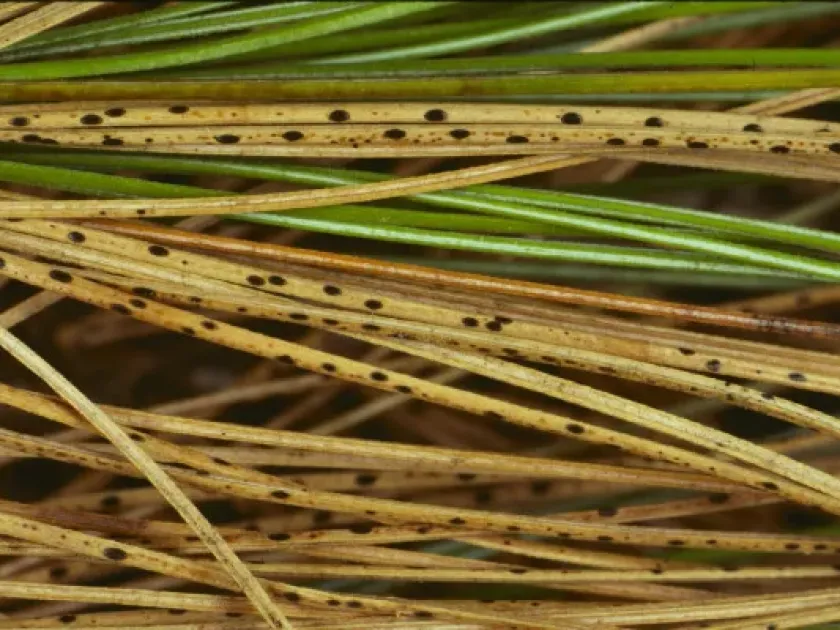
The first symptoms are often identified as yellow spots on the pine needles, which eventually turn brown or reddish-brown as the infection progresses.
Transverse dark bands appear across the needles, a key diagnostic feature of Lophodermium infections in many pine species.
Later, the characteristic black, glossy, oval fruiting bodies (hysterothecia) erupt through the epidermis of the needles, usually visible in late summer.
Significant needle drop is observed, causing the tree to have a thin, sparse crown which is a major aesthetic and physiological indicator of the disease.
In forest nurseries, high-density seedling stands show rapid browning and mortality, often spreading in circular patterns through the beds.
Pathogen
The disease is caused by the fungus Lophodermium seditiosum, an ascomycete pathogen that specifically targets pine trees (Pinus species).
The fungus produces apothecia, which are small black fruiting bodies that develop on infected needles, serving as the source of infectious spores.
Infection typically occurs when spores are dispersed by rain and wind, landing on healthy needles where they germinate and enter through the stomata.
The pathogen thrives during the growing season, colonizing the needle tissues and eventually leading to the death of the needles and premature defoliation.
Its life cycle is perfectly adapted to the pine environment, allowing the fungus to survive winter conditions on fallen needles and resume sporulation in the spring.
Conditions for development
High relative humidity and frequent rainfall are the primary environmental drivers for spore germination and infection establishment.
Periods of moderate temperature and prolonged moisture, often seen in late summer or autumn, facilitate the most critical window for primary infection.
Densely planted or poorly ventilated stands create a microclimate that traps moisture and spores, significantly increasing the risk of an outbreak.
Environmental stress, such as nutrient deficiencies or drought, can weaken the tree's defense mechanisms, making it more susceptible to fungal entry.
A thick layer of infected needle litter beneath the trees serves as a persistent reservoir, releasing spores repeatedly every season.
Why it matters
This needle cast disease causes substantial economic losses by stunting the growth and reducing the survival rate of young pine plantations.
The loss of foliage directly impacts the tree's photosynthetic capacity, leading to overall reduced vigor and increased susceptibility to secondary pests.
Severe infestations can lead to total tree death, particularly in young saplings that cannot withstand the loss of their photosynthetic needles.
In the forestry industry, this leads to increased reforestation costs and lower quality timber due to the stunted development of the trees.
From a landscape perspective, the disease ruins the appearance of ornamental pines, making them undesirable for parks and garden settings.
Protection
Preventive measures include the selection of resistant pine varieties and ensuring optimal spacing between trees to improve air circulation.
Sanitation is paramount; removing and destroying infected needles from the ground helps reduce the local spore concentration for the next season.
- Application of copper-based or systemic fungicides during periods of spore release.
- Monitoring nursery beds regularly to catch early signs of needle browning.
- Maintaining soil health and proper hydration to keep trees robust and resistant to fungal attacks.
Cultural practices, such as proper site selection and avoiding waterlogged areas, play a critical role in minimizing the disease pressure.
Integrated pest management strategies focusing on early detection and timely application of chemicals remain the most effective approach for control.
Discussion
No discussions yet — be the first.