
Pine needle cast
Lophodermium platyplacum
Description
Symptoms
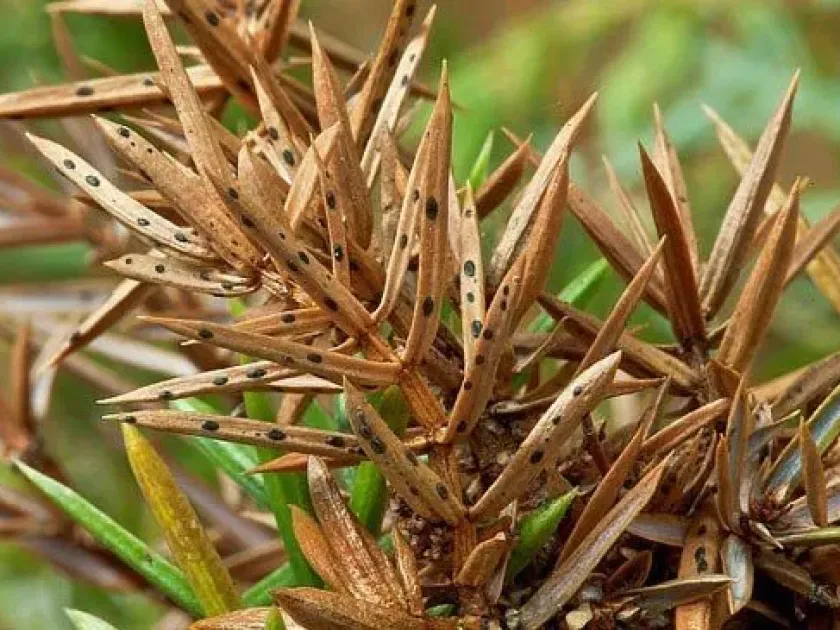
Initial symptoms include the yellowing of needles, which eventually turn a distinct reddish-brown as the infection progresses throughout the tissue.
One of the most characteristic signs is the presence of dark, transverse lines crossing the needles, which serves as a reliable diagnostic feature.
Later in the season, small, black, shiny fruiting bodies (apothecia) appear on the surface of the needles, which may erupt through the epidermis.
Premature needle cast is common, leading to significant defoliation, particularly in the lower canopy where environmental conditions are more humid.
- Needle yellowing and browning.
- Distinct dark cross-bands on needles.
- Visible black fruiting bodies.
- Premature and heavy needle shedding.
Pathogen
The disease is caused by the ascomycete fungus Lophodermium platyplacum, which primarily infects various species of pine trees worldwide.
The pathogen completes its life cycle on the needles, producing reproductive structures known as apothecia that appear as elongated black spots on the needle surface.
Spores are dispersed by splashing rain and wind, allowing the fungus to spread rapidly throughout dense plantations and nursery environments.
The fungus overwinters as mycelium and fruiting bodies on fallen needles, making the forest floor a primary source of primary infection each spring.
The biological adaptation of this fungus allows it to remain dormant during unfavorable conditions and activate rapidly during periods of high humidity.
Conditions for development
Development of the disease is highly dependent on humidity, with frequent rainfall and fog providing the necessary moisture for spore germination.
Mild temperatures during the spring and early summer act as a catalyst for the fungus to complete its infection cycle on new needle growth.
Dense planting schemes in tree nurseries inhibit airflow, creating a localized high-humidity microclimate that facilitates rapid disease spread.
Stressed trees, particularly those lacking proper nutrients or water, show less resistance to the penetration and colonization of the fungal hyphae.
Poorly managed sites with accumulated organic debris provide the perfect environment for the pathogen to persist and re-infect subsequent growth.
Why it matters
The economic impact on forestry is significant, as the disease can cause mass mortality of pine seedlings in nurseries within a single season.
Chronic infection results in severe physiological stress for mature trees, making them highly susceptible to secondary attacks by bark beetles.
Reduction in photosynthesis due to premature needle loss leads to decreased annual growth increments and stunted development of the trees.
In ornamental landscaping, the disease drastically reduces the aesthetic value of pine trees, making them unsuitable for commercial sale or public planting.
If left unmanaged, the cumulative effect of the disease can lead to the long-term degradation of forest stands and ecosystem health.
Protection
Sanitation is the first line of defense, involving the removal and destruction of fallen needles to eliminate the reservoir of fungal spores.
Implementing proper spacing between trees during planting ensures better air circulation, which helps keep needle moisture levels within safe limits.
Chemical control utilizing copper-based fungicides or systemic triazoles is effective when applied during periods of active spore release.
Improving soil health through balanced fertilization enhances the tree's natural defense mechanisms against fungal pathogens.
Regular scouting and monitoring programs allow for early detection, enabling arborists to implement control measures before a widespread outbreak occurs.
Discussion
No discussions yet — be the first.