
Lophodermium needle cast of fir
Lophodermium nervisequium
Description
Symptoms
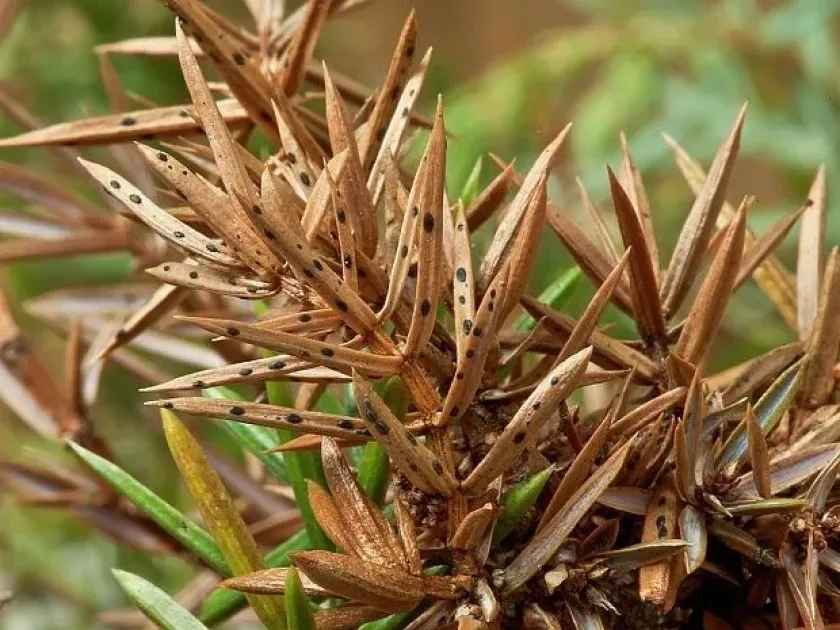
The primary symptom of the disease is the yellowing or browning of fir needles, which typically becomes visible during the spring months. The needles acquire a reddish-brown hue but remain attached to the shoots for an extended period before eventually dropping.
Over time, the fruiting bodies of the fungus, known as apothecia, develop on the underside of the infected needles. These appear as narrow, elongated black strips running parallel to the central midrib of the needle, which is a diagnostic feature.
Severe infection leads to mass premature needle drop, causing significant thinning of the branches. This effect is most pronounced in the lower parts of the crown, where higher humidity levels typically favor fungal development.
The intensity of the symptoms depends largely on the age of the tree and the severity of the infection. Young fir seedlings in nurseries are particularly vulnerable and often show more dramatic symptoms than mature trees.
It is important to differentiate this disease from other types of needle cast. The presence of distinct black lines along the needle midrib is a key diagnostic characteristic that helps confirm the presence of this specific pathogen.
Pathogen
The disease is caused by the ascomycete fungus Lophodermium nervisequium. This pathogen is specialized for attacking fir needles and is classified among the fungi that cause needle cast diseases in conifers.
The fungal life cycle involves the release of spores that are disseminated by wind or rain splash. Spores germinate through the needle stomata, after which the fungal mycelium begins to colonize the host plant tissues.
The fungus overwinters inside infected needles that are either still on the tree or have fallen to the forest floor. These fallen needles act as a constant reservoir for new infections in subsequent seasons.
In the spring, under favorable temperature conditions, the fungus completes its life cycle by producing mature fruiting bodies. These release a new wave of spores that infect the young, developing needles of the current season.
The pathogen's activity is closely linked to the host's vigor. Trees stressed by nutrient deficiencies, drought, or poor growing conditions are more susceptible to colonization by the fungal mycelium.
Conditions for development
High humidity and moisture are the primary drivers of Lophodermium development. Dense plantations with poor air circulation create an ideal microclimate for spore germination and rapid spread of the fungus.
The peak activity of the disease occurs during periods of prolonged rainfall and moderate temperatures. Constant wetness on the needle surface facilitates mycelium growth, especially in shaded or low-light areas of the forest.
Lack of sunlight also promotes outbreaks. In shaded environments, moisture evaporates slowly, keeping the needles wet for longer periods and allowing more time for spores to penetrate the plant tissue.
Poor ventilation in nurseries leads to the accumulation of inoculum in the lower canopy. Crowding of seedlings prevents the foliage from drying quickly after rainfall or heavy morning dew.
Neglecting sanitation practices, such as failing to remove and destroy fallen needles, provides a continuous source of infection. This ensures the conditions for the disease to return and spread every single year.
Why it matters
The main harm caused by Lophodermium is the disruption of photosynthesis due to extensive needle loss. This weakens the tree, slows its growth rate, and significantly reduces its overall resistance to secondary stressors.
For young nursery seedlings, the disease can lead to complete mortality within one or two seasons. The loss of a significant portion of the photosynthetic apparatus is fatal, as young plants cannot accumulate enough reserves for the winter.
Loss of ornamental value is a major concern when fir trees are used in landscaping. Infected trees appear sparse and unattractive, which diminishes their value in decorative garden or park compositions.
Persistent infection makes fir trees susceptible to secondary pests and pathogens. Weakened trees often attract stem-boring insects, which can accelerate the decline and eventual death of the entire tree.
Economic impacts in forestry include reduced timber productivity and increased costs for forest management and sanitation. Large-scale outbreaks require significant investment in disease suppression and reforestation efforts.
Protection
The foundation of effective prevention is the regular removal and destruction of fallen needles. Eliminating this debris from beneath the trees significantly reduces the amount of inoculum available for spring infection.
It is essential to avoid overcrowding by implementing proper spacing and thinning. Improving air circulation within the canopy creates a microclimate that is unfavorable for fungal growth and survival.
For disease management, fungicide treatments using copper-based products or systemic fungicides are applied. Spraying should occur at the beginning of the growing season when spores are most active and vulnerable.
Enhancing the health of the trees through balanced fertilization and proper irrigation is key. Strong, healthy trees are naturally more resistant to infection compared to those under environmental stress.
- Monitor trees regularly for early signs of discoloration or needle drop.
- Use only high-quality, disease-free planting stock for new plantations.
- Prune and destroy infected branches immediately upon detection.
- Follow strict quarantine protocols when moving nursery stock to prevent spread.
Discussion
No discussions yet — be the first.