
Lophodermium needle cast
Lophodermium minor
Description
Symptoms
Initial symptoms include the appearance of small yellowish or brownish spots on the pine needles, which slowly expand as the fungus consumes the plant tissue.
As the infection progresses, entire needles transition from green to a distinct reddish-brown or dull brown color, leading to significant chlorosis.
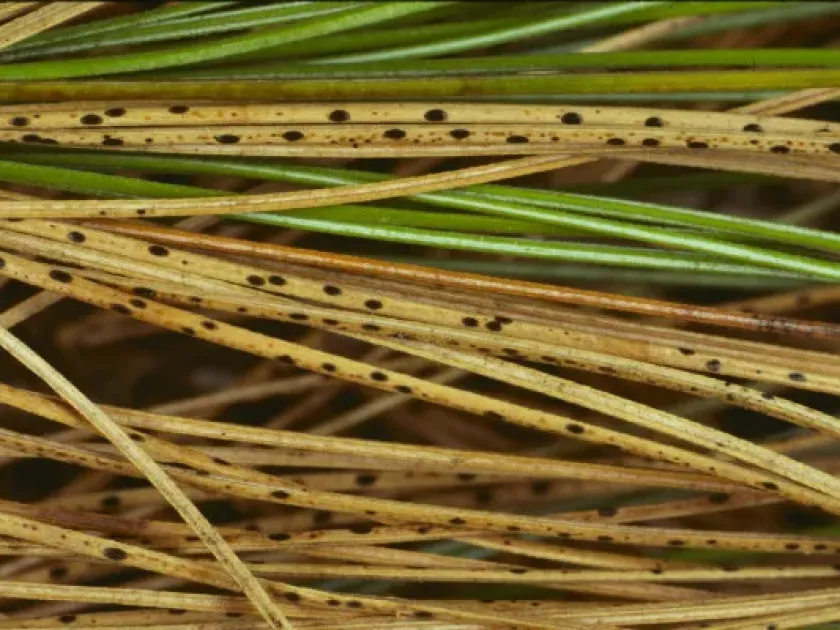
Dark, transverse bands often appear on the affected needles, serving as a key visual indicator of the Lophodermium fungal activity.
Severe infestations lead to a thinning crown, as the infected needles become brittle and drop prematurely, often starting from the lower branches.
Infected needles that persist on the tree during the spring may show visible black, shiny, longitudinal structures, which are the fungal fruiting bodies ready to release more spores.
Pathogen
The disease is caused by the fungus Lophodermium minor, an ascomycete pathogen specifically targeting pine needles. It is a common cause of premature needle drop in pine forests and nurseries.
The fungus produces small, black, elliptical fruiting bodies known as apothecia. These structures develop on dead needles, appearing as diagnostic spots after the needles have fallen to the ground.
During favorable weather, these fruiting bodies release spores into the air, which are then distributed by wind or rain splash to infect healthy needles on neighboring branches or trees.
The fungal mycelium colonizes the interior tissue of the needles, effectively breaking down the chlorophyll-producing cells and eventually causing the needle to die.
Overwintering occurs primarily in the needle litter, making the cycle of infection highly dependent on the presence of debris from previous years.
Conditions for development
High humidity and mild temperatures are the primary drivers for the spread of the disease. Prolonged wet weather during the spore-dispersal season facilitates massive outbreaks.
Dense planting configurations in tree nurseries restrict airflow and keep needle surfaces moist for longer periods, which is ideal for spore germination.
Trees suffering from nutrient deficiencies or drought stress exhibit reduced resistance, making them more susceptible to primary infection by the pathogen.
Poor sanitation practices, such as failing to remove infected fallen needles, create a reservoir of inoculum that fuels recurrent infection cycles every year.
Fluctuating spring temperatures combined with lingering moisture can trigger premature spore release, leading to widespread infection of new spring growth.
Why it matters
The primary harm caused by Lophodermium needle cast is the severe reduction in photosynthetic capacity, which directly results in stunted tree growth and low vigor.
Increased vulnerability to secondary pests, such as bark beetles, often occurs because the trees are already weakened by the fungal needle loss.
Economic losses in the forestry sector can be substantial, particularly in nurseries where large batches of seedlings may be condemned due to high infection rates.
Landscape trees lose their aesthetic value and can become unsightly, which poses a significant problem for park management and urban greenery projects.
Chronic annual infection cycles can eventually lead to the mortality of young trees, negatively impacting reforestation efforts and local biodiversity.
Protection
Sanitation is the most effective preventative measure; regularly clearing and destroying infected leaf litter prevents the build-up of fungal spores in the soil.
Applying appropriate fungicides during the peak spore-release period is crucial for nurseries to keep infection levels within acceptable thresholds.
Ensuring proper spacing between seedlings promotes better air circulation, which helps keep the foliage dry and inhibits fungal spore germination.
Balanced fertilization and good soil management help maintain strong tree health, allowing the pine to develop better natural resistance against minor infections.
Regular monitoring of forest stands and nursery beds allows for the early detection of disease outbreaks, enabling prompt intervention before the infection spreads widely.
Discussion
No discussions yet — be the first.