
Lophodermium mangiferae
Lophodermium mangiferae
Description
Symptoms
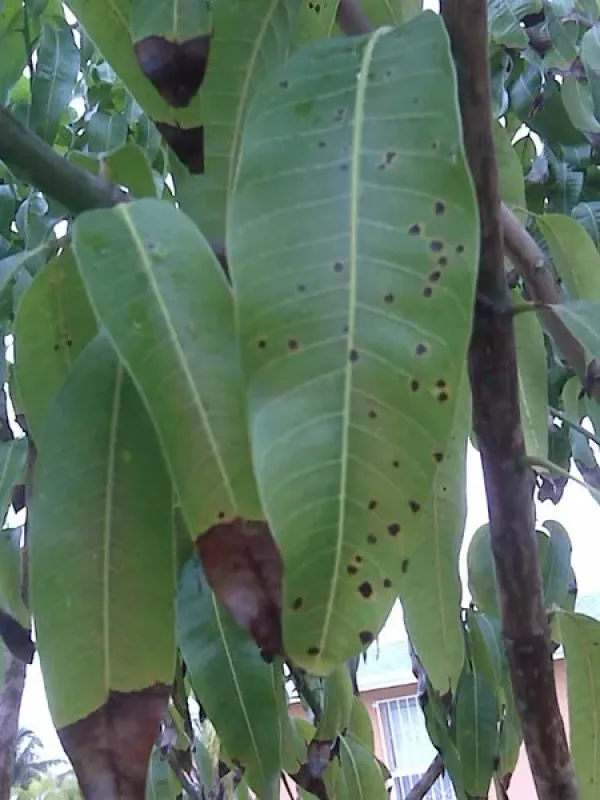
Early symptoms appear as small, subtle spots on the leaf surface. As the infection progresses, these spots often expand into larger necrotic lesions with distinct margins.
The lesions frequently exhibit a brownish or greyish center, often surrounded by a darker border. This transition in color indicates the death of the cells underlying the fungal colony.
Small, black, dot-like structures known as apothecia develop within the necrotic spots. These are diagnostic signs of the presence of Lophodermium mangiferae.
Severely infected leaves tend to undergo chlorosis and often drop prematurely. This leads to reduced canopy density and an overall decline in the tree's health and vitality.
In humid conditions, the surface of the lesions may show signs of fungal fruiting bodies, further compromising the integrity of the leaf and its ability to function normally.
Pathogen
The causal agent of this disease is the ascomycete fungus Lophodermium mangiferae. It is a specialized pathogen that predominantly targets the leaf tissue of mango plants in tropical regions.
The fungus colonizes the leaf tissue by penetrating the cuticle and invading the mesophyll cells, where it establishes its mycelium network, causing gradual tissue necrosis.
Its life cycle involves the production of apothecia, which are fruiting bodies that emerge through the leaf surface. These structures release spores that are easily dispersed by rain splash and wind currents.
The pathogen is known for its ability to persist in fallen leaf litter, which acts as a primary source of inoculum for the subsequent growing season if not properly managed.
As a host-specific fungus, its biology is finely tuned to the physiology of the mango tree, necessitating targeted management programs to mitigate its impact on plant health.
Conditions for development
High relative humidity and frequent rainfall are the most critical environmental drivers for the development and spread of this disease in mango orchards.
Temperatures ranging from 20°C to 28°C provide the optimal conditions for spore germination and rapid mycelial growth, facilitating disease progression during the rainy season.
Poor airflow within the tree canopy creates a microclimate with prolonged leaf wetness, which is highly conducive to infection by fungal spores landing on the leaf surface.
Low light intensity, particularly in the lower and interior parts of the canopy, creates an environment where moisture persists longer, hindering natural disease resistance mechanisms.
The presence of old, decaying leaves beneath the canopy provides a ready source of spores that can be splashed onto the lower foliage during the early stages of a new growing cycle.
Why it matters
The primary damage caused by this disease is the reduction of the plant's photosynthetic capacity. When a significant portion of the leaf area is destroyed, the tree's energy reserves are depleted.
Weakened trees exhibit slower growth rates and reduced vegetative vigor, which ultimately affects their ability to withstand other environmental stresses or pest attacks.
Yield loss is a common consequence, as the tree lacks the necessary carbohydrates to support both fruit development and structural growth, leading to smaller or poor-quality harvests.
The necrotic lesions created by the fungus serve as entry points for secondary infections by opportunistic bacteria and other fungi, further accelerating the decline of the plant.
Economic losses are compounded by the high costs associated with repeated fungicide applications and the labor required for orchard sanitation and disease monitoring.
Protection
Effective management begins with strict orchard sanitation. Collecting and destroying fallen leaves is essential to remove the primary source of fungal inoculum from the field.
Pruning is a critical practice to improve canopy ventilation and light penetration. This helps to reduce leaf wetness and creates an environment less favorable for the pathogen.
The application of copper-based fungicides or other broad-spectrum protective agents is recommended during periods of high humidity to prevent new infections from establishing.
Integrated disease management should involve early detection through regular scouting of the orchard, allowing for targeted intervention before the disease reaches an epidemic stage.
Balanced fertilization, particularly ensuring adequate potassium levels, helps strengthen the structural integrity of leaf tissues, potentially increasing the tree's resistance to fungal invasion.
Discussion
No discussions yet — be the first.