
Lophodermium needle cast
Lophodermium maculare
Description
Symptoms
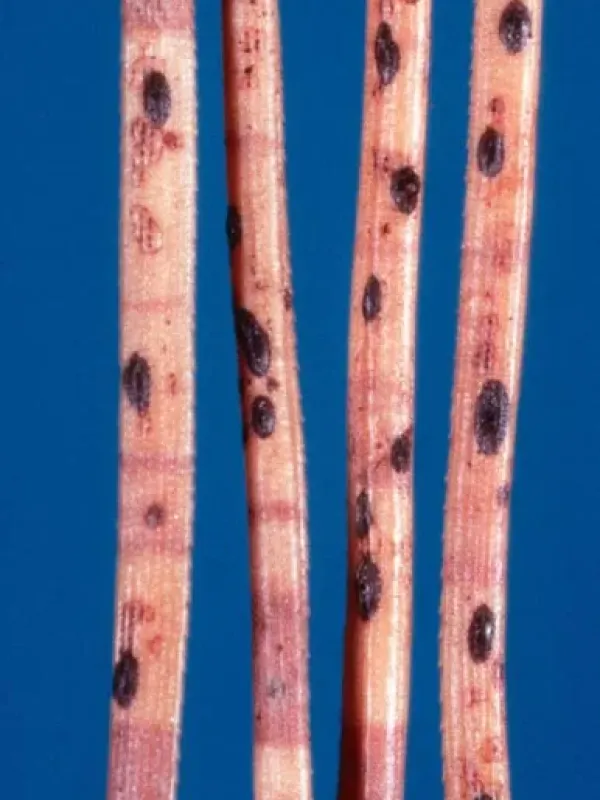
The initial signs include the appearance of localized spots on the needles, often brown or reddish-brown in color. These spots are usually well-defined and can eventually expand to cover the entire needle.
Small black structures, known as apothecia (fruiting bodies), appear on the surface of the infected needles. These are reliable indicators of the presence of the pathogen in the host tissue.
As the infection progresses, the needles turn yellow, dry out, and eventually drop prematurely. This leads to a thin appearance of the canopy, commonly referred to as "needle cast."
Differentiating this from other needle diseases requires observing the specific pattern of the apothecia. In severe cases, the entire year's growth can be lost, significantly impacting the tree's health.
The premature drop of needles is the most visible symptom that alerts forest managers to the presence of an underlying fungal problem in the nursery or plantation.
Pathogen
The disease is caused by the ascomycete fungus Lophodermium maculare. This pathogen specifically targets the foliage of various conifer species, causing distinctive needle spots and blight.
The fungus overwinters in infected needles, either attached to the branches or fallen on the ground, in the form of mycelium or fruiting bodies. During the spring, it produces spores that are released to infect new healthy needles.
It is classified as a needle cast disease, which impairs the plant's ability to undergo photosynthesis. The lifecycle of the pathogen is intricately linked to the moisture levels within the forest canopy.
Researchers study this fungus extensively in forest pathology to understand how it contributes to the weakening of forest stands. Its ability to survive in diverse conditions makes it a persistent pathogen.
The fungus is highly specialized, and its infection process involves the penetration of spores into the needle tissue under favorable environmental conditions.
Conditions for development
High humidity and frequent rainfall are the primary environmental drivers for the development and spread of Lophodermium maculare. Wet conditions facilitate the germination of fungal spores.
Overcrowded plantations with poor air circulation are particularly susceptible to infection. Stagnant moisture on the foliage creates an ideal environment for the fungus to thrive and spread.
Moderate temperatures during the spring and early summer provide the optimal window for spore dispersal. During this period, the trees are most vulnerable to initial infection.
Trees already weakened by drought, poor soil quality, or nutrient deficiencies show less resistance to the disease. Healthy trees are generally better equipped to limit the spread of the infection.
The duration of foliage wetness is a critical metric for forest health monitoring; longer wet periods increase the likelihood of successful fungal colonization on healthy needles.
Why it matters
The primary damage is the loss of needles, which reduces the tree's photosynthetic capacity. This loss directly leads to stunted growth and reduced vigor in coniferous trees.
In nurseries, this disease can cause high mortality rates among young seedlings. For older trees, repeated infections can weaken them enough to attract secondary pests like bark beetles.
The loss of foliage affects the overall aesthetic value of ornamental conifers and the economic value of timber plantations, leading to financial losses for land managers.
The weakened state of the trees makes them less resilient to other environmental stressors, creating a compounding effect on tree health and forest productivity.
Managing the disease requires long-term intervention strategies, including labor-intensive sanitation efforts to remove the source of inoculum from the environment.
Protection
Effective management begins with strict sanitation practices. Removing and destroying infected needles from the ground is crucial to reducing the primary source of the fungus for the following season.
Chemical control using systemic or contact fungicides is recommended in high-risk areas, especially during the spring when spores are actively released. Preventive sprays are key to success.
Proper silvicultural practices, such as thinning stands to improve air circulation, help create an environment less favorable for fungal growth and spread.
Selecting and planting resistant species or varieties can significantly reduce the risk of outbreaks in both reforestation projects and commercial nurseries.
- Regular monitoring of needle health in early spring
- Disinfection of pruning tools to prevent spread
- Balanced nutrient application to boost tree immunity
- Timely removal of fallen needles and debris
Discussion
No discussions yet — be the first.