
Lophodermium kumaunicum
Lophodermium kumaunicum
Description
Symptoms
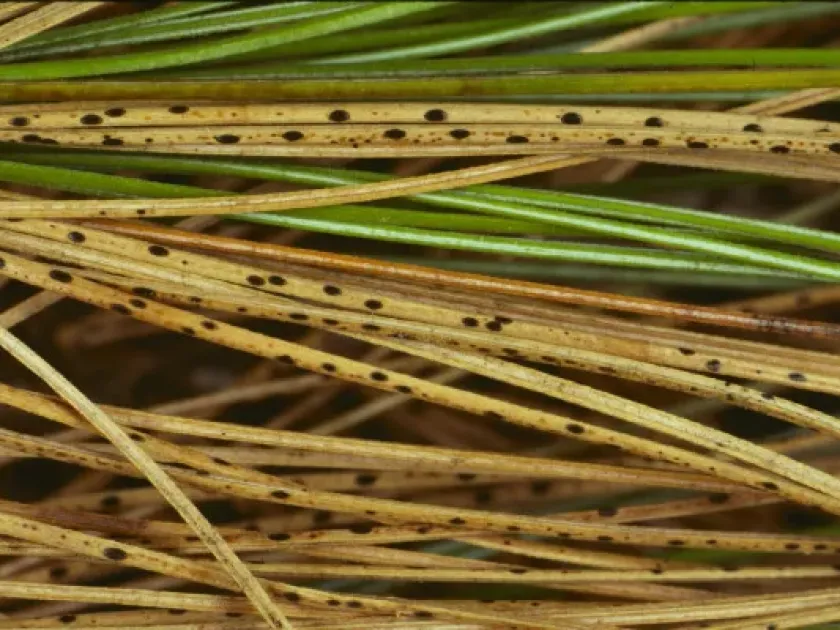
The first and most apparent sign of infection is the discoloration of needles. Initially, chlorotic spots appear, which gradually transition into a brownish or grayish-brown shade.
On the infected needles, dark transverse bands are frequently observed; these are a hallmark of Lophodermium fungi activity. This feature helps visually distinguish the disease from natural physiological browning.
Upon careful examination, small, black, elongated fruiting bodies of the fungus can be detected. These structures stand out clearly against the yellowing tissue of the needle.
The progression of the disease is accompanied by mass premature needle drop, particularly in the lower part of the tree crown. In severe cases, this can lead to almost complete denudation of the branches.
Under high humidity conditions, a faint fungal growth consisting of conidial sporulation may appear on the surface of the affected tissues, serving as a secondary indicator of active pathogen development.
Pathogen
The causative agent of this disease is the ascomycete fungus Lophodermium kumaunicum. This pathogen belongs to the group of fungi that cause specific needle lesions, broadly categorized as needle cast diseases.
The life cycle of the fungus involves the formation of fruiting bodies, known as apothecia, which develop on the surface of dead needles. These structures release spores that travel long distances via air currents and moisture droplets.
The fungus acts as a parasite by feeding on the living tissues of the needles during the initial infection phase. Over time, it transitions to a saprotrophic phase, completing the decomposition of the plant tissue.
Mycelium from the pathogen penetrates deeply into the needle tissues, disrupting essential processes such as photosynthesis and gas exchange. This leads to gradual wilting and the subsequent shedding of affected organs.
A significant aspect of the fungus's biology is its ability to persist in forest litter and on fallen needles for long periods. This creates a persistent reservoir of infection within the stand.
Conditions for development
High humidity and soil moisture are the primary factors promoting the development of Lophodermium kumaunicum. Prolonged rainfall during the spring and summer creates ideal conditions for spore germination.
Stressed stands growing in unfavorable ecological conditions are more susceptible to infection. Overcrowded plantings and poor air circulation within the canopy further facilitate the accumulation of the pathogen.
A moderate temperature range (15 to 22 degrees Celsius) is most favorable for the active growth of fungal mycelium within needle tissues.
Dense nurseries and forest plantations with excessive nitrogen fertilization often show higher rates of infection. The overgrowth of succulent needle tissues makes them more vulnerable to fungal entry.
The accumulation of old, infected needle litter under trees serves as an additional infection reservoir that activates when favorable weather conditions return in the following season.
Why it matters
The primary danger of the disease lies in the weakening of the conifer's immune system. The loss of a significant portion of the needles reduces photosynthetic capacity, leading to stunted overall growth and development.
Systemic infection over several years causes trees to lose their aesthetic value and reduces timber quality. This is a critical concern for forestry enterprises and ornamental nurseries.
Trees severely weakened by the fungus become susceptible to secondary pests, such as bark beetles. This significantly increases the risk of total mortality within the forest stand.
Disruption of metabolic processes leads to reduced winter hardiness in the trees. During harsh winters, such plants are more prone to freeze damage, compounding the overall impact of the pathogen.
The economic loss stems not only from reduced timber yields but also from the costs associated with sanitary thinning and protective treatments in infected areas.
Protection
The foundation of effective protection is strict adherence to agronomic practices. In nurseries, it is essential to avoid overcrowding seedlings and to ensure proper air circulation between plants.
Regular removal and disposal of plant debris, especially fallen needles, are highly recommended. This drastically reduces the infectious background, as the fungus overwinters in the litter.
The application of fungicides is an effective control method during the active sporulation period. Treatments with copper-based preparations or systemic fungicides help contain primary infection foci.
Conducting sanitary thinning in forest stands allows for the removal of heavily infected trees, preventing the spread of spores to healthy sections of the forest.
Using resistant species and cultivars is the most promising method for long-term prevention. Selecting high-quality, pathogen-free planting material minimizes the risks of future losses.
Discussion
No discussions yet — be the first.