
Lophodermium indianum
Lophodermium indianum
Description
Symptoms
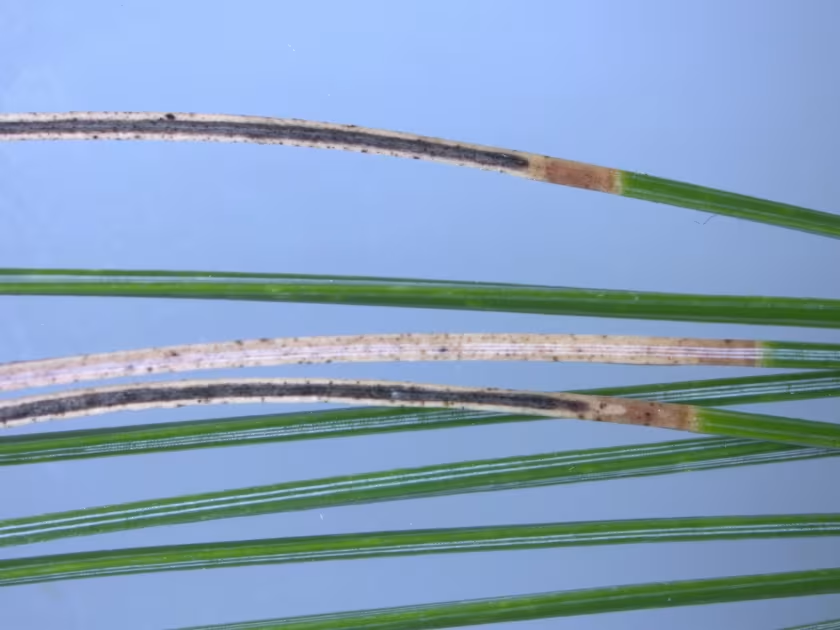
The primary symptom of infection is the development of yellow-to-brown spots on the needles, which eventually expand and cause the entire needle to turn necrotic and wither.
A distinctive diagnostic feature is the appearance of fine, dark, transverse lines on the needle surface, indicating the internal growth and progression of the fungal mycelium.
As the disease matures, black, elongated, slit-like fruiting bodies (hysterothecia) erupt through the needle's epidermis, marking the stage of active spore production.
Premature needle cast is a common sign in heavily infested areas, leading to sparse foliage and a noticeable decrease in the overall health and vigor of the affected trees.
In advanced stages of infection, the crowns of infected trees appear thin and discolored, significantly reducing their aesthetic value and photosynthetic efficiency.
Pathogen
The causal agent of this disease is the fungus Lophodermium indianum, which belongs to the order Phacidiales and specializes in infecting coniferous species, particularly within the Pinaceae family.
This pathogen acts as a parasitic ascomycete that completes its life cycle by forming specialized fruiting bodies known as hysterothecia within the host plant tissues.
The fungus colonizes the needles, forming a dense mycelial network that systematically breaks down the cellular structure, effectively disrupting the tree's metabolic processes.
Survival of the pathogen is facilitated by its ability to remain dormant in fallen needles on the forest floor, which serves as a primary source of inoculum for subsequent seasons.
Dissemination is predominantly achieved through the release of ascospores into the air, which are then carried by wind currents to healthy needles when humidity levels are sufficiently high.
Conditions for development
The disease thrives in environments characterized by persistent high humidity, frequent rainfall, and moderate temperatures, which are optimal for spore germination.
Densely planted nurseries or overcrowded forest stands create microclimates with poor air circulation, significantly increasing the risk of rapid disease transmission.
Trees that are weakened by environmental stressors, such as nutrient deficiencies, drought, or insect damage, exhibit increased susceptibility to fungal colonization.
The presence of significant amounts of leaf litter beneath the trees provides a stable substrate for the fungus to persist and multiply over multiple growing seasons.
Extended periods of overcast weather and fog create favorable conditions for the mycelium to spread across the needles and establish new infection sites efficiently.
Why it matters
The major impact of this disease is the massive loss of needle foliage, which directly impairs the tree's ability to produce energy through photosynthesis, leading to stunted growth.
In forestry nurseries, Lophodermium indianum can cause high mortality rates among seedlings, resulting in severe economic consequences and project delays.
Trees affected by the blight exhibit reduced resistance to other biotic and abiotic stressors, making them more vulnerable to secondary pests like bark beetles.
Chronic infection results in a substantial decrease in timber quality and annual growth volume, negatively affecting the long-term productivity of forest stands.
The weakened physiological state of the trees makes them less resilient to climate-related challenges, such as extreme heat or cold stress during the winter months.
Protection
Integrated disease management involves a combination of sanitation practices, such as the removal of infected needles, and the judicious use of systemic fungicides.
Preventive fungicide applications during periods of high spore release are crucial for protecting young plantations and maintaining nursery health.
Optimizing planting density and ensuring good air drainage within the canopy can significantly reduce the local humidity levels that favor fungal development.
Routine health monitoring and early detection of infected needles are essential for containing localized outbreaks before they spread throughout the forest.
- Removal and burning of heavily infected needles
- Application of broad-spectrum fungicides
- Selection of resistant or site-adapted species
- Improving stand aeration through selective thinning
- Monitoring weather patterns to time chemical treatments
Discussion
No discussions yet — be the first.