
Lophodermium hedericola
Lophodermium hedericola
Description
Symptoms
The first signs of infection typically include small, brownish spots on the leaves. These spots gradually enlarge, often developing a lighter center as the tissue dies.
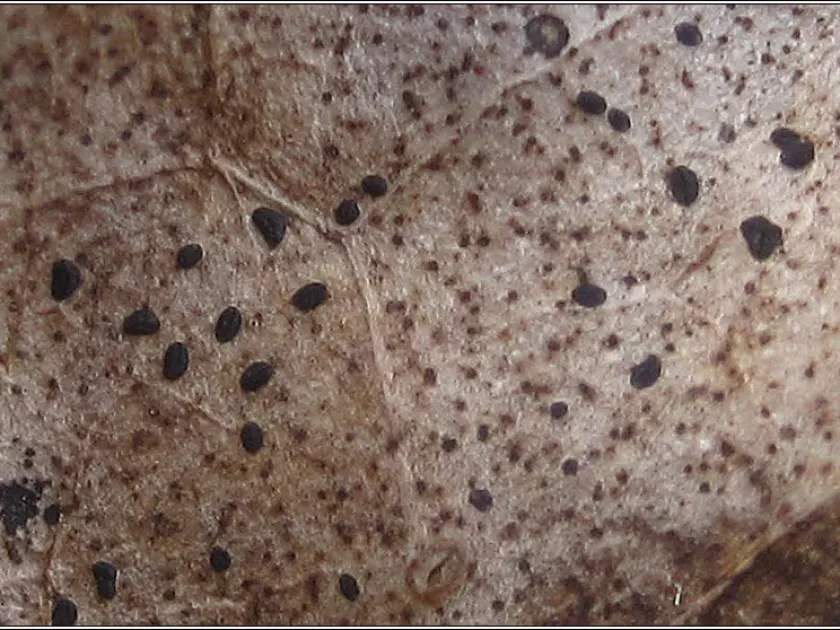
Small, black, dot-like apothecia form on the infected areas of the leaf. These are the hallmark of Lophodermium infections and are usually most prominent on the underside of the foliage.
Heavy infection causes yellowing (chlorosis) of the leaves, leading to premature leaf drop and the unsightly bareness of the stems.
In humid conditions, a faint greyish fungal growth may appear on the lesions, indicating active sporulation and further potential for the spread of the disease.
The structural damage caused by the fungus disrupts photosynthesis, which ultimately stunts the growth of the plant and diminishes its overall health and vitality.
Pathogen
Lophodermium hedericola is an ascomycete fungus that acts as a specialized pathogen on species of the genus Hedera (ivy). It is primarily known for its role in causing leaf spot and blight in evergreen climbing plants.
The fungus develops reproductive structures called apothecia, which appear as black dots on the leaf surface. These structures release spores that are responsible for the spread of the infection within a garden or greenhouse environment.
The mycelium of the pathogen penetrates the leaf epidermis, establishing a parasitic relationship that causes tissue necrosis. It can survive in fallen leaves, making sanitation a critical component of disease control.
The life cycle of this fungus is highly dependent on environmental moisture, which facilitates the germination of spores and their colonization of healthy ivy foliage.
As a specialized parasite, Lophodermium hedericola often goes unnoticed in its early stages, allowing it to become well-established before symptoms become visually obvious to the grower.
Conditions for development
High humidity and poor air circulation are the primary drivers for the development and spread of Lophodermium hedericola. Ivy planted in shaded, damp areas is particularly susceptible.
Overcrowded plantings prevent foliage from drying out after rainfall, creating a persistent film of water on the leaves that provides an optimal environment for fungal spore germination.
Although the fungus is active in moderate temperatures, it remains persistent throughout the growing season if environmental conditions stay damp and stagnant.
Incorrect irrigation practices, such as overhead watering in the evening, significantly exacerbate the risk of an outbreak by ensuring that leaves remain wet throughout the night.
The accumulation of dead organic matter around the base of the ivy provides a persistent source of inoculum that can re-infect the plant in subsequent seasons.
Why it matters
The primary concern with Lophodermium hedericola is the degradation of the ivy's ornamental value, as the disease causes leaf disfigurement and defoliation.
Weakened plants are significantly more vulnerable to secondary stresses, including winter injury and pest attacks, which can eventually lead to plant death.
For commercial growers, this disease results in lower quality stock and potential economic losses due to the need for strict culling of infected plants.
The disease interferes with the ivy's ability to maintain a lush, full covering, which is often the primary reason for choosing ivy in landscape design.
In severe cases, persistent infection leads to a lack of vigor, making the ivy unable to recover its architectural beauty even with improved care.
Protection
Sanitation is the most effective management tool. Regularly raking and disposing of fallen, infected leaves is essential to reduce the amount of inoculum present in the area.
Promote better air circulation by pruning overgrown patches and ensuring appropriate spacing between plants, which helps leaves dry more quickly.
Avoid overhead irrigation; use drip or soaker hoses to keep the foliage dry, especially during the afternoon and evening hours.
- Apply copper-based fungicides or systemic triazoles as a preventative measure.
- Monitor the lower foliage regularly for early signs of lesions.
- Remove and discard heavily infected sections of the plant.
Maintain plant health through appropriate fertilization and soil management to increase the natural resilience of the ivy against fungal infections.
Discussion
No discussions yet — be the first.